
The Factory Is Where Folding Bikes Either Last—or Loosen Over Time
Most buyers evaluating a folding electric bike factory focus on what they can see: product design, folding mechanism, overall size.
Everything looks solid during the first inspection.
The bike folds smoothly.
The lock clicks into place.
The ride feels stable.
But what most people don’t see is what happens after 100 folds… or 300.
That’s when differences begin to appear.
A hinge that felt tight becomes slightly loose.
A locking system that clicked perfectly starts to feel less precise.
A frame that felt rigid develops subtle movement.
These changes don’t come from design alone—they come from how consistently the product is manufactured inside the factory.
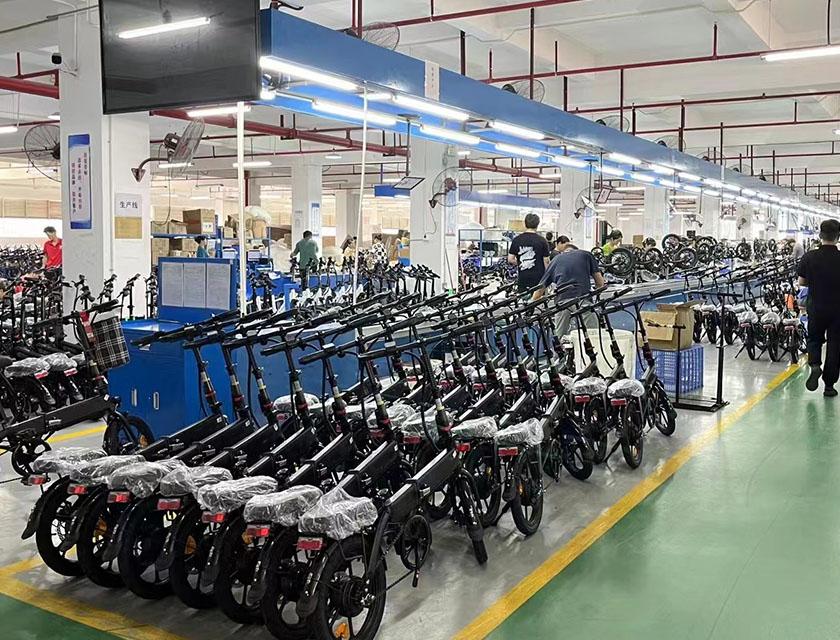
At OTMAR, we see the factory not just as a production space, but as the place where long-term durability is decided.
Folding Structure Changes Everything in Production
A folding electric bike is not just a smaller version of a standard e-bike.
It introduces a moving structure into the frame—and that changes how the entire product must be manufactured.
A professional folding electric bike factory must control:
- Hinge alignment accuracy
- Locking system precision
- Joint strength under repeated stress
- Structural rigidity after folding cycles
| Structural Area | Factory Control Requirement |
|---|---|
| Hinge connection | Tight tolerance and fatigue resistance |
| Locking mechanism | Consistent engagement force |
| Frame joints | Reinforcement for repeated use |
| Alignment | Stability after folding/unfolding |
Organizations such as the European Cyclists’ Federation emphasize that structural reliability is essential for safe cycling in urban environments.
https://ecf.com
This is why folding bike production requires a higher level of control than standard models.
Precision Is Not About Design—It’s About Repeatability
Designing a folding mechanism is one challenge. Producing it consistently is another.
In many factories, the first few units perform perfectly. But as production scales, small variations begin to appear.
These variations come from:
- Slight differences in component machining
- Assembly tolerances that are not tightly controlled
- Inconsistent torque application during assembly
For folding bikes, even small variations matter.
A professional folding electric bike factory must ensure:
- Every hinge fits within strict tolerance
- Every locking system behaves the same
- Every unit maintains the same structural feel
At OTMAR, we reduce variation through:
- Standardized component sourcing
- Controlled assembly procedures
- Batch-level inspection
Because in folding bikes, precision is not just about engineering—it’s about repeatability at scale.
Daily Folding Cycles Are the Real Durability Test
Unlike standard bikes, folding models are handled repeatedly—not just ridden.
This creates a unique stress pattern.
| Daily Action | Impact on Structure |
|---|---|
| Folding/unfolding | Stress on hinge and locking system |
| Carrying | Load on frame joints |
| Storage | Potential alignment shift |
| Repeated use | Accelerated wear on moving parts |
A factory that does not simulate these conditions during testing will produce bikes that perform well initially but degrade over time.
At OTMAR, we design production testing around:
- Repeated folding cycle simulation
- Structural fatigue testing
- Locking system durability checks
A reliable folding electric bike factory must validate durability under real usage patterns—not just static inspection.
Case: When Precision Was Missing at Scale
A distributor in Europe once sourced folding electric bikes from a supplier that delivered good initial samples.
The first batch performed well.
But as orders increased, feedback changed.
Customers began reporting that some bikes felt slightly different. Some hinges were tighter, others looser. Locking mechanisms varied slightly between units.
The issue wasn’t failure—it was inconsistency.
After working with OTMAR, the focus shifted to production control:
- Tightening hinge tolerance standards
- Standardizing assembly torque
- Adding batch-level inspection
The result was not a redesign—but a more consistent product.
Customers stopped noticing differences between units.
This is where a professional folding electric bike factory creates real value.
Certification Must Cover Moving Structures
Folding bikes must meet the same safety standards as other electric bikes—but with additional structural considerations.
| Certification | Purpose |
|---|---|
| CE | European market compliance |
| EN15194 | Electric bicycle technical standard |
| UL 2849 | Electrical system safety |
| UN38.3 | Battery transport compliance |
According to UL Solutions, consistent manufacturing processes are essential to maintain safety standards across all units.
https://www.ul.com
A reliable folding electric bike factory ensures that both electrical systems and structural components meet certification requirements.
Packaging Must Protect Folding Structures
Folding bikes offer advantages in shipping—but also introduce risks.
Improper packaging can damage hinges, misalign joints, or affect locking systems.
A professional factory must design packaging specifically for folding structures:
| Packaging Method | Purpose |
|---|---|
| Folded assembled | Protects structure while reducing volume |
| SKD packaging | Optimizes shipping efficiency |
| CKD packaging | Supports local assembly |
At OTMAR, packaging is aligned with product structure, ensuring that critical components are protected during transport.
A reliable folding electric bike factory understands that logistics is part of product quality.
OTMAR: Built for Folding Bikes That Last
Folding electric bikes are judged over time—not in the showroom.
OTMAR focuses on building folding bikes that maintain structural stability, hinge precision, and consistent performance across repeated daily use.
You can explore our electric bike and electric trike solutions here:
https://www.otmarx.com/
If you are looking for a manufacturing partner that prioritizes long-term durability and consistency, our team is ready to support your project:
https://www.otmarx.com/en/contact-us
Because in folding bikes, durability is not tested once—it’s tested every day.