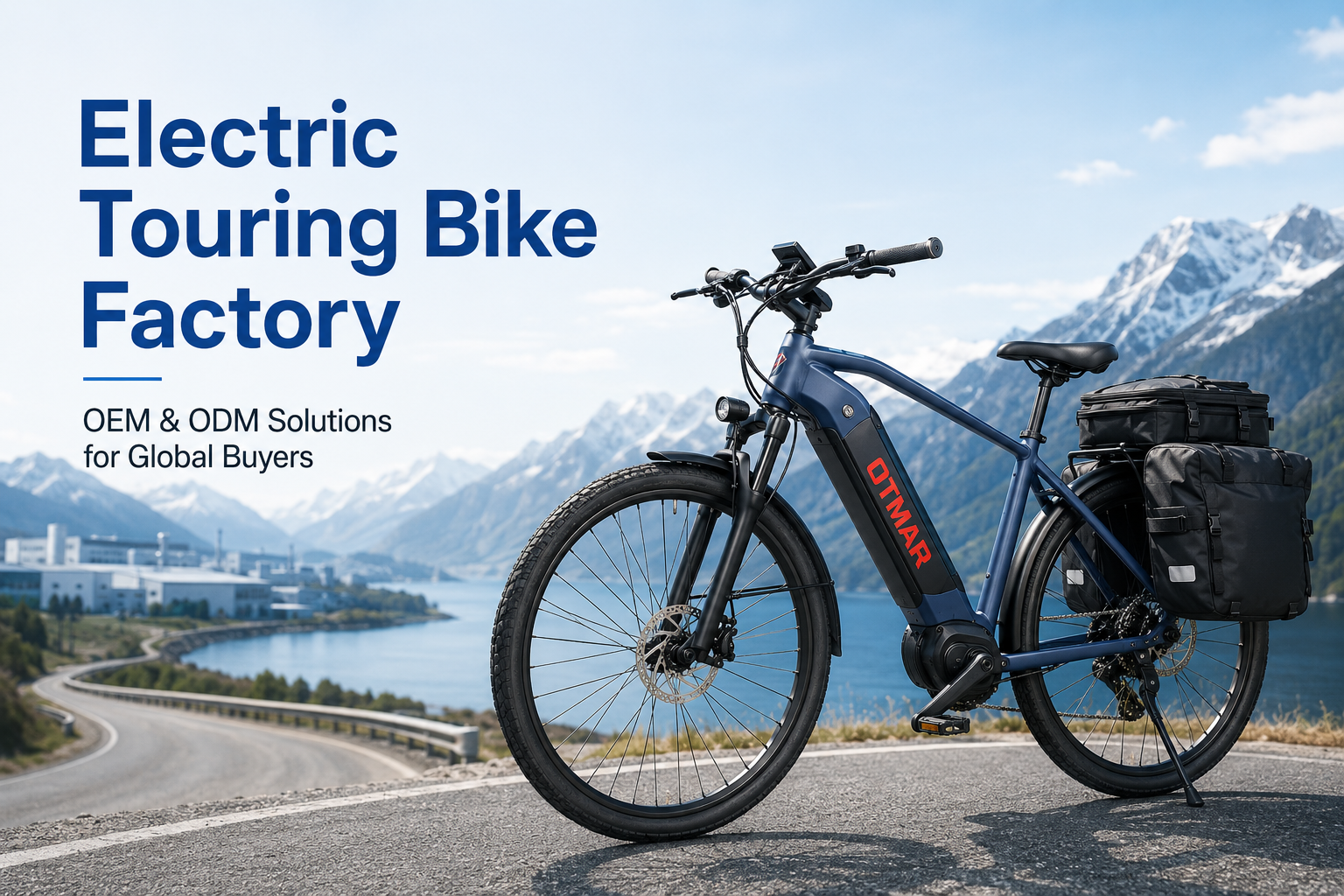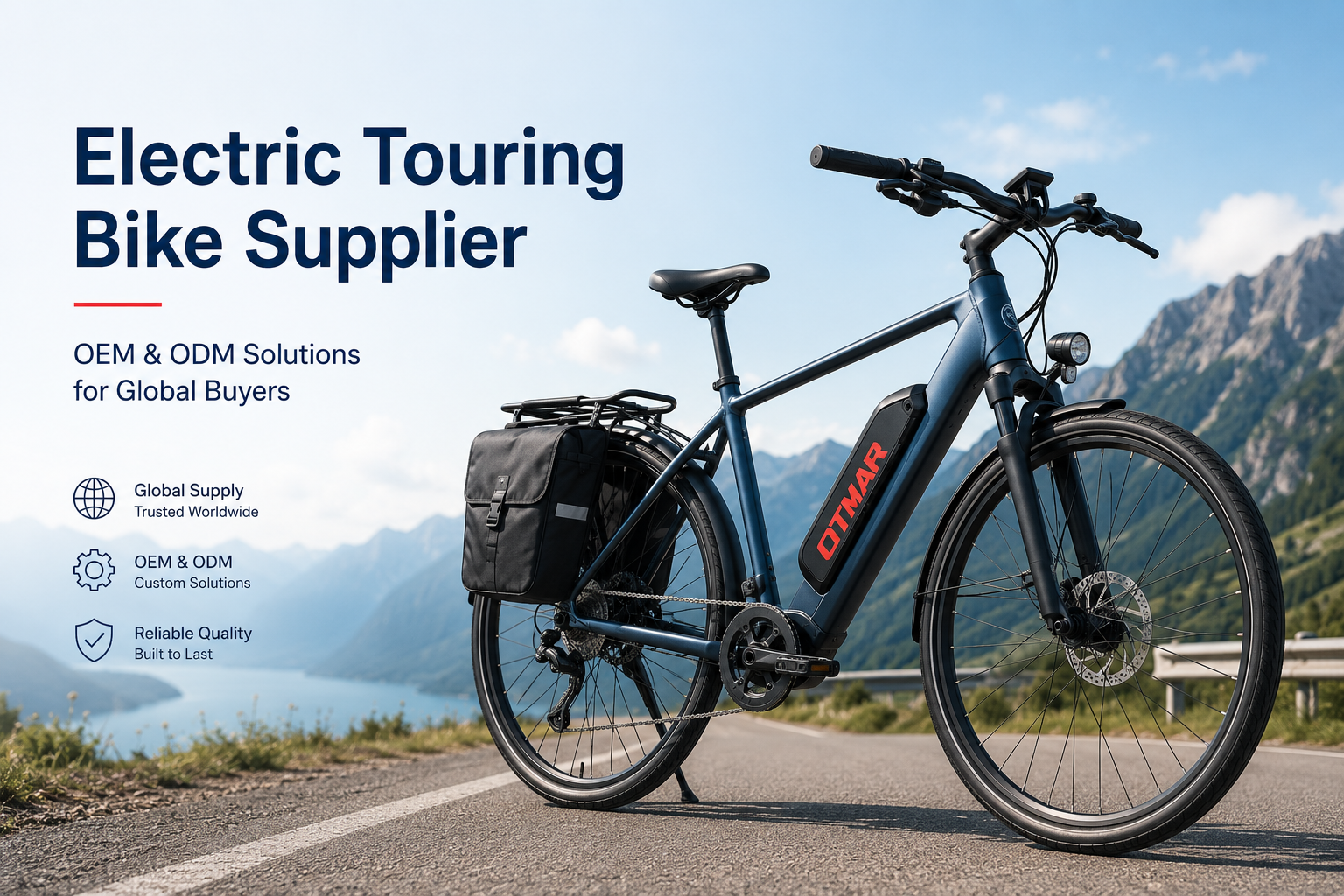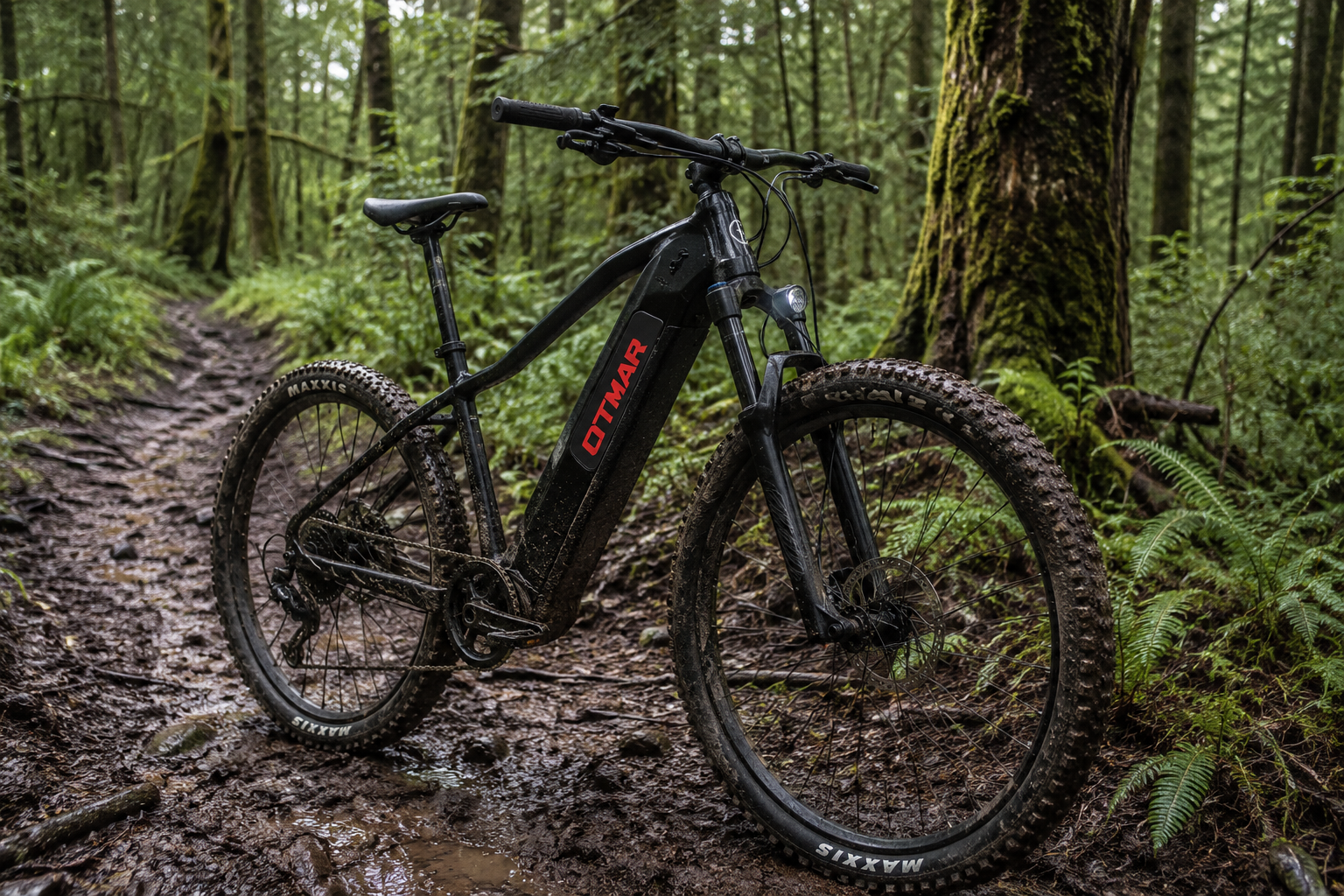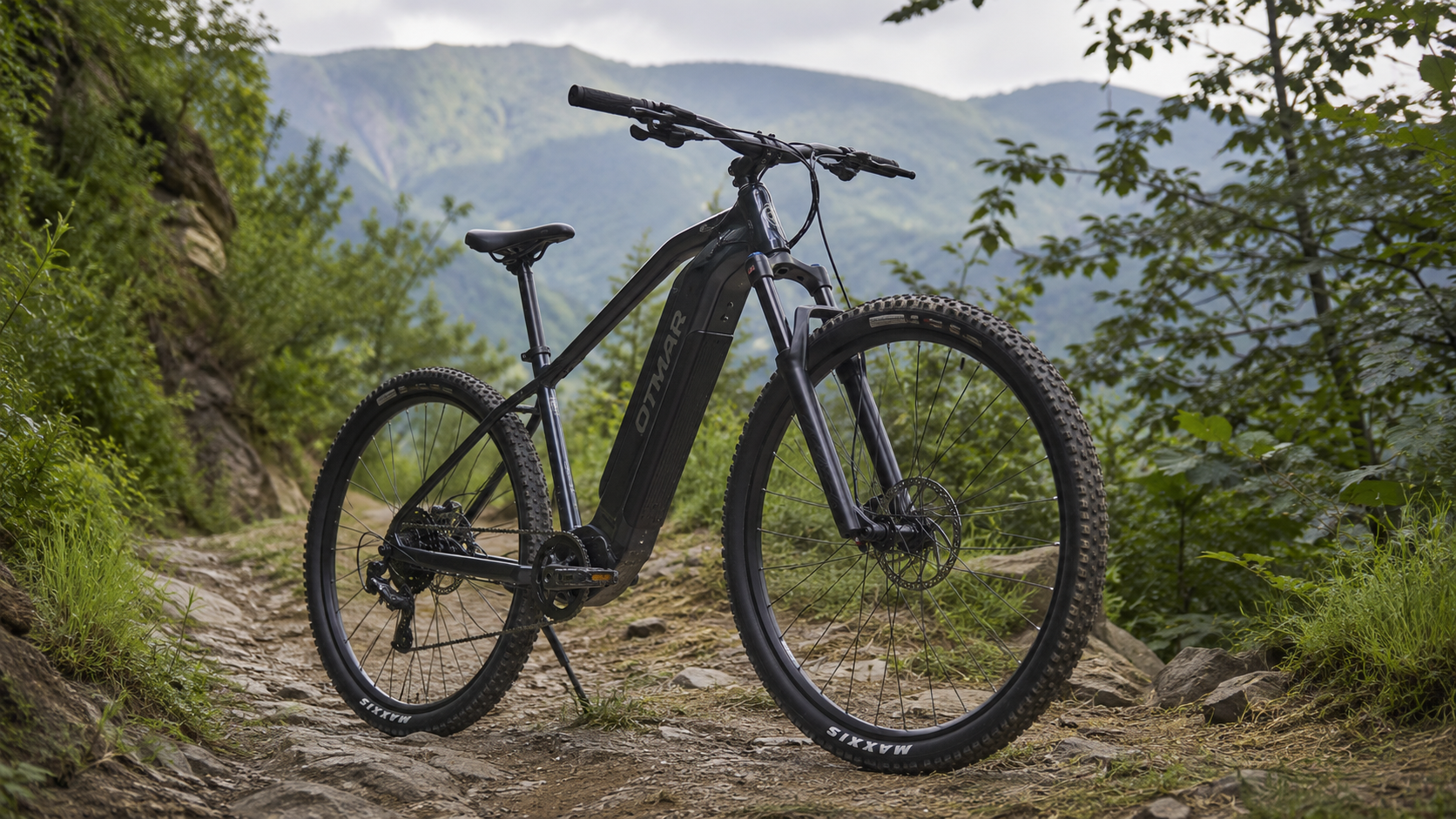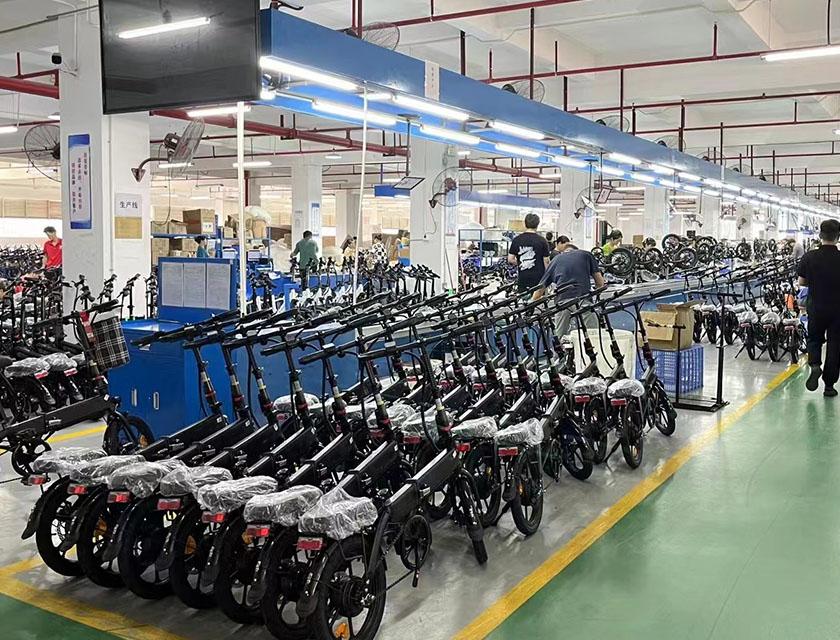

Electric touring bike OEM means working with a manufacturer to produce long-distance e-bikes under your own brand requirements. Instead of buying a generic catalog model, buyers can customize key details such as logo, frame color, battery capacity, motor power, display, tires, saddle, rack, lights, packaging, and user manual.
For e-bike brands, distributors, dealers, and mobility businesses, OEM is not only about putting a logo on a bike. A successful electric touring bike OEM project should match your market positioning, rider expectations, price range, after-sales plan, and local compliance needs.
Touring e-bikes are especially suitable for OEM projects because they serve a clear user need: comfortable long-distance riding. Buyers can position them for commuters, weekend riders, rental fleets, travel routes, senior riders, and outdoor lifestyle customers.
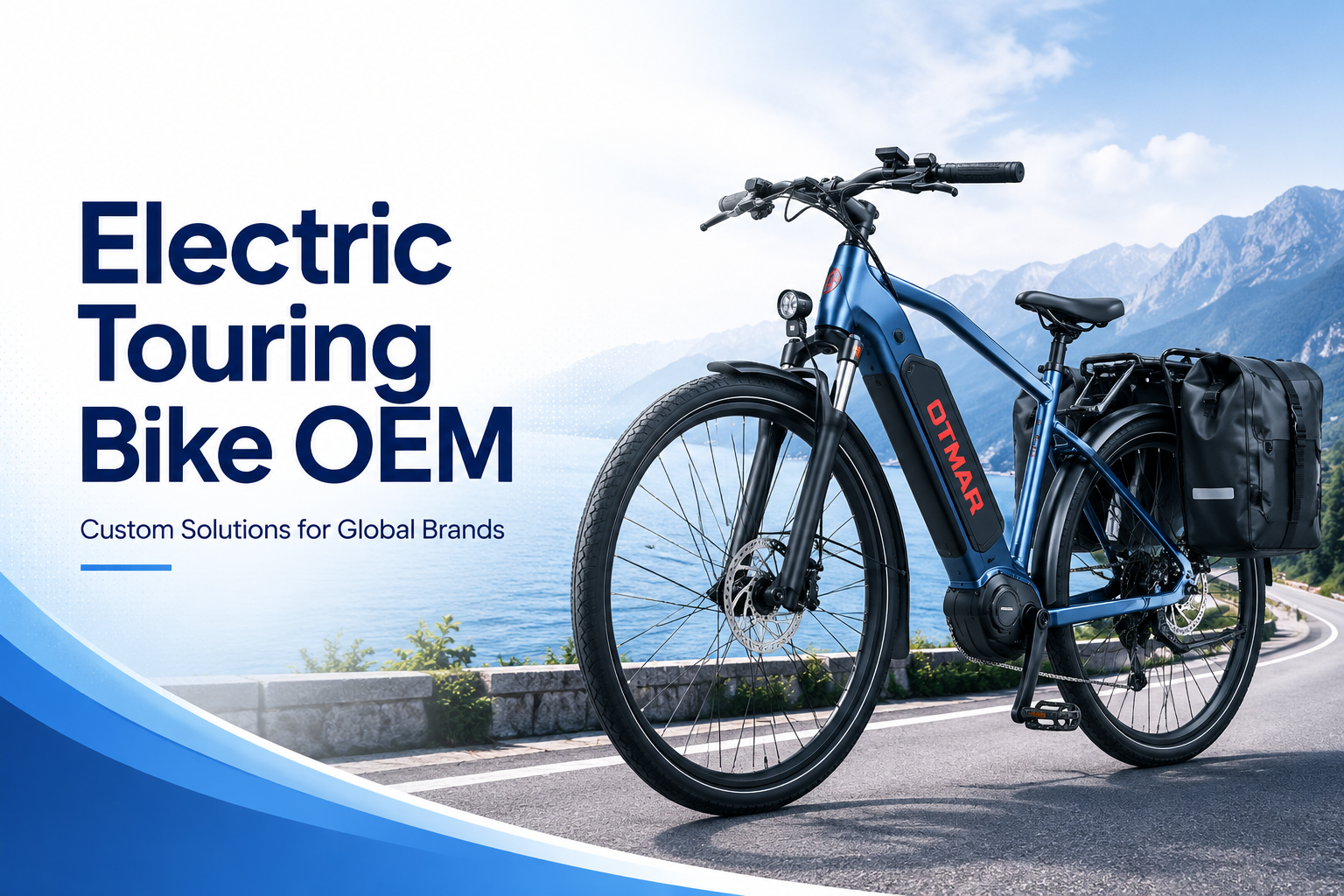
Quick Answer: How Do You Start an Electric Touring Bike OEM Project?
To start an electric touring bike OEM project, define your target market first. Then choose the riding style, motor power, battery capacity, frame design, tire type, comfort features, branding details, packaging, and quality requirements. After that, request samples, test real riding performance, confirm artwork, and approve production before placing a bulk order.
A practical OEM project usually follows this process:
- Define target buyers and price level
- Choose a base touring e-bike model
- Confirm motor, battery, frame, tire, brake, and accessory configuration
- Add logo, color, packaging, and brand details
- Test samples before mass production
- Confirm QC standards and export packaging
- Place bulk order after final approval
Why Touring E-Bikes Are Suitable for OEM Brands
Touring e-bikes are not short-term trend products. They answer a practical need for riders who want comfort, range, and stability over longer distances.
For brands and distributors, this creates strong product-line value.
Wider Customer Coverage
A touring e-bike can serve city riders, leisure riders, outdoor buyers, senior riders, rental users, and travel operators. This gives brands more sales flexibility than a highly niche product.
Higher Perceived Value
Compared with basic city e-bikes, touring e-bikes often include larger batteries, stronger frames, better saddles, rear racks, lights, wider tires, and comfort-focused design. These features make the product easier to position as a mid-range or premium model.
Strong Storytelling Potential
A touring e-bike is easy to market around freedom, long-distance riding, weekend travel, scenic routes, and daily utility. This helps brands create better product pages, ads, videos, and dealer materials.
Useful for B2B Channels
Dealers, rental fleets, and mobility businesses often prefer products that are easy to explain and easy to test ride. Touring e-bikes fit this need because customers can quickly understand their value.
OEM vs ODM: Which One Fits Your Touring E-Bike Project?
| Cooperation Type | Meaning | Best For | Buyer Control |
|---|---|---|---|
| OEM | Manufacturer produces based on your brand and confirmed configuration | Brands with clear product positioning | Higher |
| ODM | Manufacturer provides existing design with selected customization | New brands or distributors testing a market | Medium |
| Private Label | Existing model with logo and packaging changes | Fast market entry | Lower to medium |
| Full Custom Development | New structure or major engineering changes | Established brands with budget and time | Highest |
For most buyers, the best starting point is not full custom development. A practical route is to choose an existing touring e-bike platform, customize branding and key specifications, test samples, and then adjust based on market feedback.
Key OEM Customization Options for Touring E-Bikes
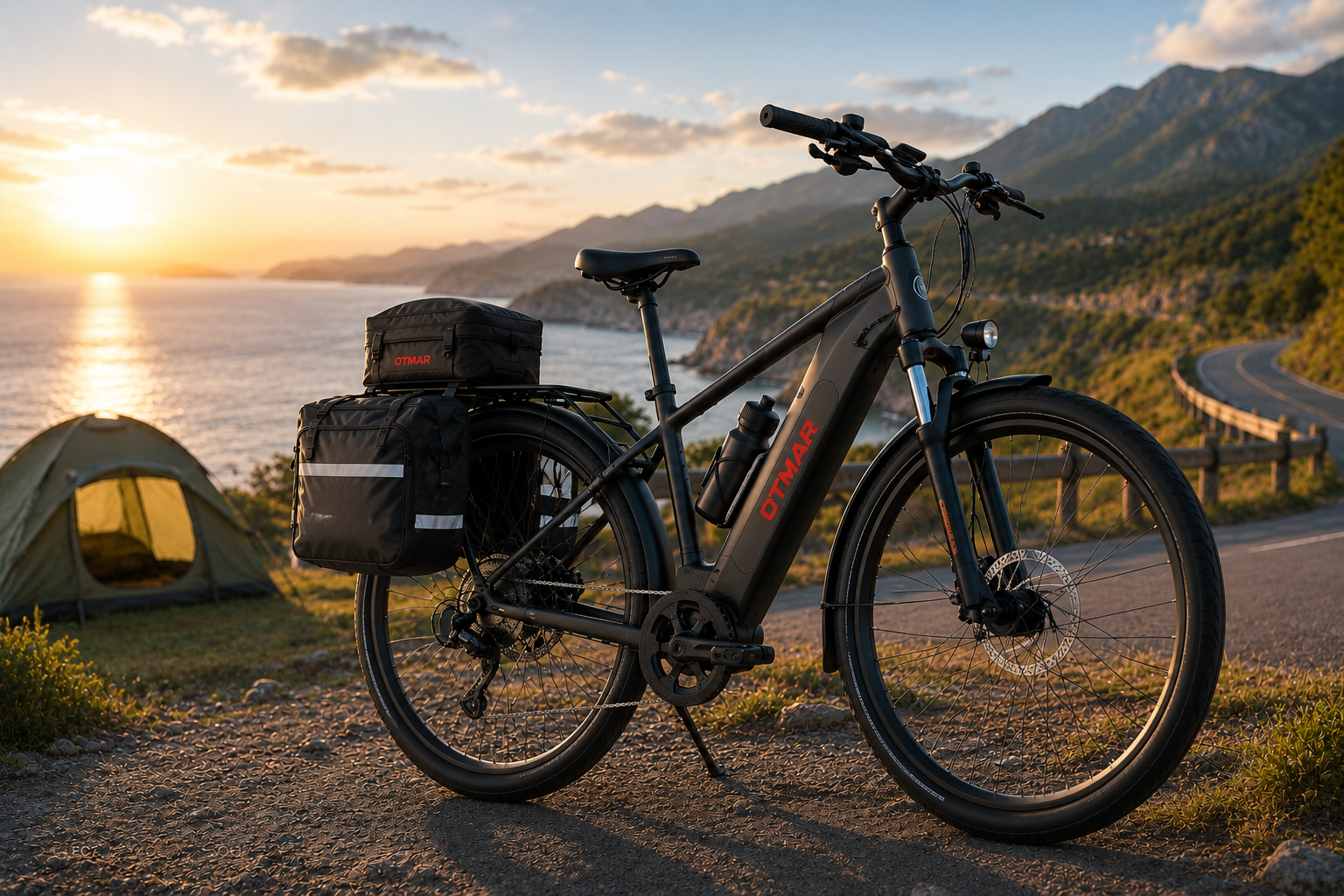
1. Logo and Brand Placement
Logo placement should be clear but not excessive. Common positions include the frame, battery cover, rear bag, carton, manual, and product label.
Before production, confirm:
- Logo size
- Logo color
- Logo position
- Printing or decal method
- Durability of the logo finish
- Packaging artwork
- Manual branding
A small logo mistake can affect the entire shipment, so artwork confirmation should happen before mass production.
2. Frame Color and Surface Finish
Color is one of the easiest ways to differentiate an OEM touring e-bike. Brands can choose understated colors for urban markets or more outdoor-oriented colors for adventure positioning.
Check:
- Color code
- Finish type
- Scratch resistance
- Paint consistency
- Batch color control
- Sample approval
For dealer channels, a clean and professional finish often improves showroom value.
3. Battery Configuration
Battery selection is critical for electric touring bikes. Buyers should choose a capacity that fits the target riding distance and price point.
Important questions include:
- What battery capacity is available?
- Is the battery hidden or removable?
- What cell quality is used?
- How is charging safety tested?
- Can replacement batteries be supplied?
- What documentation is available for export?
A touring e-bike should not only claim “long range.” The battery should match realistic customer use.
4. Motor Power and Riding Feel
Motor power affects acceleration, hill climbing, load handling, and comfort. For OEM projects, the goal is not always the highest wattage. The goal is the right riding experience for your market.
Buyers should compare:
- Motor power
- Torque output
- Controller response
- Noise level
- Assist smoothness
- Heat management
- Local market requirements
A smooth motor can create better customer satisfaction than a powerful but unstable system.
5. Tire Type and Road Positioning
Touring e-bikes may be used on paved roads, bike lanes, coastal routes, countryside roads, gravel paths, and scenic routes.
Possible tire choices include:
- City tires for efficient commuting
- Wider tires for comfort
- All-terrain tires for mixed roads
- Fat tires for visual impact and better grip
The best tire choice depends on where your customers will ride.
6. Comfort Features
Touring e-bike buyers often care about comfort more than speed. OEM buyers should review the saddle, handlebar, frame geometry, suspension, and riding posture.
Useful comfort features include:
- Upright riding position
- Ergonomic saddle
- Front suspension
- Rear rack
- Fenders
- Comfortable grips
- Stable frame geometry
Comfort is especially important for rental fleets and older riders.
7. Accessories and Practical Details
Touring e-bikes need practical accessories. These details can improve customer satisfaction and reduce dealer complaints.
Common options include:
- Rear rack
- Front and rear lights
- Fenders
- Kickstand
- Digital display
- Reflectors
- Pannier bags
- Bell
- Bottle holder
- Charger
- Toolkit
A good OEM manufacturer should help buyers choose accessories based on real use, not only appearance.
Electric Touring Bike OEM Specification Table
| OEM Item | Customization Options | Buyer Notes |
| Logo | Frame, battery cover, packaging, manual | Confirm artwork before production |
| Frame Color | Matte, glossy, neutral, outdoor colors | Use color code for consistency |
| Battery | Capacity, hidden/removable design, cell quality | Match target range and market price |
| Motor | Power, torque, controller settings | Focus on smooth riding feel |
| Tires | City, wide tire, all-terrain, fat tire | Match road conditions |
| Brakes | Mechanical or hydraulic disc brakes | Check maintenance and safety needs |
| Display | Basic or advanced display | Ensure clear battery and assist data |
| Rack | Rear rack or cargo support | Useful for touring and rental use |
| Lights | Front light, rear light, brake light | Important for safety and compliance |
| Packaging | Branded carton, labels, protection | Reduces shipping damage |
| Manual | Branded user manual | Helps dealers and end users |
| QC | Battery, motor, brakes, frame, packaging | Confirm inspection standard |
How to Plan a Touring E-Bike OEM Product Line
A good OEM project should not begin with one random model. Buyers should think about product positioning first.
Entry-Level Touring Model
This model can target dealers who want a practical long-distance e-bike at a competitive price. It should focus on reliable battery performance, comfortable frame design, disc brakes, rear rack, and basic accessories.
Mid-Range Touring Model
This model can include better battery capacity, improved tires, stronger suspension, better display, upgraded saddle, and cleaner branding. It is suitable for distributors and retailers who want higher margins.
Premium Touring Model
A premium model can focus on larger battery options, stronger motor performance, advanced comfort, branded accessories, high-end finish, and stronger visual identity. It is suitable for mature brands and outdoor mobility channels.
Rental Fleet Version
A rental-focused model should prioritize durability, easy maintenance, spare parts, strong kickstand, practical tires, stable brakes, and simple operation.
Sample Confirmation Before Mass Production
Sample testing is one of the most important steps in an electric touring bike OEM project. Buyers should not approve production based only on photos.
During sample review, check:
- Riding comfort
- Motor smoothness
- Battery fit and charging
- Brake response
- Tire grip
- Display accuracy
- Rack stability
- Logo placement
- Paint finish
- Packaging protection
- User manual accuracy
- Overall assembly quality
If the sample is not tested carefully, small issues may become expensive after mass production.
OEM Quality Control Checklist
| QC Stage | What to Check | Why It Matters |
| Pre-Production | Final specs, artwork, sample approval | Prevents wrong configuration |
| Frame Inspection | Welding, alignment, paint finish | Affects safety and appearance |
| Battery Test | Charging, mounting, output, connection | Affects range and reliability |
| Motor Test | Noise, response, assist mode | Affects riding experience |
| Brake Test | Stopping power and alignment | Affects safety |
| Accessory Check | Rack, fenders, lights, display | Affects practical use |
| Logo Check | Position, color, durability | Affects brand image |
| Packaging Check | Carton, foam, protection, label | Reduces shipping damage |
| Final Inspection | Full-bike function and visual check | Confirms shipment quality |
Common OEM Mistakes Buyers Should Avoid
Mistake 1: Customizing Too Many Details at Once
New brands sometimes try to customize every part from the first order. This increases cost, lead time, and risk. A better approach is to start with essential customization and improve after market feedback.
Mistake 2: Choosing Battery Capacity Only for Marketing
A large battery sounds attractive, but it also affects cost, weight, charging time, and packaging. Buyers should choose a battery based on real riding use and target price.
Mistake 3: Ignoring Local Market Needs
A touring e-bike for Europe may need a different configuration from a model for North America, Australia, or resort rental fleets. Motor power, accessories, lighting, and documentation should match the market.
Mistake 4: Not Confirming Logo Artwork
Logo color, size, and placement must be confirmed before production. A wrong logo position can affect the entire batch.
Mistake 5: Skipping Packaging Review
International shipping can damage bikes if packaging is weak. Buyers should review carton structure, protection material, accessory placement, and label information.
Mistake 6: Treating OEM as Only a Price Project
OEM success depends on product planning, supplier communication, sample testing, QC, and after-sales support. Price matters, but it should not be the only decision factor.
What to Ask an Electric Touring Bike OEM Manufacturer
Before placing an order, buyers should ask:
- Which touring e-bike models are suitable for my target market?
- What OEM and ODM customization options are available?
- Can you support logo, color, packaging, and manual customization?
- What battery and motor configurations can be selected?
- Can I request samples before mass production?
- What is the MOQ for OEM orders?
- How do you inspect battery, motor, brakes, and packaging?
- What certifications or documents can you provide?
- How do you support spare parts and after-sales communication?
- What is the estimated lead time for bulk production?
These questions help buyers confirm whether the manufacturer can support a real OEM project, not just a standard product order.
Why Work with OTMAR for Electric Touring Bike OEM?
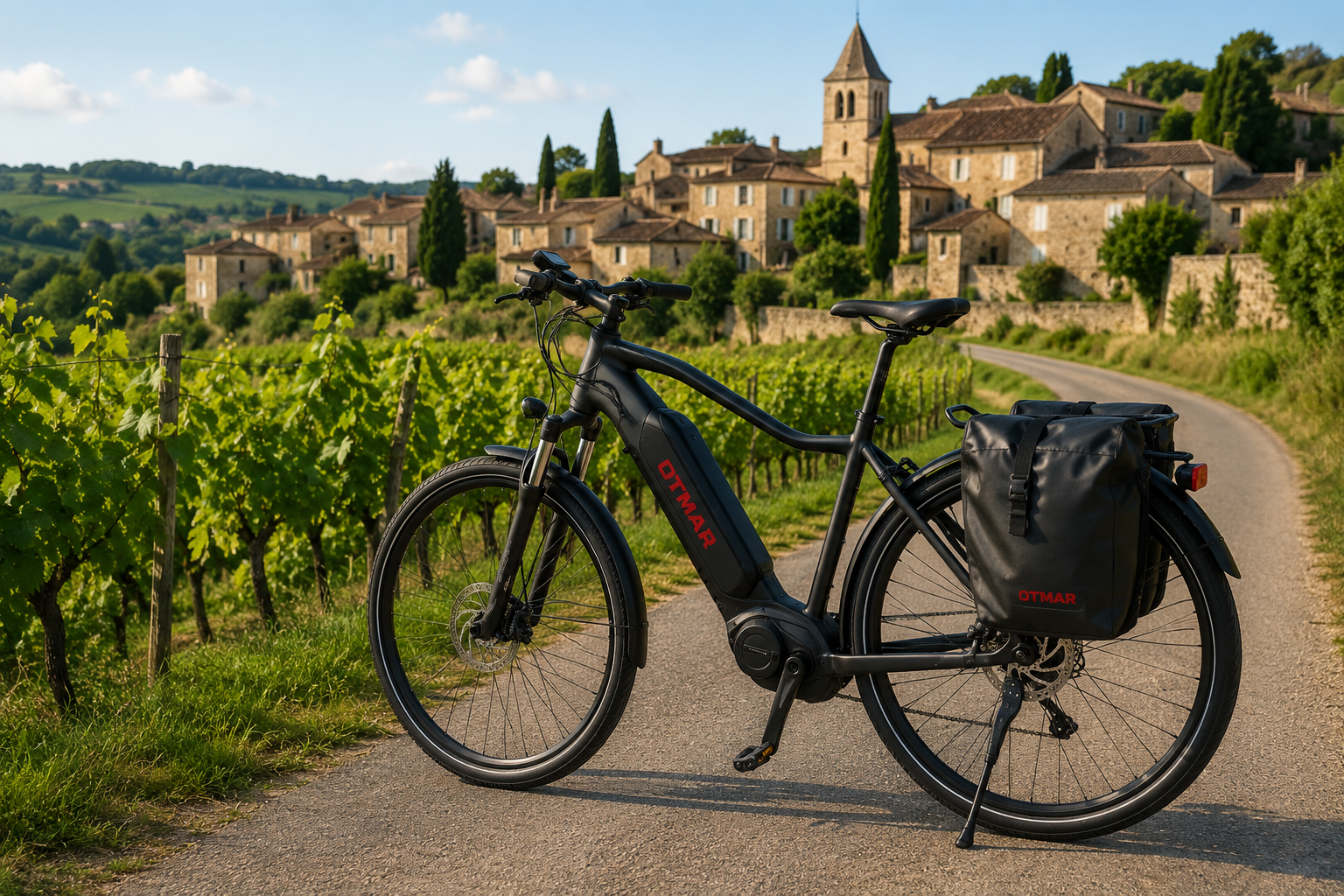
OTMAR provides OEM/ODM electric bike and electric trike manufacturing solutions for global buyers. For brands, distributors, dealers, and mobility businesses, OTMAR can support touring e-bike projects through product selection, configuration discussion, branding customization, sample confirmation, quality inspection, and export communication.
OTMAR’s electric bike category includes touring-related models as part of a broader e-bike product range. Buyers can explore available electric bike options through OTMAR Electric Bikes.
For company background, manufacturing positioning, and export capability, buyers can visit About OTMAR. For OEM/ODM discussion, bulk pricing, or project requirements, buyers can contact the team through Contact OTMAR.
Electric Touring Bike OEM Project Workflow
| Step | Project Stage | What Happens |
| 1 | Requirement Discussion | Buyer shares market, quantity, budget, and brand needs |
| 2 | Model Selection | Manufacturer recommends suitable touring e-bike base models |
| 3 | Configuration Planning | Battery, motor, tire, brake, display, and accessories are confirmed |
| 4 | Branding Design | Logo, color, packaging, label, and manual details are prepared |
| 5 | Sample Production | Sample is made for testing and approval |
| 6 | Sample Review | Buyer checks riding feel, appearance, function, and packaging |
| 7 | Pre-Production Confirmation | Final specs, artwork, and QC standards are confirmed |
| 8 | Bulk Production | Factory produces the approved OEM model |
| 9 | Quality Inspection | Battery, motor, frame, brakes, accessories, and packaging are checked |
| 10 | Shipping Support | Export packaging, documents, and logistics communication are arranged |
FAQ
1. What is electric touring bike OEM?
Electric touring bike OEM means a manufacturer produces long-distance e-bikes based on a buyer’s brand, configuration, and packaging requirements. It may include logo, frame color, battery capacity, motor power, tires, display, rear rack, lights, manual, and carton customization.
2. Who needs electric touring bike OEM service?
Electric touring bike OEM service is suitable for e-bike brands, distributors, dealers, importers, rental fleet operators, outdoor mobility businesses, and companies that want to build a private label long-distance e-bike product line for their local market.
3. What can be customized in an OEM touring e-bike?
Common customization options include logo, frame color, battery capacity, motor power, tire type, saddle, display, rear rack, lights, fenders, packaging, carton labels, user manual, and market-specific accessories. Buyers should confirm all details before mass production.
4. Is OEM better than buying standard touring e-bikes?
OEM is better if you want brand differentiation, specific configurations, and private label packaging. Standard models are faster for market testing, but OEM gives brands more control over positioning, customer experience, and long-term product identity.
5. What should buyers check before approving a sample?
Buyers should test riding comfort, motor smoothness, battery charging, brake response, tire grip, display accuracy, rack stability, logo placement, frame finish, packaging protection, manual content, and overall assembly quality before approving mass production.
6. What is the risk of low-cost OEM touring e-bikes?
Low-cost OEM projects may use weaker batteries, unstable motor systems, poor brakes, low-grade accessories, inconsistent paint, or weak packaging. These issues can lead to returns, warranty claims, poor reviews, and damage to brand reputation.
7. Can OTMAR support private label electric touring bikes?
Yes. OTMAR supports OEM/ODM electric bike projects for global buyers. Brands and distributors can discuss logo, color, configuration, packaging, sample confirmation, bulk production, and export communication with the OTMAR team.
8. How do I request an OEM quote from OTMAR?
Prepare your target market, expected order quantity, preferred touring e-bike style, battery requirement, motor power, color, logo files, packaging needs, and delivery expectations. Then contact OTMAR through the official contact page to discuss project details.
Conclusion
An electric touring bike OEM project is more than adding a logo to a bicycle. It requires clear product positioning, reliable technical configuration, sample testing, branding confirmation, quality control, packaging review, and long-term supplier communication.
For brands, distributors, dealers, and rental fleet operators, the right OEM partner can help create a touring e-bike product line that fits real market demand and reduces sourcing risk.
OTMAR provides OEM/ODM electric bike solutions for global buyers. To start your electric touring bike OEM project, visit OTMAR Electric Bikes or contact the team through Contact OTMAR.