
You Don’t See the Factory—But You Feel It Every Day
Most buyers never visit the factory.
They evaluate samples, compare specifications, maybe check a few certifications—and then make a decision. That’s how cooperation with an electric commuter bike factory usually begins.
But once the bikes reach real users, something interesting happens.
Riders don’t experience specifications.
They experience consistency.
One bike feels smooth. Another feels slightly different.
One battery behaves predictably. Another doesn’t.
These differences don’t come from design alone. They come from how the bike is built, every single time, inside the factory.
We’ve worked with distributors who initially focused on product features, only to realize later that production consistency mattered far more than expected.
At OTMAR, we see the factory not as a place where bikes are assembled—but as the place where reliability is either created or lost.
Production Is Not Assembly—It’s Control
From the outside, manufacturing can look simple: components arrive, bikes are assembled, shipments are sent.
But in reality, a professional electric commuter bike factory operates as a controlled system.
Every stage of production must be repeatable.
| Production Stage | What Must Be Controlled |
|---|---|
| Frame preparation | Alignment and structural accuracy |
| Electrical installation | Compatibility between battery, motor, controller |
| Wiring layout | Protection against vibration and wear |
| Final testing | Functional consistency across units |
Without this level of control, even well-designed bikes can perform inconsistently.
Organizations such as the Light Electric Vehicle Association (LEVA-EU) emphasize that production consistency is a key factor in ensuring reliable electric bike performance.
https://leva-eu.com
This is why a factory is not just about capacity—it is about process discipline.
The Real Challenge: Keeping Every Unit the Same
For commuter bikes, consistency is everything.
A commuter uses the bike every day. If one unit behaves differently from another, it becomes noticeable quickly.
This creates a unique challenge for any electric commuter bike factory:
Not just building a good bike—but building the same bike, repeatedly.
Even small variations can matter:
- Slight differences in motor calibration
- Minor variation in battery output
- Small inconsistencies in braking response
At OTMAR, we reduce these variations through:
- Standardized component sourcing
- Controlled torque settings during assembly
- Batch-level testing before shipment
The goal is simple: when a distributor receives 100 bikes, they should feel like one product—not 100 variations.
Daily Use Reveals What Production Hides
Commuter bikes are exposed to repetition.
Every day, they go through:
- Dozens of start-stop cycles
- Continuous braking
- Frequent charging
- Long-term vibration
These are not extreme conditions—but they are continuous.
A factory that does not account for this will produce bikes that perform well initially but degrade inconsistently over time.
At OTMAR, we design production processes to match these usage patterns:
- Electrical systems are tested under repeated load conditions
- Brake systems are matched to expected usage cycles
- Assembly tolerances are tightened to reduce long-term variation
A reliable electric commuter bike factory must build products for long-term behavior, not just initial performance.
Case: When Production Consistency Changed Customer Feedback
A distributor in Southern Europe once worked with a supplier that offered competitive pricing and acceptable product samples.
The first shipments went well. But after several months, customer feedback began to change.
The issue was not failure—it was inconsistency.
Some bikes felt smooth and stable. Others felt slightly different. Customers began comparing units, which affected confidence in the product.
When the distributor switched to OTMAR, the focus was not on redesigning the bike, but on improving production consistency.
We standardized component matching, refined assembly processes, and introduced stricter batch testing.
Within the next production cycles, feedback improved—not because the bikes became more powerful, but because they became uniform.
This is what a professional electric commuter bike factory delivers: consistency that customers can trust.
Certification Starts in the Factory, Not After Production
Many buyers treat certification as a separate step after manufacturing.
In reality, compliance must be built into the production process.
A qualified electric commuter bike factory ensures that every unit is produced according to certification standards.
Key certifications include:
| Certification | Role |
|---|---|
| CE | Market access in Europe |
| EN15194 | Technical compliance for e-bikes |
| UL 2849 | Electrical safety validation |
| UN38.3 | Battery transport safety |
According to UL Solutions, consistent manufacturing processes are essential for ensuring that certified products maintain safety standards across all units.
https://www.ul.com
At OTMAR, certification is integrated into production—not added afterward—ensuring that every bike meets the required standards.
Logistics Reflect How Well the Factory Is Organized
Shipping is often seen as a separate process, but in reality, it reflects how well the factory operates.
A well-organized electric commuter bike factory aligns production with logistics planning.
This includes:
| Packaging Type | Purpose |
|---|---|
| Fully assembled | Quick deployment in market |
| SKD packaging | Reduced shipping volume |
| CKD packaging | Flexible local assembly |
Proper packaging protects the product during transport, while documentation ensures smooth customs clearance.
A factory that manages these processes well reduces risk not only in production, but also in delivery.
OTMAR: A Factory Built for Daily Reliability
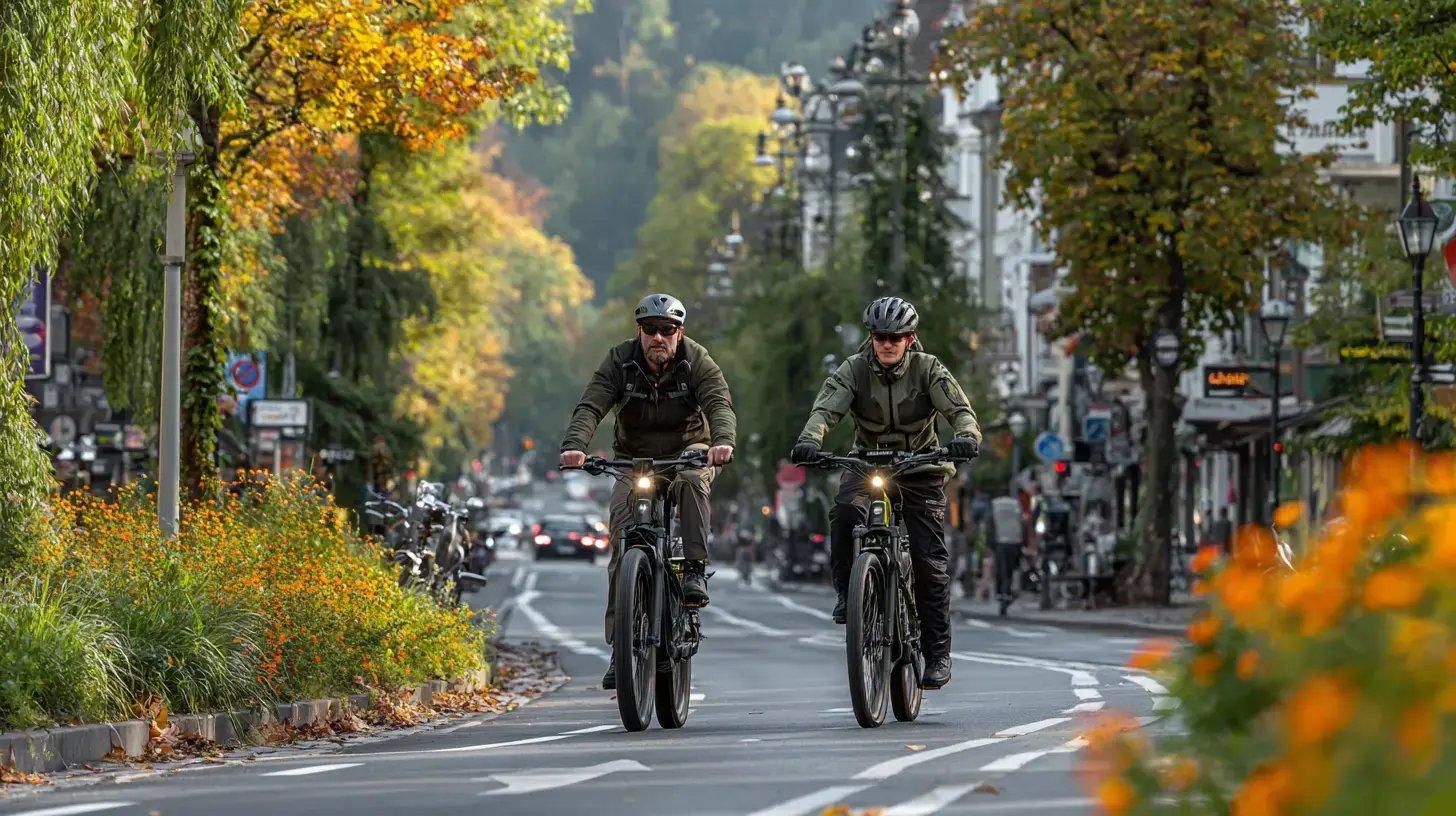
Commuter bikes are defined by routine. They must perform the same way every day, across different riders and conditions.
OTMAR focuses on building that consistency at the factory level—through controlled processes, stable component sourcing, and rigorous testing.
You can explore our electric commuter bike solutions here:
https://www.otmarx.com/
If you are looking for a manufacturing partner that prioritizes long-term reliability over short-term output, our team is ready to support your project:
https://www.otmarx.com/en/contact-us
Because in the end, the factory is where reliability begins—and where it is proven.