
It Usually Starts with a Sketch—or Just an Idea
Most commuter e-bike projects don’t start with a finished product.
They start with a concept. Sometimes it’s a rough design. Sometimes it’s just a clear market idea—“we need a lightweight, comfortable commuter bike for urban users.” When brands begin searching for an electric commuter bike OEM, what they’re really looking for is not just a factory, but a partner who can turn that idea into something real.
We’ve worked with clients who came to us with only reference images and a target price range. No technical drawings. No finalized specs. What they did have was pressure—from competitors, from market timing, and from customers already asking for the product.
At OTMAR, we treat that early stage as part of the OEM process itself. Because the biggest risk in commuter bike projects is not manufacturing—it’s misalignment between idea and execution.
According to the International Energy Agency, electric commuter bikes are increasingly replacing short car trips in urban environments, driving strong demand for practical and reliable designs.
https://www.iea.org/reports/global-ev-outlook
That demand creates opportunity—but only for brands that can move from concept to product efficiently with the right electric commuter bike OEM partner.
Turning Concepts into Engineering-Ready Designs
The first real challenge in any OEM project is translating an idea into a manufacturable product.
A commuter bike may seem simple, but once development begins, decisions multiply quickly:
- What motor power fits the target market regulations?
- How should battery capacity balance range and weight?
- What frame geometry supports comfortable daily riding?
At this stage, a professional electric commuter bike OEM does not just follow instructions—it helps define them.
At OTMAR, we typically guide clients through:
- Frame geometry refinement for urban riding posture
- Motor and controller selection based on commuting scenarios
- Battery configuration aligned with daily usage patterns
- Component matching to ensure system stability
| Design Factor | OEM Consideration |
|---|---|
| Frame structure | Comfort and durability for daily use |
| Motor tuning | Smooth acceleration in traffic |
| Battery system | Stable performance across frequent charging |
| Braking system | High cycle durability |
Organizations such as the European Cyclists’ Federation emphasize that commuter bikes must prioritize usability and comfort to support daily urban riding.
https://ecf.com
This is why working with an experienced electric commuter bike OEM early in development reduces costly redesign later.
Why OEM Development Fails Without Real Use Scenarios
Many OEM projects fail not because of poor manufacturing—but because the product was never aligned with real use.
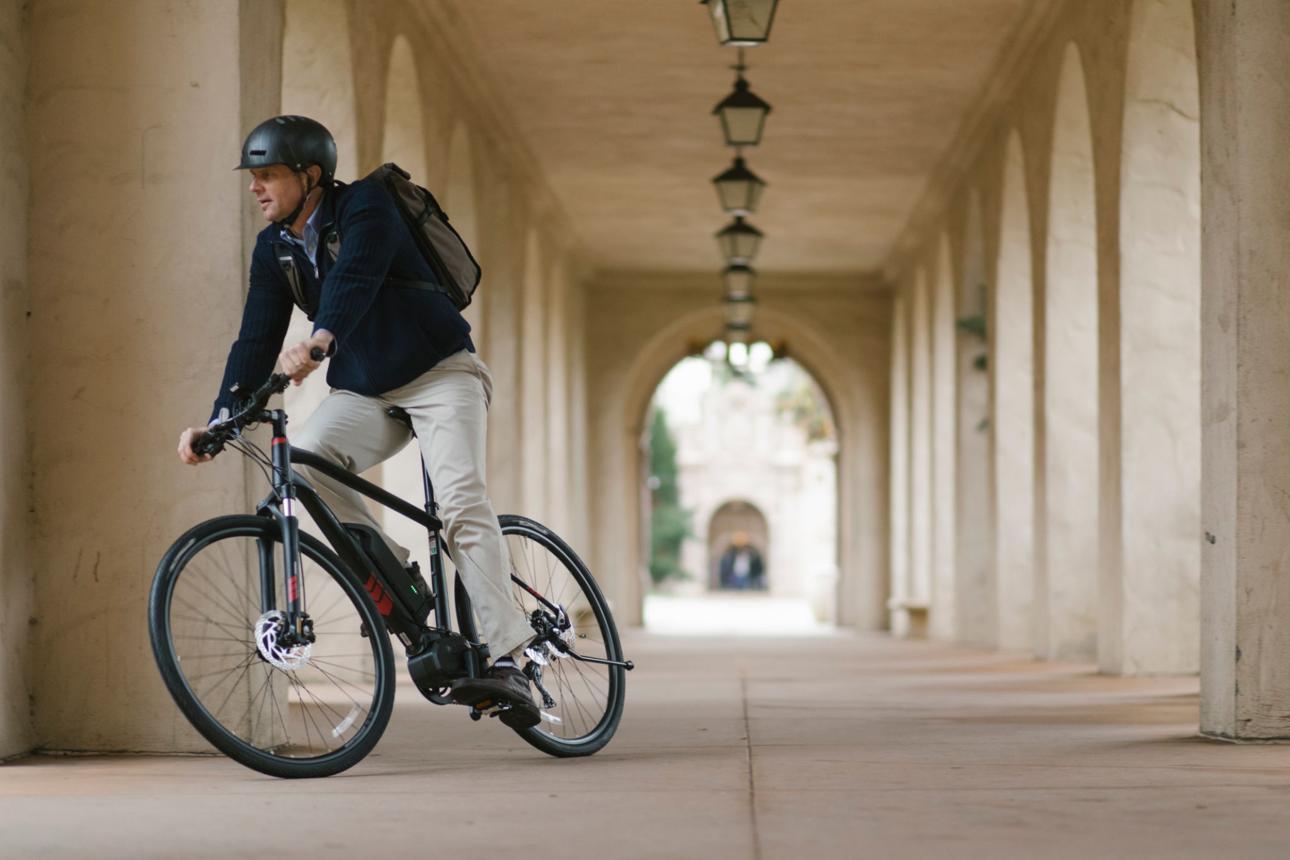
A commuter bike is not just a smaller e-bike. It is a daily-use tool, and every design decision must reflect that.
We’ve seen projects where brands focused heavily on visual design, only to realize later that:
- The riding position caused fatigue
- The motor response felt too aggressive in traffic
- The battery performance didn’t match short commuting patterns
At OTMAR, we base OEM development on real commuting behavior:
- Stop-and-go riding cycles
- Daily charging routines
- Mixed rider profiles
- Urban road conditions
This approach ensures that the final product matches how people actually use commuter bikes—not how they are imagined.
A capable electric commuter bike OEM must design around behavior, not just specifications.
From Prototype to Production: Where Most Risks Appear
Once the design is confirmed, the project moves into prototyping and testing.
This is where many hidden issues surface.
A prototype may perform well in isolation, but scaling that performance into mass production is a different challenge. Small inconsistencies in assembly, component sourcing, or calibration can create variation across units.
At OTMAR, we treat this phase as critical:
- Prototype testing under repeated commuting conditions
- Adjustment of component matching for stability
- Refinement of assembly processes before scaling
| Stage | Risk Without OEM Control |
|---|---|
| Prototype testing | Overlooking real-world usage issues |
| Component sourcing | Inconsistent performance across batches |
| Assembly scaling | Variation between units |
The Light Electric Vehicle Association (LEVA-EU) highlights that consistency in system integration is essential for reliable electric bike production.
https://leva-eu.com
A professional electric commuter bike OEM ensures that what works in a prototype also works at scale.
Case: From Concept to Market-Ready Commuter Bike
A startup brand in Southeast Asia approached OTMAR with a clear goal: launch a commuter electric bike designed for urban office workers.
At the beginning, they only had a concept—lightweight, simple, and suitable for daily commuting. However, they lacked technical development experience.
Our team worked with them to:
- Define frame geometry for comfort
- Select motor and battery systems suited for short daily trips
- Optimize component matching for stability
The first prototype revealed several adjustments were needed, especially in motor tuning and braking response.
After refinement, the final product achieved a balance between comfort, control, and reliability.
When the bike was launched, feedback from early users focused on one thing:
“It feels natural to ride every day.”
That feedback mattered more than specifications.
This project shows how an experienced electric commuter bike OEM helps transform an idea into a product that fits real life.
Certification Is Part of OEM Development—Not an Extra Step
Many brands treat certification as something to handle after production.
In reality, certification must be integrated during development.
For commuter bikes, common requirements include:
| Certification | Role |
|---|---|
| CE | Market access in Europe |
| EN15194 | Technical compliance |
| UL 2849 | Electrical safety |
| UN38.3 | Battery transport approval |
According to UL Solutions, integrating safety testing into development improves both compliance and product reliability.
https://www.ul.com
At OTMAR, certification planning is included from the beginning, ensuring that products are ready for market entry without delays.
A reliable electric commuter bike OEM reduces compliance risk by building standards into the product—not adding them later.
Logistics Planning Starts Before Production Ends
Even after manufacturing, the project is not complete.
OEM partners must also support distribution through proper logistics planning.
Different markets require different shipping approaches:
| Packaging Type | Benefit |
|---|---|
| Fully assembled | Faster retail launch |
| SKD packaging | Reduced shipping cost |
| CKD packaging | Local assembly flexibility |
In addition, documentation such as UN38.3 reports and MSDS files must be prepared to ensure smooth international shipping.
A professional electric commuter bike OEM treats logistics as part of the product delivery process—not a separate task.
OTMAR: From Concept to Commuter Reality
Launching a commuter e-bike is not just about building a product—it’s about building a system that works every day.
OTMAR supports brands through the entire OEM process—from early concept development to stable mass production.
Our focus is simple:
- Consistent performance
- Real-world usability
- Scalable manufacturing
You can explore our electric commuter bike solutions here:
https://www.otmarx.com/
If you are planning to launch your own commuter e-bike brand or expand your product line, our team is ready to support your project:
https://www.otmarx.com/en/contact-us
Because in the end, a successful commuter bike is not defined by design—it’s defined by how naturally it fits into everyday life.