
Long range electric bikes are becoming one of the most valuable categories for dealers, distributors, rental operators, and e-bike brands. Riders want more than a short commute solution. They want freedom to ride farther, carry daily items, explore outdoor routes, and reduce range anxiety during longer trips.
For B2B buyers, this creates strong market potential. A well-designed long range e-bike can serve commuters, touring riders, outdoor customers, delivery users, rental fleets, and premium retail channels. However, choosing the right long range electric bike manufacturer is critical because real range depends on more than battery capacity.
Battery quality, motor efficiency, controller tuning, frame weight, tire resistance, rider posture, cargo load, and riding conditions all influence actual performance. A manufacturer that understands these factors can help buyers develop products that are easier to sell and more reliable after delivery.
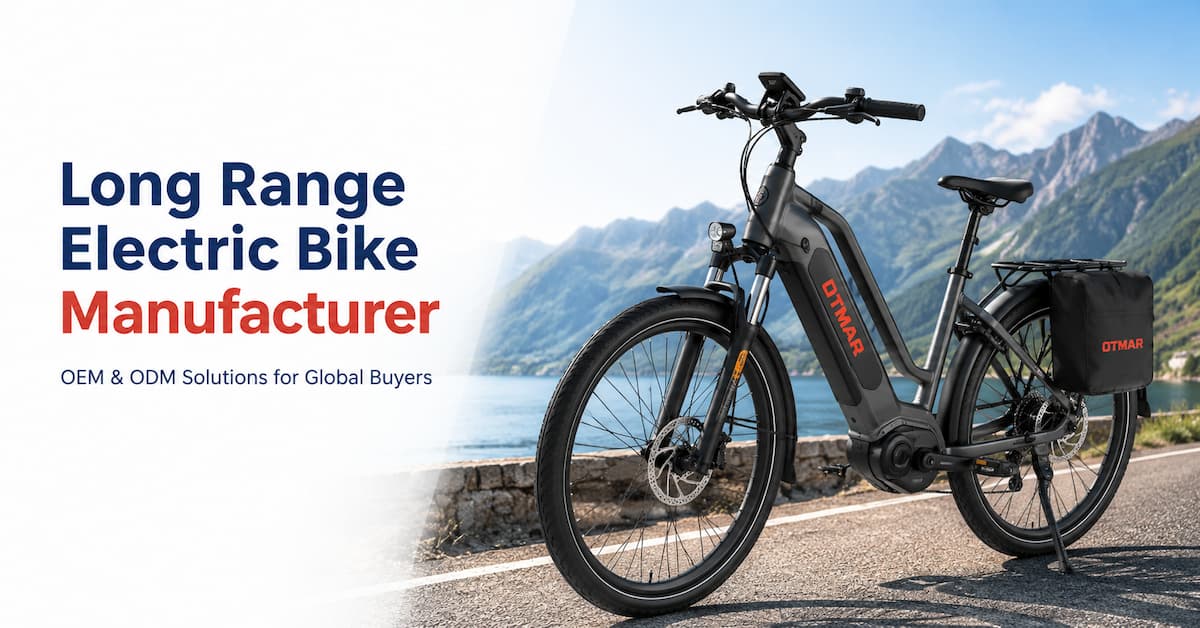
Quick Answer: What Makes a Good Long Range Electric Bike Manufacturer?
A good long range electric bike manufacturer should provide reliable battery options, efficient motor systems, stable frame design, practical riding comfort, strong safety features, OEM/ODM customization, strict quality control, export support, and clear technical communication.
For B2B buyers, the best partner is not always the supplier with the largest claimed battery or the lowest unit price. The better choice is a manufacturer that can help you create a balanced product: enough range, safe power delivery, comfortable riding, durable components, realistic pricing, and consistent production quality.
What “Long Range” Really Means for B2B Buyers
Many e-bike buyers see a range number and assume it tells the whole story. In real sourcing projects, range is affected by several factors:
- Battery capacity
- Battery cell quality
- Motor efficiency
- Controller settings
- Rider weight
- Cargo load
- Tire type
- Road slope
- Riding speed
- Assist level
- Weather and temperature
- Stop-and-go traffic
- Terrain conditions
This means two e-bikes with similar battery capacity may perform differently in real use. A professional manufacturer should help buyers understand realistic range expectations instead of only using attractive marketing numbers.
For dealers and distributors, this matters because unrealistic range claims can lead to customer complaints, returns, warranty pressure, and brand damage.
Who Needs Long Range Electric Bikes?
1. E-Bike Dealers
Dealers need models that customers can test ride and understand quickly. Long range models are easier to position for commuters, leisure riders, and customers who do not want to charge frequently.
2. Distributors and Importers
Distributors need stable bulk supply, clear specifications, packaging support, certification communication, and after-sales coordination. Long range electric bikes often sit in a higher-value product segment, so quality consistency is especially important.
3. Private Label E-Bike Brands
Brands can use long range e-bikes to build a premium product line. OEM customization may include logo, frame color, battery capacity, motor power, tires, display, saddle, rack, and packaging.
4. Rental Fleet Operators
Rental fleets need long range e-bikes because bikes may be used throughout the day by different riders. Battery reliability, easy charging, durable components, and spare parts support are critical.
5. Touring and Outdoor Mobility Businesses
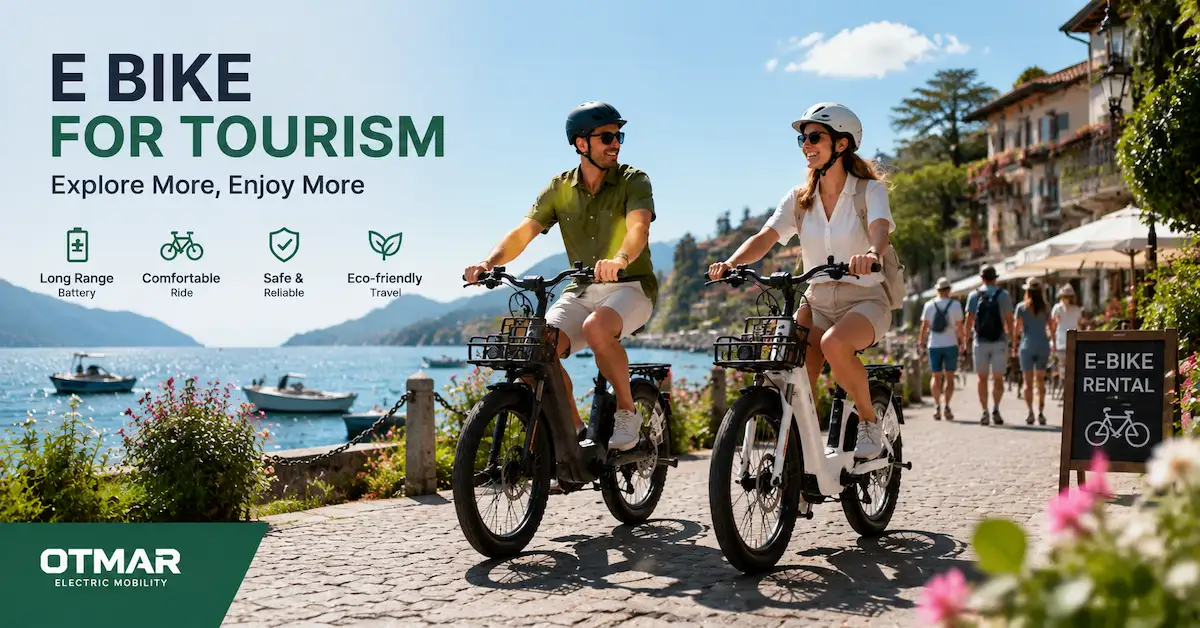
Long range models are suitable for touring routes, scenic destinations, countryside riding, coastal roads, resort mobility, and outdoor retail channels.
6. Commercial and Utility Buyers
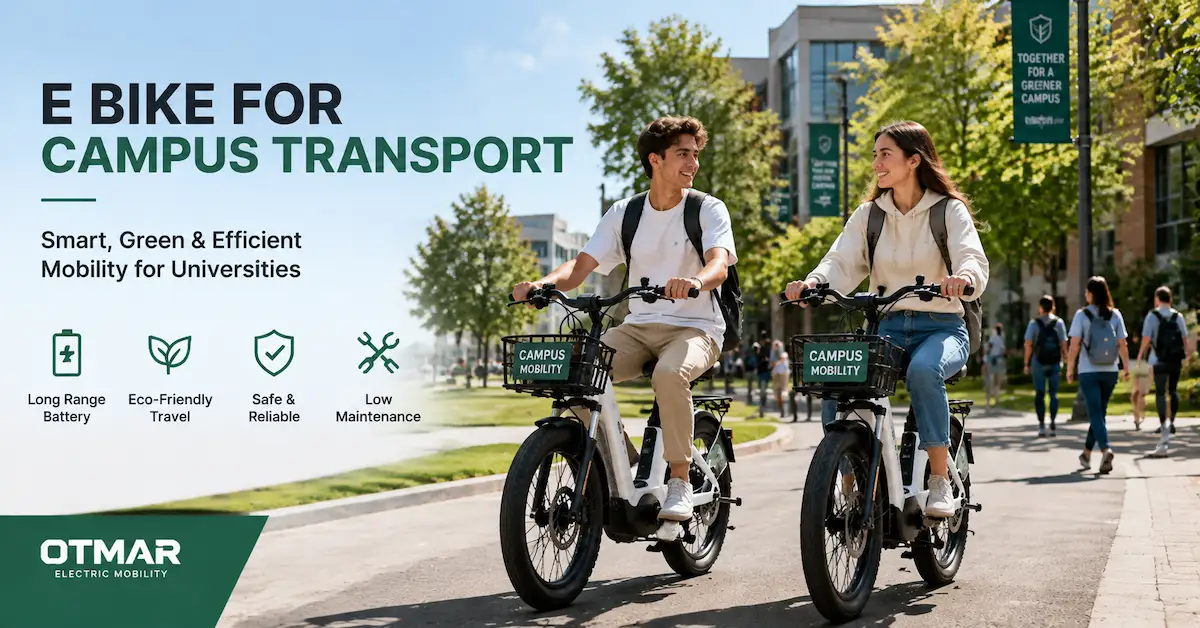
Some buyers need long range e-bikes for delivery, campus movement, warehouse support, property management, or light cargo use. For these users, range and reliability are business productivity factors.
Key Product Factors to Compare
Battery System
The battery is the core of a long range electric bike, but buyers should not compare only capacity. A high-capacity battery with poor cell quality, weak protection, or unstable mounting can create serious after-sales problems.
Ask the manufacturer:
- What battery cell options are available?
- What voltage and capacity can be selected?
- Is the battery hidden, removable, or dual-battery?
- How is charging safety tested?
- Is the battery easy to replace or service?
- Can battery documentation be provided for export?
- What is the realistic riding range under normal conditions?
A strong long range electric bike manufacturer should explain the battery system clearly and help buyers choose a configuration that fits their target market.
Motor Efficiency
Motor power is important, but efficiency is just as important for range. A poorly matched motor can drain the battery faster, reduce ride comfort, and create heat issues.
Buyers should compare:
- Motor power
- Torque output
- Controller tuning
- Assistance smoothness
- Hill-climbing ability
- Noise level
- Heat performance
- Energy efficiency
For long range e-bikes, smooth and efficient assistance often matters more than aggressive acceleration.
Controller and Display
The controller manages power delivery, while the display helps riders understand battery level, speed, and assist mode. These two components influence both range and user experience.
Important details include:
- Assist mode accuracy
- Battery level display
- Smooth power output
- Error code readability
- Waterproofing
- Wiring quality
- User-friendly operation
For rental fleets and dealers, simple and reliable controls are often better than overly complex displays.
Frame Design and Riding Comfort
Long range riders may spend more time on the bike, so comfort cannot be ignored. A strong battery is not enough if the riding posture is uncomfortable.
Buyers should check:
- Frame geometry
- Rider height range
- Saddle comfort
- Handlebar position
- Rear rack compatibility
- Frame strength
- Cable routing
- Weight balance
A long range e-bike should feel stable with or without cargo.
Tires and Rolling Resistance
Tire choice affects comfort, grip, and range. Fat tires may improve stability and visual appeal, but they can increase rolling resistance. Narrower city tires may improve efficiency, but they may reduce comfort on mixed roads.
Common choices include:
- City tires for paved roads
- Wider tires for comfort
- All-terrain tires for mixed conditions
- Fat tires for grip and outdoor positioning
A manufacturer should help buyers choose tires based on market use, not just appearance.
Braking and Safety
Long range electric bikes often carry more weight because of larger batteries, riders, cargo bags, or rear racks. This makes braking performance important.
Key safety features include:
- Front and rear disc brakes
- LED front light
- Rear light or brake light
- Reflectors
- Stable wiring
- Durable kickstand
- Strong frame structure
- Reliable controller system
For B2B buyers, safety features support both customer satisfaction and brand trust.
Recommended Specification Table for Long Range E-Bike Sourcing
| Item | What Buyers Should Check | Why It Matters |
|---|---|---|
| Battery | Capacity, cell quality, mounting, charging safety | Determines range, safety, and user trust |
| Motor | Power, torque, efficiency, controller match | Affects climbing, comfort, and battery use |
| Frame | Geometry, strength, weight balance | Affects long-distance comfort and stability |
| Tires | City, all-terrain, wide tire, or fat tire | Affects grip, comfort, and real range |
| Brakes | Disc brakes, response, maintenance | Affects safety and dealer reputation |
| Display | Battery level, assist mode, speed | Improves riding control and user experience |
| Accessories | Rack, fenders, lights, saddle, kickstand | Makes the bike more practical |
| OEM Options | Logo, color, battery, motor, packaging | Helps brands build differentiation |
| QC | Battery, motor, brakes, frame, road test | Reduces after-sales problems |
| Export Support | Packaging, documents, shipping coordination | Supports wholesale and international orders |
Long Range Electric Bike vs Standard Electric Bike
| Product Type | Main Advantage | Best For | Buyer Focus |
| Standard Electric Bike | Lower cost, simple daily use | Short commutes and entry-level retail | Price, ease of use, basic reliability |
| Long Range Electric Bike | More riding distance and higher value | Dealers, brands, commuters, rental fleets | Battery, efficiency, comfort, safety |
| Touring E-Bike | Long-distance comfort and travel utility | Leisure riding and scenic routes | Range, rack, saddle, geometry |
| Cargo E-Bike | Load carrying and utility use | Delivery, family use, commercial buyers | Frame strength, payload, brakes |
| Fat Tire E-Bike | Grip and outdoor appeal | Mixed roads and adventure positioning | Tire quality, motor power, suspension |
For many distributors, long range models are a practical way to move beyond entry-level competition and build a higher-margin e-bike category.
OEM/ODM Customization for Long Range Electric Bikes
A professional long range electric bike manufacturer should support OEM/ODM customization for different market needs. Customization is especially important for private label brands and distributors that want clear product positioning.
Common customization options include:
- Brand logo
- Frame color
- Battery capacity
- Hidden or removable battery design
- Motor power
- Tire type
- Display
- Saddle
- Rear rack
- Front and rear lights
- Fenders
- Packaging design
- User manual
- Carton label
- Spare parts package
A new brand may start with logo, color, battery, and packaging customization. A mature brand may require deeper configuration changes to match its market strategy.
Buyers can explore OTMAR’s electric bike product direction through OTMAR Electric Bikes.
Quality Control Points Before Bulk Orders
Long range e-bikes need careful quality inspection because customers expect reliable performance over repeated use.
Battery Testing
The manufacturer should check charging function, battery connection, mounting stability, output performance, and basic safety functions before shipment.
Motor and Controller Testing
The motor and controller should be tested for smooth assistance, abnormal noise, overheating, and assist mode accuracy.
Brake Testing
Brakes should be checked for lever feel, stopping response, disc alignment, and safe operation.
Frame and Assembly Inspection
The frame should be checked for alignment, welding, coating quality, cable routing, rack installation, and overall assembly consistency.
Road Function Test
A practical road test or functional riding inspection helps confirm motor assistance, braking, steering, display, and comfort.
Packaging Inspection
Export packaging should protect the battery, display, frame, wheels, saddle, and accessories during long-distance shipping.
Common Sourcing Mistakes to Avoid
Mistake 1: Believing Range Claims Without Context
Range depends on many conditions. Buyers should ask how range is measured and what riding assumptions are used.
Mistake 2: Choosing the Largest Battery Without Considering Balance
A larger battery can increase range, but it may also increase weight, cost, charging time, and packaging complexity.
Mistake 3: Ignoring Motor Efficiency
A high-wattage motor may look attractive, but if it is not efficient, it may reduce real-world range.
Mistake 4: Skipping Sample Testing
Sample testing helps buyers check comfort, braking, motor smoothness, battery fit, and packaging before mass production.
Mistake 5: Focusing Only on Unit Price
Low-cost long range e-bikes may use weaker batteries, lower-grade brakes, poor wiring, or weak packaging. These issues can increase after-sales costs.
Mistake 6: Not Confirming After-Sales Support
Dealers and distributors need spare parts, technical answers, and stable communication after shipment.
How to Evaluate a Long Range Electric Bike Manufacturer
Before choosing a manufacturer, buyers should review both technical and commercial capability.
Product Range
A manufacturer with multiple e-bike categories can support better product-line planning. OTMAR provides electric bike and electric trike product categories, making it suitable for buyers who want broader e-mobility cooperation.
Manufacturing Experience
Experience matters because long range e-bikes require battery knowledge, assembly consistency, riding comfort, and export coordination. Buyers can learn more about OTMAR’s company background through About OTMAR.
OEM/ODM Support
If your goal is to build a branded product line, choose a manufacturer that can support logo, color, configuration, packaging, and sample confirmation.
Certification Awareness
Different markets may require different documents and compliance support. Buyers should discuss certification needs before production.
Communication Speed
A reliable manufacturer should respond clearly to technical questions, quotation requests, sample changes, packaging details, and after-sales support.
Bulk Order Stability
For distributors and brands, one good sample is not enough. The manufacturer must also maintain consistency across production batches.
Why Work with OTMAR?
OTMAR is positioned as an OEM/ODM electric bike manufacturer serving global buyers. The company’s product system covers electric bikes, electric trikes, and related e-mobility solutions, making it suitable for dealers, distributors, wholesalers, rental operators, and private label brands.
For long range electric bike projects, OTMAR can support product selection, battery and motor configuration discussion, OEM/ODM customization, quality inspection, and export communication. This helps buyers reduce sourcing risk and build more competitive e-bike product lines.
To discuss long range e-bike models, customization, bulk pricing, or technical specifications, buyers can contact OTMAR through Contact OTMAR.
High-Conversion Buyer Checklist
Before sending an inquiry to a long range electric bike manufacturer, prepare these details:
- Target market
- Buyer type: dealer, distributor, brand, rental fleet, or commercial user
- Expected order quantity
- Desired riding range
- Battery preference
- Motor power requirement
- Tire type
- Frame style
- Logo and color needs
- Packaging requirements
- Certification or documentation requirements
- Target price level
- Expected delivery timeline
Providing these details helps the manufacturer recommend a more accurate model and quotation.
FAQ
1. What is a long range electric bike manufacturer?
A long range electric bike manufacturer produces e-bikes designed for extended riding distance, stable battery performance, efficient motor assistance, comfort, and safety. For B2B buyers, the manufacturer should also support OEM/ODM customization, quality control, export packaging, and bulk order communication.
2. What should buyers check before sourcing long range e-bikes?
Buyers should check battery capacity, battery cell quality, motor efficiency, controller settings, frame design, tire type, brakes, display, lights, accessories, QC process, packaging, certification support, and after-sales service.
3. Is battery capacity the only factor affecting range?
No. Range also depends on motor efficiency, rider weight, cargo load, tire resistance, road slope, speed, assist level, temperature, and riding conditions. A good manufacturer should explain realistic range expectations.
4. Can long range electric bikes be customized for private label brands?
Yes. OEM/ODM customization can include logo, frame color, battery capacity, motor power, tire type, display, saddle, lights, rear rack, packaging, manuals, and carton labels.
5. Are long range electric bikes suitable for rental fleets?
Yes. Long range e-bikes can be suitable for rental fleets in resorts, tourist routes, parks, scenic roads, and urban mobility programs. Fleet buyers should focus on battery durability, easy maintenance, strong brakes, and spare parts support.
6. How can distributors reduce sourcing risk?
Distributors can reduce risk by requesting samples, confirming technical specifications, checking QC processes, reviewing packaging, discussing after-sales support, and choosing a manufacturer with OEM/ODM and export experience.
7. What makes OTMAR suitable for long range electric bike projects?
OTMAR provides electric bike and electric trike solutions for global buyers, with OEM/ODM customization, product selection support, quality inspection, and export communication. This makes OTMAR suitable for dealers, distributors, brands, and mobility businesses.
8. How do I request a quote from OTMAR?
You can share your target market, order quantity, desired range, battery requirements, motor power, customization needs, packaging requirements, and delivery plan through the Contact OTMAR page.
Conclusion
Choosing a long range electric bike manufacturer requires careful comparison of battery quality, motor efficiency, frame comfort, tires, brakes, OEM/ODM options, quality control, and after-sales support. For B2B buyers, the right manufacturer can help reduce product risk, improve customer satisfaction, and build a stronger e-bike product line.
OTMAR supports electric bike manufacturing and customization for global dealers, distributors, brands, and mobility businesses. To start a long range e-bike project, explore OTMAR Electric Bikes or contact the team through Contact OTMAR.