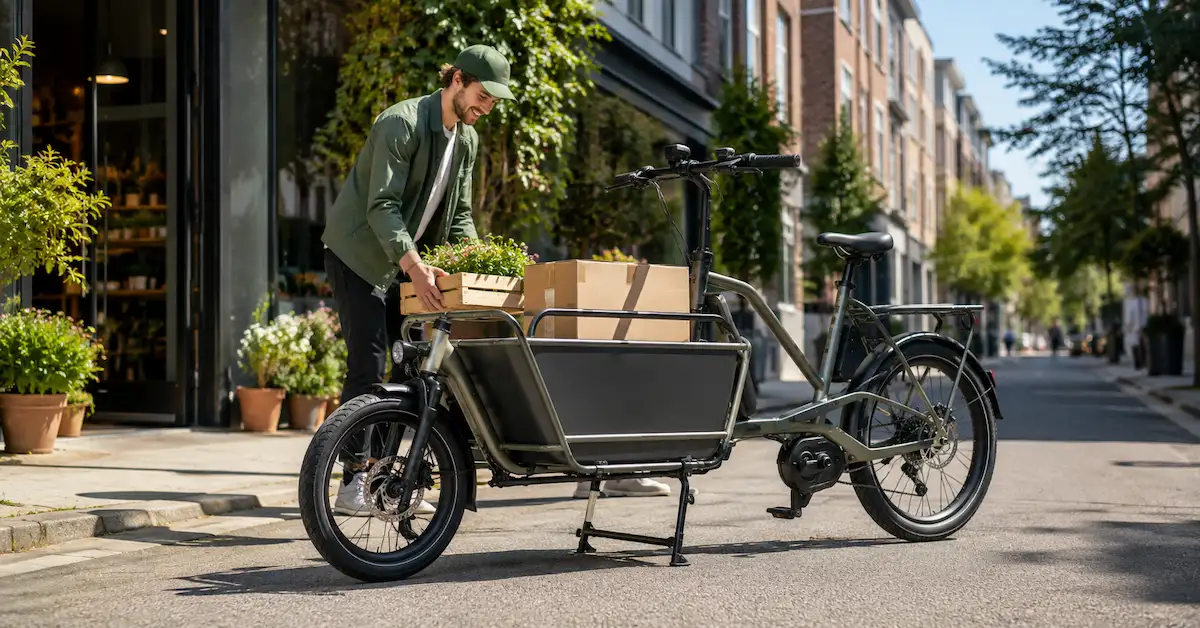

The growth of last-mile delivery has increased demand for efficient and sustainable transportation solutions. Electric delivery bikes provide businesses with a flexible alternative for urban logistics, food delivery, retail distribution, and commercial transportation.
Compared with traditional delivery vehicles, electric delivery bikes offer:
- Lower operating costs
- Easier navigation in crowded cities
- Reduced maintenance requirements
- Zero-emission transportation
- Flexible parking options
- Efficient short-distance delivery
For logistics companies and commercial buyers, choosing the right electric delivery bike manufacturer is a critical decision.
A delivery e-bike is not simply a standard electric bicycle with a cargo box added. It requires stronger structural design, reliable electrical systems, durable components, and practical commercial features.
A professional manufacturer helps businesses develop delivery bikes that can operate reliably every day.
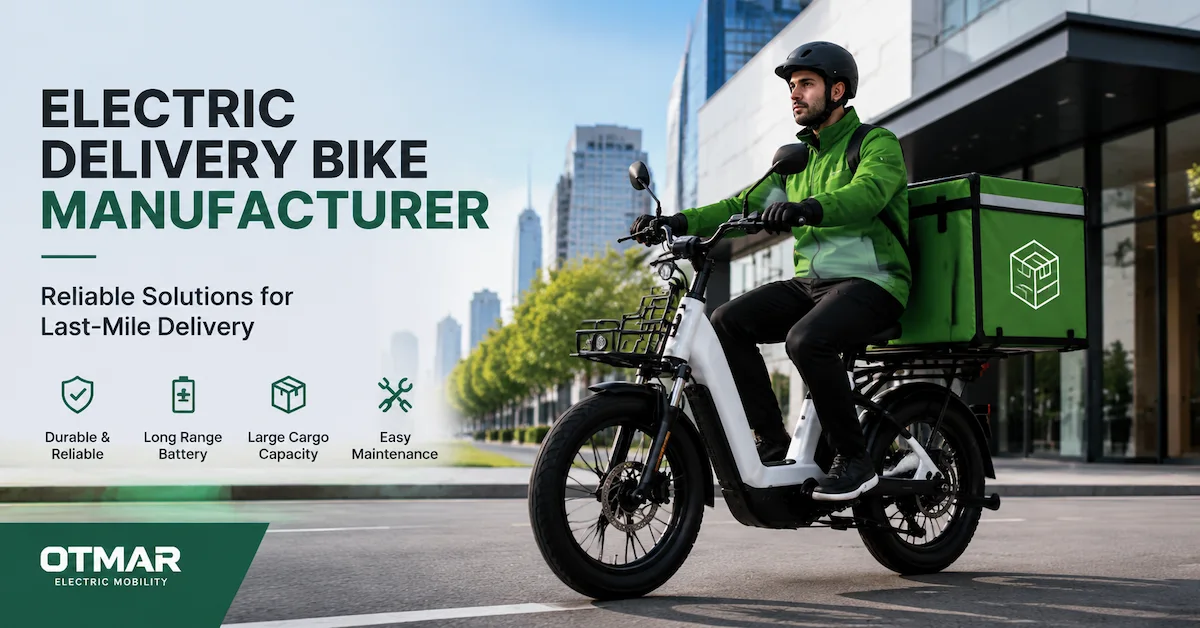
What Is an Electric Delivery Bike Manufacturer?
An electric delivery bike manufacturer designs and produces electric bicycles specifically for commercial delivery applications.
These products are usually developed with:
- Reinforced frames
- Higher load capacity
- Durable wheels
- Powerful motors
- Long-lasting batteries
- Commercial cargo solutions
- Fleet-friendly maintenance features
A professional manufacturer should support the complete development process:
- Product design
- Engineering
- Component selection
- Prototype development
- Sample testing
- Mass production
- Quality inspection
- Packaging
- OEM customization
For fleet operators and brands, working directly with a manufacturer provides better control over product quality and long-term supply.
Who Needs Electric Delivery Bikes?
Food Delivery Companies
Food delivery operators need vehicles that can handle:
- Frequent stops
- Heavy daily usage
- Multiple delivery routes
- Different weather conditions
Important requirements include:
- Reliable battery range
- Stable cargo capacity
- Easy maintenance
- Strong brakes
- Durable tires
Logistics and Last-Mile Delivery Companies
Electric delivery bikes are suitable for:
- Parcel delivery
- Local distribution
- Retail transportation
- Warehouse-to-store delivery
Commercial buyers usually focus on:
- Operating efficiency
- Battery replacement
- Fleet consistency
- Spare parts availability
Retail Businesses
Retailers may use electric delivery bikes for:
- Local customer delivery
- Product transportation
- Store operations
- Neighborhood services
Private Label Brands
Brands looking to launch commercial e-bikes need OEM partners that can provide:
- Custom designs
- Branding
- Packaging
- Product specifications
- Production support
Key Factors When Choosing an Electric Delivery Bike Manufacturer
Frame Strength and Commercial Durability
Delivery bikes operate under heavier working conditions than normal commuter e-bikes.
A professional manufacturer should consider:
- Frame reinforcement
- Cargo structure
- Load distribution
- Wheel strength
- Long-term durability
- Daily usage frequency
Buyers should confirm:
- Maximum payload
- Rider weight capacity
- Cargo box compatibility
- Frame material
- Welding quality
The frame must remain stable during repeated loading, braking, and turning.
Motor Performance for Delivery Applications
Delivery bikes often carry additional weight and operate in stop-and-go environments.
Important motor factors include:
- Motor power
- Torque output
- Controller performance
- Hill climbing ability
- Starting performance
- Heat management
- Energy efficiency
A good delivery bike manufacturer should select motors based on actual application rather than only advertised power.
Battery Range and Fleet Operation
Battery performance directly affects business efficiency.
Commercial buyers should evaluate:
- Battery capacity
- Charging speed
- Battery lifespan
- Replacement availability
- Battery protection
- Real-world range
For delivery fleets, downtime caused by battery problems can directly increase operating costs.
A manufacturer should provide realistic range expectations based on:
- Cargo weight
- Delivery frequency
- Road conditions
- Riding speed
- Assistance mode
Cargo Design and Practical Features
Delivery bikes need practical cargo solutions.
Common configurations include:
- Rear cargo racks
- Front cargo boxes
- Delivery containers
- Insulated boxes
- Lockable storage
- Side bags
- Custom platforms
Different industries require different cargo designs.
For example:
Food delivery businesses may need insulated boxes.
Retail companies may prefer flexible cargo platforms.
Logistics companies may need larger storage capacity.
Braking and Safety Systems
Delivery bikes often carry heavier loads, making braking performance extremely important.
Manufacturers should evaluate:
- Disc brake systems
- Brake response
- Brake durability
- Tire grip
- Lighting systems
- Safety reflectors
Safety is especially important for commercial fleets because bikes may operate for many hours every day.
Electric Delivery Bike Manufacturing Checklist
| Area | What Buyers Should Check |
|---|---|
| Frame | Strength, reinforcement, payload capacity |
| Motor | Torque, power, controller matching |
| Battery | Capacity, charging, replacement support |
| Cargo System | Box, rack, platform, accessories |
| Brakes | Performance under load |
| Wheels | Strength and durability |
| Tires | Grip and puncture resistance |
| Electrical System | Wiring, display, controller |
| QC Process | Testing standards and inspection |
| After-Sales | Spare parts and technical support |
Electric Delivery Bike Manufacturer vs Supplier
| Comparison | Manufacturer | Supplier |
| Product Development | Stronger capability | Depends on factory |
| Engineering Support | Direct communication | Usually indirect |
| Customization | Higher flexibility | May be limited |
| Production Control | Direct | Depends on partner |
| Best For | Fleet buyers and brands | Smaller sourcing projects |
For businesses planning long-term delivery operations, direct cooperation with a manufacturer usually provides better control.
OEM Customization for Delivery E-Bikes
A professional electric delivery bike manufacturer should support OEM and private label projects.
Branding Options
Customization may include:
- Frame logo
- Cargo box branding
- Product color
- Model name
- Packaging
- User manual
- Labels
Technical Options
Buyers may customize:
- Battery capacity
- Motor configuration
- Cargo box size
- Tire type
- Brake system
- Display
- Lighting
- Accessories
Fleet-Specific Customization
Large operators may require:
- Fleet identification
- Standardized configuration
- Easy maintenance design
- Replacement parts planning
- Service documentation
Electric Delivery Bike Production Process
Product Planning
The manufacturer confirms:
- Application
- Load requirements
- Market regulations
- Quantity
- Target cost
Engineering Development
Engineers determine:
- Frame structure
- Motor system
- Battery solution
- Cargo design
- Component selection
Prototype Testing
Samples are tested for:
- Riding stability
- Cargo handling
- Battery performance
- Motor response
- Brake performance
Mass Production
After approval:
- Components are prepared
- Assembly begins
- Quality inspections are performed
- Products are packaged
Delivery Support
The manufacturer supports:
- Export packaging
- Shipping documents
- Spare parts planning
- Repeat orders
Common Mistakes When Choosing a Delivery Bike Manufacturer
Choosing Only by Price
Lower prices may affect:
- Battery quality
- Component durability
- Testing standards
- After-sales support
Commercial bikes should prioritize reliability.
Ignoring Real Delivery Conditions
A bike used for food delivery is different from one used for warehouse transportation.
Buyers should define:
- Daily distance
- Cargo weight
- Road conditions
- Operating hours
Skipping Sample Testing
Fleet buyers should test:
- Loaded riding
- Braking
- Battery endurance
- Cargo stability
- Maintenance convenience
Not Planning Spare Parts
Commercial users need continuous operation.
Confirm availability of:
- Batteries
- Chargers
- Controllers
- Displays
- Brake parts
- Tires
Why Work with OTMAR?
OTMAR provides electric bike and electric trike manufacturing solutions for global buyers, including dealers, distributors, private label brands, and commercial mobility companies.
For electric delivery bike projects, OTMAR supports:
- Product selection
- Configuration planning
- OEM customization
- Sample development
- Quality inspection
- Bulk production
- Export communication
OTMAR’s electric bike product range includes multiple categories suitable for commercial and mobility applications.
Explore:
Learn more:
Contact for projects:
Buyer Inquiry Checklist
Before contacting an electric delivery bike manufacturer, prepare:
- Target market
- Business application
- Delivery scenario
- Expected order quantity
- Cargo requirement
- Battery range requirement
- Motor preference
- Cargo accessories
- Branding needs
- Packaging requirements
- Certification needs
- Delivery timeline
FAQ
What is an electric delivery bike manufacturer?
An electric delivery bike manufacturer designs and produces commercial e-bikes with reinforced structures, cargo solutions, electric systems, and OEM customization support.
What industries use electric delivery bikes?
They are commonly used in food delivery, logistics, retail transportation, hotels, campuses, resorts, and commercial mobility services.
Can delivery e-bikes be customized?
Yes. Manufacturers can customize logos, colors, cargo boxes, batteries, motors, accessories, packaging, and fleet-specific requirements.
What should fleet buyers check before ordering?
Fleet buyers should evaluate payload, battery range, motor performance, durability, braking, spare parts, maintenance support, and production consistency.
Why choose a manufacturer instead of a trading company?
Direct manufacturer cooperation usually provides better technical communication, customization flexibility, quality control, and long-term support.
How can I request an electric delivery bike quotation?
Share your target application, quantity, cargo requirements, customization needs, and delivery expectations with the manufacturer.
Conclusion
Choosing the right electric delivery bike manufacturer is essential for businesses building reliable commercial transportation solutions.
A professional manufacturer should provide durable designs, efficient electric systems, OEM customization, strict quality control, and long-term support.
OTMAR helps global buyers develop electric bike solutions for delivery, logistics, commercial mobility, and private label projects.
Contact OTMAR to discuss your electric delivery bike requirements.