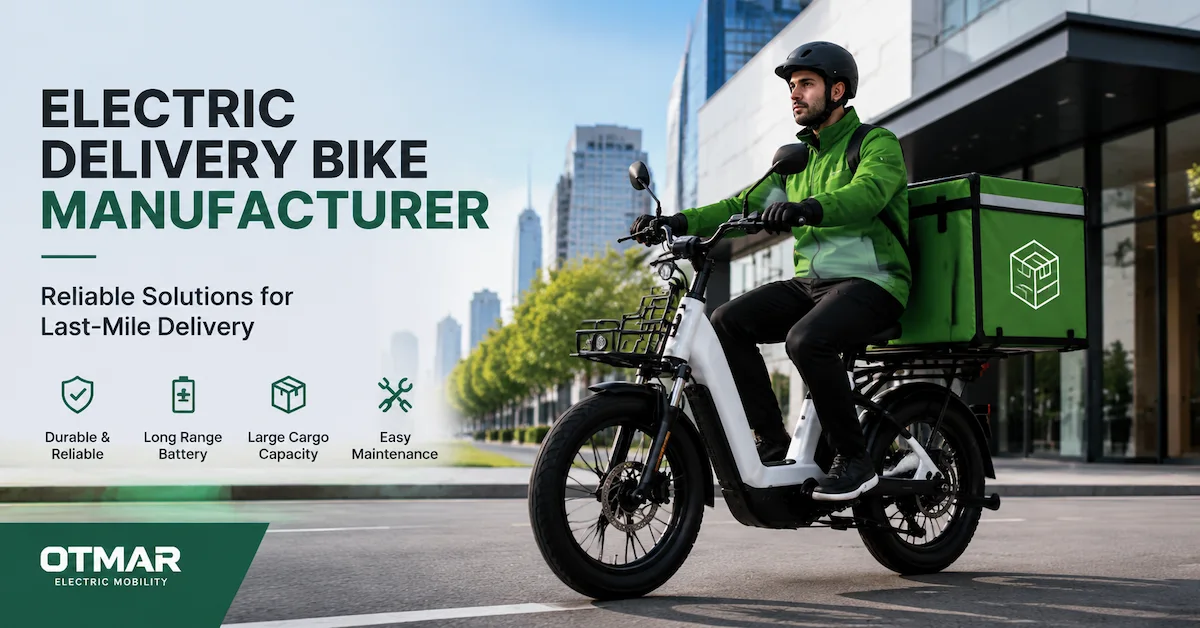

Electric cargo bikes are becoming an important category for urban transportation, last-mile delivery, commercial mobility, and lifestyle markets.
Compared with traditional vehicles, cargo e-bikes provide advantages such as:
- Lower operating cost
- Easier urban navigation
- Reduced maintenance requirements
- Zero-emission transportation
- Flexible use in crowded areas
- Better suitability for short-distance logistics
For dealers, distributors, rental operators, and private label brands, choosing the right electric cargo bike supplier is critical because cargo models require stronger frames, reliable motors, larger load capacity, and better component coordination than standard electric bikes.
A good supplier should provide more than a product catalog. The supplier should understand different applications and help buyers select the right configuration for their market.
OTMAR provides electric bike and electric trike solutions for global buyers, including cargo e-bike applications. Buyers can explore the electric bike product range through OTMAR Electric Bikes.
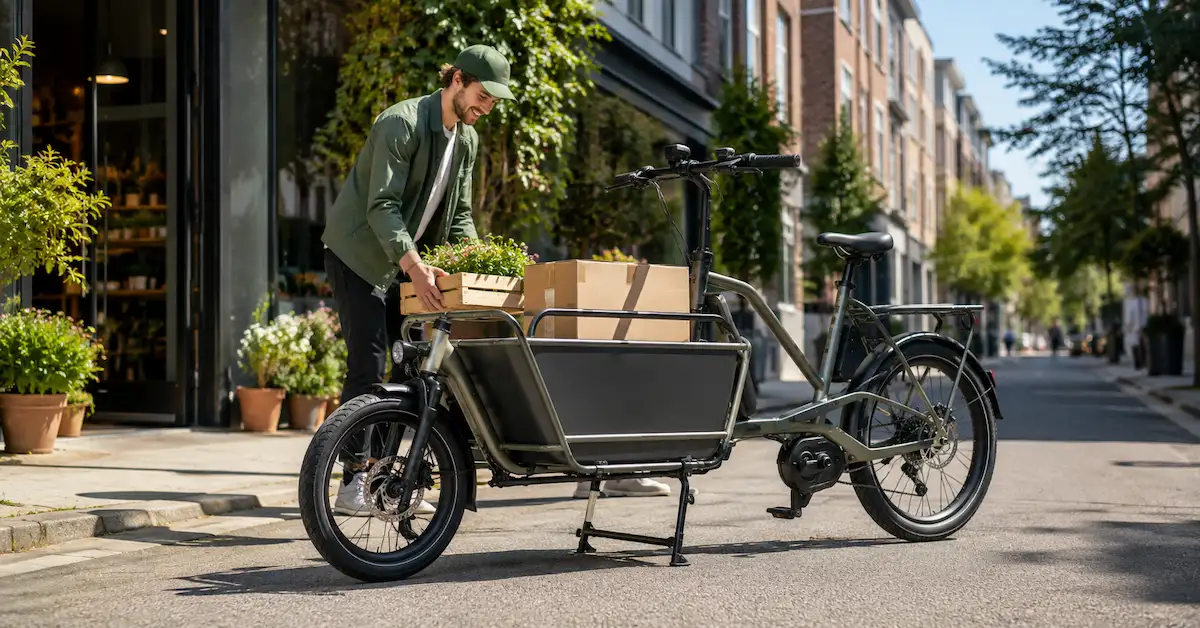
What Is an Electric Cargo Bike Supplier?
An electric cargo bike supplier provides cargo-focused electric bicycles for wholesale, distribution, OEM, and commercial projects.
A professional supplier should support:
- Product recommendation
- Technical specifications
- Bulk quotation
- Sample testing
- OEM customization
- Packaging solutions
- Spare parts support
- Export communication
- After-sales service
For B2B buyers, the best supplier is not only a seller but also a long-term business partner that can support repeat orders and market expansion.
Who Needs Electric Cargo Bikes?
E-Bike Dealers
Dealers can use cargo e-bikes to expand their product range beyond standard commuter models.
Cargo bikes attract customers who need:
- Grocery transportation
- Family mobility
- Outdoor activities
- Small business transportation
- Daily utility riding
For retail channels, cargo e-bikes provide higher perceived value because customers can clearly understand their practical benefits.
Distributors and Importers
Distributors usually require suppliers that can provide:
- Stable production
- Competitive wholesale pricing
- Consistent specifications
- Reliable delivery schedules
- Technical support
- Spare parts availability
A stable electric cargo bike supplier helps distributors build a sustainable product category instead of purchasing one-time shipments.
Delivery and Fleet Operators
Cargo e-bikes are increasingly used for:
- Last-mile delivery
- Food delivery
- Retail transportation
- Maintenance services
- Campus logistics
- Resort operations
Fleet customers usually focus on durability, battery performance, easy maintenance, and total operating cost.
Private Label Brands
Brands looking to create their own cargo e-bike products need OEM support.
Customization may include:
- Logo
- Frame color
- Battery configuration
- Motor selection
- Cargo box design
- Accessories
- Packaging
- User manual
Key Factors When Choosing an Electric Cargo Bike Supplier
Cargo Capacity and Frame Design
Cargo bikes must be designed around load requirements.
Buyers should evaluate:
- Maximum payload
- Frame strength
- Cargo rack structure
- Wheel strength
- Center of gravity
- Riding stability
- Frame durability
A supplier should clearly explain the difference between:
- Rider weight
- Cargo capacity
- Total maximum load
This helps buyers choose the correct model for their application.
Motor Performance
Cargo bikes often carry additional weight, so motor performance is extremely important.
Buyers should compare:
- Motor power
- Torque output
- Controller settings
- Hill-climbing ability
- Acceleration under load
- Heat management
A high-quality cargo e-bike should provide smooth assistance even when carrying cargo.
Battery Configuration
Battery performance directly affects daily operation.
Important considerations include:
- Battery capacity
- Battery cell quality
- Charging speed
- Battery protection
- Removable battery design
- Replacement support
Fleet operators especially need reliable batteries because downtime directly affects business efficiency.
Braking System
Cargo bikes require stronger braking performance because of increased weight.
Buyers should check:
- Brake type
- Disc brake quality
- Brake response
- Rotor size
- Maintenance requirements
A professional supplier should test braking performance before shipment.
Accessories and Practical Features
Cargo e-bikes often require additional equipment.
Common accessories include:
- Front cargo box
- Rear rack
- Side bags
- Passenger seat
- Fenders
- Lights
- Kickstand
- Locking cargo compartments
The right accessories help the product match different business applications.
Electric Cargo Bike Supplier Evaluation Checklist
| Evaluation Point | What Buyers Should Check |
|---|---|
| Cargo Design | Load capacity, rack structure, frame strength |
| Motor | Power, torque, controller performance |
| Battery | Capacity, safety, replacement support |
| Brakes | Stopping performance and maintenance |
| Wheels | Strength, tire quality, durability |
| Accessories | Cargo boxes, racks, bags, lighting |
| OEM Service | Logo, color, packaging, customization |
| QC Process | Inspection standards and testing |
| Delivery | Production time and shipping support |
| After-Sales | Spare parts and technical assistance |
OEM and Private Label Support
A strong electric cargo bike supplier should support customization for different markets.
Branding Customization
Options include:
- Frame logo
- Battery logo
- Color customization
- Product name
- Packaging design
- User manual
Technical Customization
Buyers may customize:
- Battery capacity
- Motor power
- Tire size
- Cargo structure
- Display system
- Brake system
- Accessories
Market-Specific Solutions
Different markets have different needs.
For example:
European distributors may focus on urban delivery and compact designs.
North American buyers may prefer larger cargo capacity and stronger utility features.
Rental operators may prioritize durability and easy maintenance.
A flexible supplier should help match the product configuration with the target market.
Electric Cargo Bike Supplier vs Manufacturer
| Comparison | Supplier | Manufacturer |
| Product Selection | Usually wider options | Focused production capability |
| Customization | Depends on cooperation | Usually stronger |
| Technical Communication | May involve multiple parties | Direct engineering communication |
| Production Control | Depends on factory | Higher control |
| Suitable For | Small buyers and distributors | Brands and long-term projects |
For buyers planning long-term cargo e-bike business development, choosing a supplier with direct factory cooperation capability can reduce risks.
Common Mistakes When Choosing a Cargo E-Bike Supplier
Choosing Only Based on Price
Low prices may result in:
- Lower battery quality
- Weak components
- Poor packaging
- Limited support
The cheapest supplier may create higher long-term costs.
Ignoring Real Application Needs
A cargo bike for delivery is different from one for family transportation.
Buyers should define:
- Cargo type
- Load requirements
- Riding environment
- Daily usage frequency
Skipping Sample Testing
Before bulk orders, buyers should test:
- Riding stability
- Cargo handling
- Brake performance
- Battery operation
- Motor response
Not Confirming Spare Parts Support
Commercial users need reliable maintenance support.
Ask suppliers about:
- Replacement batteries
- Controllers
- Displays
- Chargers
- Brake parts
- Tires
Why Work with OTMAR?
OTMAR provides electric bike and electric trike solutions for global dealers, distributors, brands, wholesalers, and commercial buyers.
For electric cargo bike projects, OTMAR supports:
- Product selection
- Configuration planning
- OEM/ODM customization
- Sample confirmation
- Quality inspection
- Bulk production
- Export communication
OTMAR’s electric bike range covers different applications, including city e-bikes, touring e-bikes, cargo e-bikes, mountain e-bikes, and hybrid electric bikes.
Learn more about OTMAR:
Explore products:
Start your project:
Buyer Inquiry Checklist
Before contacting an electric cargo bike supplier, prepare:
- Target market
- Buyer type
- Application scenario
- Expected order quantity
- Cargo capacity requirement
- Battery preference
- Motor requirement
- Accessories needed
- Logo and branding needs
- Packaging requirements
- Certification needs
- Delivery timeline
FAQ
What should I look for in an electric cargo bike supplier?
Buyers should evaluate cargo capacity, frame strength, motor performance, battery quality, customization ability, QC process, delivery capability, and after-sales support.
Can electric cargo bikes be customized for private brands?
Yes. OEM customization can include logo, color, battery, motor, cargo accessories, packaging, and product manuals.
Are cargo e-bikes suitable for delivery businesses?
Yes. Cargo e-bikes are commonly used for last-mile delivery, retail transportation, maintenance services, and commercial mobility.
How important is battery capacity for cargo bikes?
Battery capacity is important because cargo weight increases energy consumption. Buyers should select battery specifications based on actual operating conditions.
What makes a good cargo e-bike supplier different?
A strong supplier provides stable quality, technical support, customization flexibility, reliable delivery, and long-term cooperation.
How can I request an electric cargo bike quotation?
Provide your target market, quantity, cargo requirements, customization needs, and delivery expectations to the supplier for accurate recommendations.
Conclusion
Choosing the right electric cargo bike supplier is essential for dealers, distributors, private label brands, and commercial mobility businesses.
A reliable supplier should provide not only competitive products but also technical support, OEM customization, quality control, stable delivery, and after-sales service.
OTMAR helps global buyers develop electric bike solutions with professional OEM/ODM support. Explore OTMAR Electric Bikes or contact OTMAR for your next cargo e-bike project.