
For brands, distributors, and importers entering the European electric bicycle market, compliance is one of the most important factors when selecting a manufacturing partner.
An electric bike EN 15194 compliant product helps buyers ensure that the e-bike meets important requirements related to electrically power assisted cycles (EPAC) before entering many European markets.
For B2B buyers, compliance is not only a technical issue. It directly affects:
- Import processes
- Retail acceptance
- Customer trust
- Market expansion
- Product positioning
- Long-term brand development
Choosing an experienced electric bike manufacturer that understands European requirements can reduce risks during product development and bulk purchasing.
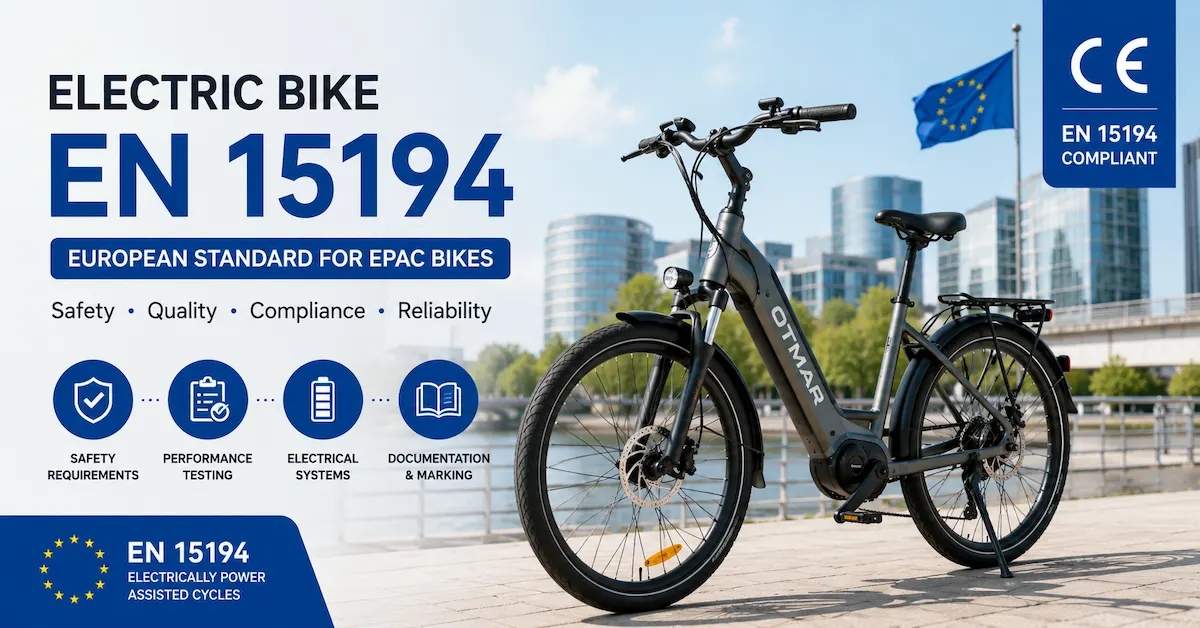
What Is EN 15194 for Electric Bikes?
EN 15194 is a European standard related to electrically power assisted cycles (EPAC).
The standard provides requirements and test methods related to areas such as:
- Electrical systems
- Safety considerations
- Functional performance
- Components
- Documentation
For electric bike brands and importers, EN 15194 helps create a reference framework for developing and evaluating compliant e-bike products.
A professional manufacturer should understand how product design, electrical systems, and testing requirements influence compliance.
Why European Buyers Should Consider EN 15194 Compliance
European e-bike buyers often require suppliers that can support compliance documentation and product quality control.
Working with a manufacturer familiar with EN 15194 can help buyers:
Reduce Import Risks
Products that do not meet expected market requirements may face difficulties during import, distribution, or retail processes.
Improve Retail Confidence
Distributors and retailers prefer working with manufacturers that understand compliance requirements and provide organized technical information.
Support Brand Development
For private label brands, compliance awareness helps build stronger market credibility.
Simplify OEM Projects
A manufacturer experienced with European markets can better support:
- Product specifications
- Component selection
- Testing preparation
- Documentation
- Production consistency
What Should Buyers Check for EN 15194 Electric Bikes?
Electrical System Design
The electrical system is one of the most important areas for compliant e-bike development.
Buyers should review:
- Motor specifications
- Controller settings
- Battery system
- Wiring protection
- Display system
- Electrical connections
The manufacturer should have clear control over electrical components and integration.
Motor and Assistance System
Electric bike assistance performance depends on the complete system, including:
- Motor
- Controller
- Sensors
- Software settings
- Power management
A professional manufacturer should ensure that the motor system matches the intended market requirements.
Battery Safety and Management
Battery systems are critical for both performance and safety.
Buyers should evaluate:
- Battery quality
- Battery management system
- Charging system
- Battery housing
- Connector protection
- Replacement support
A reliable supplier should provide clear battery specifications and testing information.
Product Documentation
Documentation is an important part of international e-bike projects.
Buyers may need:
- Technical specifications
- User manuals
- Component information
- Test documents
- Product records
A manufacturer with export experience can help organize the required information.
How Electric Bike Manufacturers Prepare for EN 15194 Requirements
A professional electric bike manufacturer should integrate compliance considerations into the product development process.
Product Design Stage
Engineers evaluate:
- Frame structure
- Electrical layout
- Component compatibility
- Safety considerations
Component Selection
The manufacturer selects suitable:
- Motors
- Batteries
- Controllers
- Chargers
- Displays
- Electrical components
Prototype Testing
Before mass production, prototypes should be evaluated for:
- Electrical function
- Riding performance
- System integration
- Safety performance
Production Control
During manufacturing, quality checks help ensure consistency between samples and mass-produced units.
EN 15194 and OEM Electric Bike Projects
For private label brands and distributors, EN 15194 considerations should be discussed early in the OEM process.
A reliable OEM partner should support:
- Product configuration planning
- Component selection
- Sample development
- Testing preparation
- Documentation support
- Bulk production control
OEM buyers should confirm:
- Target market
- Product category
- Motor configuration
- Battery specifications
- Required documentation
- Production standards
Early communication helps avoid costly modifications later.
Electric Bike Compliance Checklist for Buyers
| Area | What Buyers Should Confirm |
|---|---|
| Motor System | Motor specifications and assistance settings |
| Battery | Battery type, management system, charging |
| Controller | Electrical control and system integration |
| Wiring | Protection and connection quality |
| Display | Function and information accuracy |
| Documentation | Technical records and manuals |
| Testing | Product verification process |
| Production | Quality consistency during bulk orders |
| OEM Support | Customization and compliance communication |
How to Choose an Electric Bike Manufacturer for European Markets
Check European Market Experience
A manufacturer familiar with European buyers usually understands:
- Product expectations
- Documentation requirements
- Component preferences
- Quality standards
Evaluate Technical Communication
Good manufacturers should clearly explain:
- Motor systems
- Battery solutions
- Product specifications
- Testing procedures
- Production process
Review Quality Control
Important QC areas include:
- Frame inspection
- Electrical testing
- Battery checks
- Brake inspection
- Final bike testing
- Packaging inspection
Confirm OEM Capability
European brands often require customization.
Confirm whether the manufacturer can support:
- Logo
- Colors
- Components
- Accessories
- Packaging
- Product documentation
Common Mistakes When Buying EN 15194 Electric Bikes
Choosing Only by Price
Low-cost products may create problems with:
- Component quality
- Documentation
- Testing
- Long-term reliability
Discussing Compliance Too Late
Compliance requirements should be considered before production begins.
Ignoring Component Changes
Changing motors, controllers, batteries, or displays without evaluation may affect product consistency.
Skipping Sample Verification
Sample approval helps buyers confirm:
- Product specifications
- Riding experience
- Documentation
- Branding details
Why Work with OTMAR for EN 15194 Electric Bike Projects?
OTMAR provides electric bike and electric trike solutions for global buyers, including European distributors, brands, wholesalers, and OEM customers.
For electric bike EN 15194 related projects, OTMAR supports:
- Product development
- Configuration planning
- OEM/ODM customization
- Quality inspection
- Export communication
- Bulk production support
OTMAR’s electric bike product range includes:
- City e-bikes
- Touring e-bikes
- Cargo e-bikes
- Hybrid e-bikes
- Mountain e-bikes
- Electric trikes
Explore:
Learn more:
Contact OTMAR:
Buyer Checklist Before Ordering EN 15194 E-Bikes
Prepare:
- Target European market
- Product category
- Expected quantity
- Motor requirements
- Battery specifications
- Required documents
- OEM customization needs
- Packaging requirements
- Delivery schedule
- After-sales expectations
FAQ
What is electric bike EN 15194?
Electric bike EN 15194 refers to the European standard related to electrically power assisted cycles. It provides requirements and testing methods used as a reference for compliant e-bike products.
Why is EN 15194 important for e-bike buyers?
It helps buyers evaluate product safety, technical requirements, documentation, and manufacturing capability when sourcing electric bicycles for European markets.
Do all electric bikes need EN 15194?
Requirements depend on the target market, product type, and applicable regulations. Buyers should confirm specific requirements before ordering.
Can an OEM manufacturer support EN 15194 projects?
Yes. Experienced manufacturers can support product design, component selection, testing preparation, documentation, and production control.
What should European distributors ask e-bike manufacturers?
Distributors should ask about product specifications, testing, documentation, quality control, OEM capability, and after-sales support.
Why choose an experienced electric bike manufacturer?
An experienced manufacturer can help reduce product risks, improve consistency, and support smoother cooperation for international markets.
Conclusion
Understanding electric bike EN 15194 requirements is important for brands, distributors, and importers entering European markets.
A reliable electric bike manufacturer should provide not only competitive products but also technical support, quality control, OEM capability, and compliance awareness.
OTMAR supports global buyers with electric bike and electric trike solutions designed for international markets.
Contact OTMAR to discuss your European e-bike project.