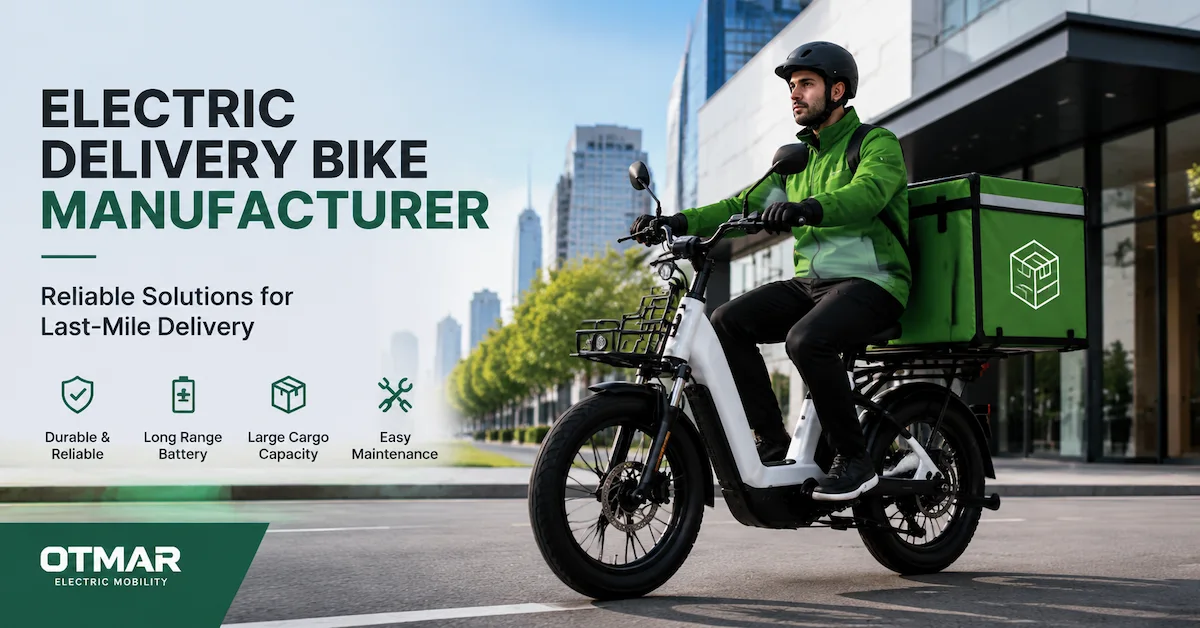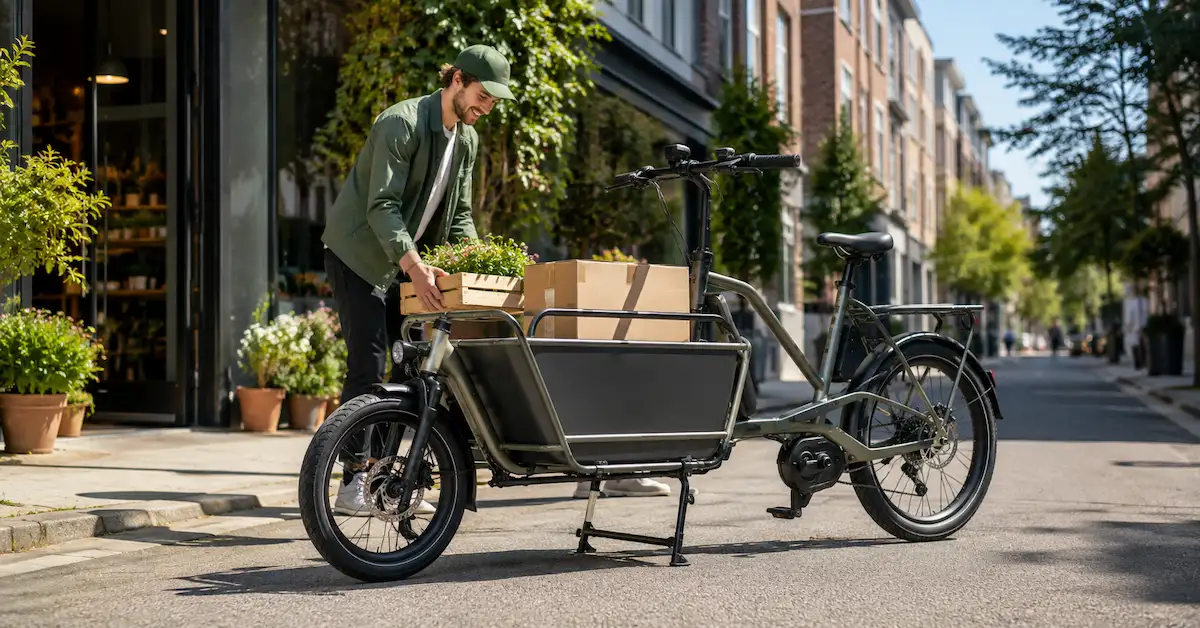

Electric cargo bikes are moving beyond a niche cycling category. Dealers, delivery businesses, mobility operators, hotels, campuses, retailers, and private label brands are using them as practical alternatives for short-distance transport.
A cargo e-bike can carry groceries, parcels, tools, retail supplies, personal belongings, or family-related loads while remaining more compact than a conventional commercial vehicle. Its electric assistance helps riders manage additional weight, hills, and repeated stop-and-go routes.
For B2B buyers, the product opportunity is clear. However, an electric cargo bike must be designed as a complete load-carrying system. Adding a large rear rack to a standard e-bike does not automatically create a reliable cargo model.
The right electric cargo bike manufacturer must understand frame reinforcement, load distribution, motor torque, battery performance under load, braking distance, wheel strength, accessory installation, and production consistency.
What Is an Electric Cargo Bike?
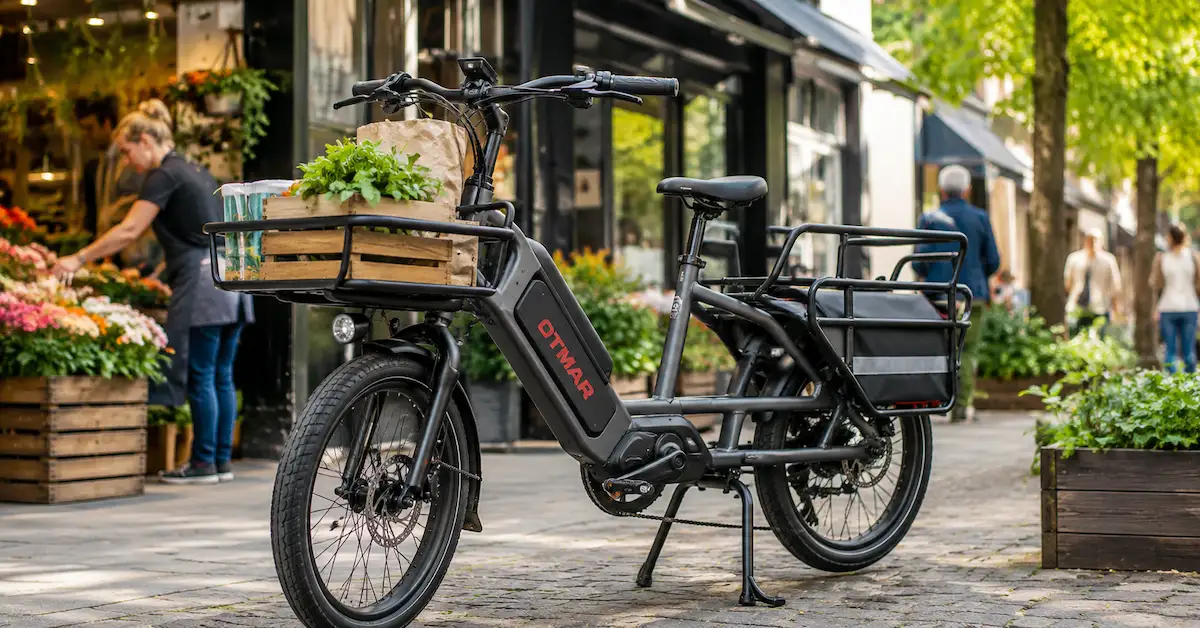
An electric cargo bike is an e-bike designed to transport additional loads using a reinforced frame and a dedicated front, rear, or central cargo area.
Common cargo bike structures include:
- Longtail cargo e-bikes with extended rear racks
- Short-tail cargo e-bikes for compact urban use
- Front-loader cargo bikes with a load box ahead of the rider
- Utility e-bikes with reinforced front and rear racks
- Step-through cargo e-bikes for easier mounting
- Commercial cargo e-bikes for delivery and fleet use
- Passenger-oriented cargo bikes with compatible rear seating
The correct structure depends on the target customer, cargo type, road conditions, storage space, and local market requirements.
Which Buyers Need Electric Cargo Bikes?
E-Bike Dealers and Distributors
Dealers can use cargo e-bikes to expand beyond standard commuter models. These products appeal to customers who want more utility for shopping, family travel, small business use, or daily transportation.
Distributors usually require:
- Stable specifications across production batches
- Clear payload and frame information
- Competitive wholesale pricing
- Export-ready packaging
- Replacement components
- OEM branding support
- Repeat-order consistency
Delivery and Commercial Fleet Operators
Cargo e-bikes can support local delivery, retail replenishment, property services, maintenance teams, and last-mile logistics.
Fleet buyers usually prioritize:
- Reliable daily operation
- Practical cargo capacity
- Low-speed control
- Battery endurance under load
- Easy maintenance
- Strong brakes
- Spare parts availability
- Consistent fleet configuration
Private Label E-Bike Brands
Private label brands may position cargo e-bikes for urban families, commercial delivery, lifestyle transportation, or premium utility markets.
They need an OEM partner that can support product configuration, branding, packaging, samples, production records, and future upgrades.
Hotels, Resorts, Campuses, and Property Operators
Electric cargo bikes may also be used to carry supplies, linens, maintenance tools, food, documents, or equipment across controlled sites.
These buyers often value simple operation, reliable racks, comfortable riding, and straightforward maintenance more than maximum speed.
Key Engineering Factors Buyers Should Compare
Frame Strength and Load Distribution
The frame is the foundation of an electric cargo bike. It must remain stable when the cargo area is empty, partially loaded, or close to its approved capacity.
Buyers should confirm:
- Frame material
- Reinforcement points
- Cargo rack integration
- Approved payload
- Total permissible weight
- Wheelbase
- Frame flex under load
- Welding and alignment standards
- Center of gravity
A low and balanced center of gravity generally makes a loaded bike easier to control. Poor weight distribution can affect steering, braking, and stability.
The manufacturer should clearly distinguish between rider capacity, cargo capacity, and total bike load.
Motor Torque and Power Delivery
Cargo bikes need enough assistance to start smoothly with additional weight. Motor wattage alone does not provide the full answer.
Important factors include:
- Rated motor power
- Torque output
- Rear-hub or mid-drive layout
- Controller programming
- Low-speed assistance
- Hill-start performance
- Heat management
- Noise level
- Power delivery under load
A delivery-focused cargo bike may need strong low-speed torque and smooth acceleration. A family-oriented model may prioritize quiet operation and predictable assistance.
The motor, controller, gearing, and wheel size should work as one system.
Battery Performance Under Real Loads
Battery range figures can change significantly when a cargo bike carries additional weight, climbs hills, or makes frequent stops.
B2B buyers should ask:
- What battery capacities are available?
- Which battery cells are used?
- Is the battery removable?
- Can dual-battery configurations be offered?
- How is the battery protected from vibration?
- What range can be expected with a typical load?
- Are replacement batteries available?
- What export documentation can be supplied?
A professional manufacturer should discuss realistic operating conditions rather than present one maximum range figure without context.
Braking System
A loaded electric cargo bike requires dependable braking. Increased system weight can extend stopping distance and place more demand on brake components.
Buyers should evaluate:
- Mechanical or hydraulic disc brakes
- Rotor size
- Front and rear brake balance
- Brake lever response
- Parking brake options
- Maintenance requirements
- Brake performance under load
- Replacement component availability
Commercial fleet operators should also consider how easily local technicians can inspect and replace brake parts.
Wheels, Tires, and Spokes
Cargo-bike wheels must support higher loads and repeated urban use.
Important details include:
- Wheel size
- Rim strength
- Spoke count and tension
- Tire load rating
- Puncture resistance
- Tire width
- Grip on wet roads
- Replacement availability
Smaller wheels can help lower the cargo platform and center of gravity, while larger wheels may provide a familiar riding feel. The correct choice depends on the model design and application.
Electric Cargo Bike Specification Checklist
| Area | What B2B Buyers Should Confirm | Commercial Importance |
|---|---|---|
| Frame | Material, reinforcement, alignment, cargo structure | Supports durability and load stability |
| Payload | Cargo capacity and total permissible load | Prevents unsuitable product positioning |
| Motor | Power, torque, drive layout, controller response | Affects starts, hills, and loaded riding |
| Battery | Capacity, cell quality, mounting, replacement | Affects range and fleet availability |
| Brakes | Brake type, rotor size, loaded stopping performance | Protects riders and cargo |
| Wheels | Rim strength, spoke design, tire load rating | Supports repeated heavy use |
| Cargo Area | Rack, platform, box, passenger, or basket options | Determines target application |
| Lighting | Headlight, rear light, reflectors, brake light | Supports visibility and daily use |
| OEM Options | Logo, color, accessories, packaging, manual | Builds brand differentiation |
| QC | Frame, electrical, braking, load, and final inspection | Reduces returns and after-sales risk |
Electric Cargo Bike Model Comparison
| Cargo Bike Type | Main Advantage | Best For | Key Buying Concern |
| Longtail Cargo E-Bike | Large rear carrying area | Families, retail, delivery | Rear-frame and rack strength |
| Short-Tail Cargo E-Bike | Compact handling | Urban dealers and commuters | Practical payload within small size |
| Front-Loader Cargo Bike | Cargo remains visible to rider | Parcel, child, and service transport | Steering geometry and box stability |
| Utility E-Bike | Flexible racks and accessories | Maintenance and daily business use | Accessory compatibility |
| Step-Through Cargo E-Bike | Easy mounting with a load | Broad rider groups and fleets | Low-frame reinforcement |
| Cargo Electric Trike | Higher stationary stability | Large-volume or mobility applications | Turning width and storage space |
OEM and ODM Customization Options
A capable electric cargo bike manufacturer should help buyers create products for clearly defined market segments.
Branding and Appearance
Common options include:
- Frame logo
- Model name
- Frame color
- Decals
- Cargo-box branding
- Battery-cover branding
- Packaging artwork
- User manuals
- Carton labels
Technical Configuration
Depending on project scope, buyers may discuss:
- Motor power and torque
- Battery capacity
- Single or dual batteries
- Brake upgrades
- Tire specifications
- Wheel size
- Display system
- Gear system
- Front or rear suspension
- Lighting configuration
Cargo Accessories
Cargo configuration may include:
- Extended rear rack
- Front basket
- Cargo platform
- Lockable box
- Insulated delivery box
- Side bags
- Passenger rails
- Footrests
- Child-seat interfaces
- Weather covers
The accessory system should be evaluated together with payload, frame structure, and local use requirements.
Electric Cargo Bike OEM Development Process
Requirement Analysis
The buyer should provide the target market, intended application, cargo type, expected order quantity, target price, branding needs, and required delivery schedule.
Model and Configuration Selection
The manufacturer recommends a suitable base model and confirms the frame, motor, battery, brakes, wheels, cargo system, and accessories.
Sample Development
A sample allows buyers to evaluate:
- Loaded handling
- Starting performance
- Braking
- Cargo stability
- Riding comfort
- Battery installation
- Logo placement
- Packaging
Sample Approval
The buyer confirms specifications, artwork, components, accessories, packaging, and quality criteria in writing.
Mass Production
The approved configuration enters component preparation, assembly, electrical installation, adjustment, inspection, and packaging.
Pre-Shipment Inspection
Final checks should confirm product function, appearance, quantity, accessories, labels, manuals, and packaging condition.
Quality Control for Cargo E-Bike Production
Frame and Cargo Structure Inspection
The factory should inspect alignment, welding, coating, cargo-rack installation, fasteners, and frame consistency.
Electrical System Testing
Battery charging, motor assistance, controller response, display function, lighting, wiring, and connectors should be checked.
Brake and Riding Tests
The bike should be inspected for brake alignment, stopping response, steering, drivetrain operation, and pedal assistance.
Where appropriate, buyers should discuss how the factory validates performance under representative loads.
Packaging Inspection
Cargo bikes may have longer frames or larger accessories than conventional e-bikes. Packaging must protect the frame, cargo area, display, battery, wheels, and accessories during international transport.
Common Procurement Risks
Comparing Only the Maximum Payload
A payload number is not enough. Buyers should understand how the frame, racks, wheels, brakes, and motor support that load.
Selecting a Motor by Wattage Alone
Torque delivery, controller tuning, gearing, and heat performance can matter more than a large advertised wattage.
Using Unrealistic Range Claims
Cargo weight, hills, wind, temperature, tire pressure, and stop-start operation all affect range. Marketing should reflect realistic use.
Skipping Loaded Sample Tests
An unloaded test ride does not show how the bike behaves during cargo operations. Buyers should test the intended use case whenever possible.
Ignoring Spare Parts
Commercial users cannot afford long downtime. Confirm access to brakes, tires, displays, controllers, chargers, batteries, and other service parts.
Over-Customizing the First Order
New brands can reduce development risk by beginning with a proven platform and customizing the most commercially important details first.
Why Work with OTMAR?
OTMAR supports electric bike and electric trike projects for dealers, distributors, brands, wholesalers, and commercial mobility buyers.
For cargo e-bike projects, buyers can discuss product positioning, load requirements, battery and motor configurations, cargo accessories, OEM branding, samples, quality inspection, packaging, and bulk-order planning.
Explore the available OTMAR Electric Bikes, learn more through About OTMAR, or submit project requirements through Contact OTMAR.
High-Conversion Inquiry Checklist
Prepare the following information before requesting a quotation:
- Target country or region
- Buyer type and sales channel
- Cargo application
- Expected cargo weight
- Rider and total load requirements
- Preferred cargo-bike structure
- Motor and torque requirements
- Battery and range expectations
- Brake preference
- Wheel and tire requirements
- Required cargo accessories
- Logo and color requirements
- Packaging requirements
- Certification or documentation needs
- Trial and annual order quantity
- Expected delivery schedule
A detailed inquiry enables the manufacturer to recommend a more accurate platform, configuration, and quotation.
FAQ
What is an electric cargo bike manufacturer?
An electric cargo bike manufacturer develops and produces load-carrying e-bikes with reinforced frames, cargo structures, electric drive systems, safety components, and optional OEM branding.
What should distributors check before ordering cargo e-bikes?
Distributors should evaluate payload, total permissible weight, frame structure, motor torque, battery performance, brakes, wheels, cargo accessories, QC, packaging, spare parts, and after-sales support.
Can electric cargo bikes be customized?
Yes. OEM options may include logo, frame color, motor, battery, brakes, display, tires, racks, boxes, passenger accessories, packaging, manuals, and carton labels.
Is a larger motor always better for a cargo e-bike?
No. The motor should be selected according to payload, terrain, legal requirements, battery capacity, controller tuning, and the desired riding experience.
How does cargo affect battery range?
Additional weight, frequent stops, hills, wind, tire resistance, temperature, and assist level can reduce actual range. Buyers should evaluate range under realistic operating conditions.
Should buyers order a sample before mass production?
Yes. A sample helps confirm loaded handling, braking, motor assistance, cargo stability, comfort, branding, accessories, and packaging before a bulk order.
Are cargo e-bikes suitable for delivery fleets?
They can be suitable for last-mile delivery, retail replenishment, property services, and local transport when the model, payload, cargo box, battery, and maintenance plan match the operation.
How can I request an OTMAR cargo e-bike quotation?
Send OTMAR your target market, application, payload, order quantity, motor and battery preferences, cargo accessories, OEM requirements, packaging needs, and expected delivery schedule.
Conclusion
Choosing an electric cargo bike manufacturer requires a complete evaluation of load capacity, frame engineering, motor torque, battery performance, braking safety, wheels, accessories, production quality, and after-sales support.
The right manufacturing partner should help buyers develop a cargo e-bike that matches the intended application instead of relying on one generic configuration.
OTMAR supports OEM/ODM and bulk electric bike projects for global dealers, distributors, brands, and commercial buyers. Review OTMAR Electric Bikes or contact the team to discuss your cargo e-bike requirements.