
What Should You Expect From an Electric Delivery Bike Supplier?
An electric delivery bike supplier should do more than provide a bicycle with a cargo rack.
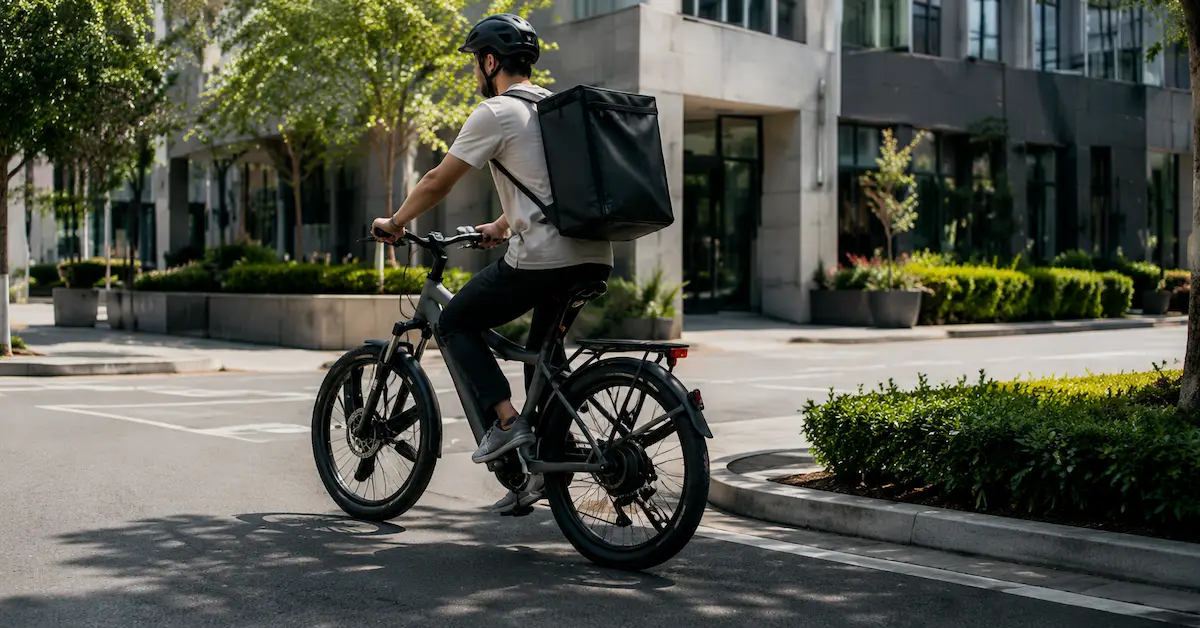
A delivery bike works differently from a normal commuter e-bike. It may spend several hours on the road, stop dozens of times during a shift, carry changing loads, and operate in weather and traffic conditions that are difficult to predict.
For a restaurant group, courier company, distributor, or private-label brand, those details eventually show up as operating costs.
A bike with the wrong battery configuration can create charging problems. A weak cargo structure can limit usable capacity. Poor brake selection can become a serious concern when the bike is loaded. A supplier that cannot provide replacement parts can turn a small component failure into several days of downtime.
That is why B2B buyers should evaluate the complete supply solution, including:
- Vehicle design
- Battery and motor system
- Cargo configuration
- Braking and tires
- Quality control
- Spare parts
- OEM/ODM capability
- Production consistency
- Export support
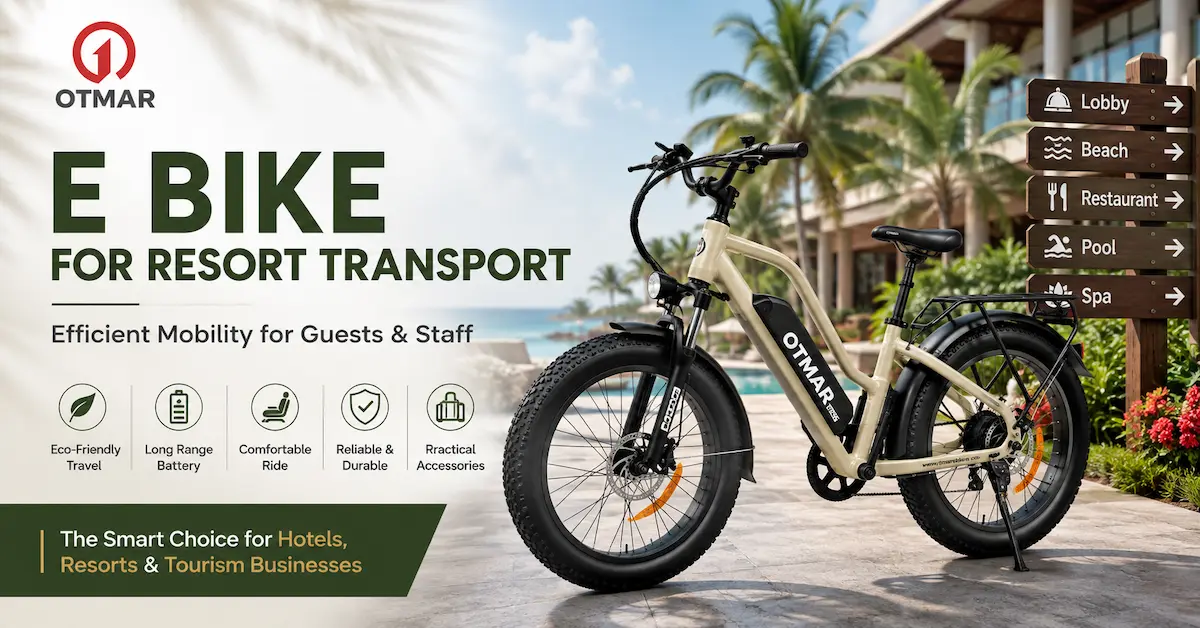
OTMAR develops electric bikes and electric trikes for international B2B customers. Its current product structure includes City eBike, Cargo eBike, Touring eBike, eMTB, Gravel eBike, and Hybrid eBike categories.
You can browse the OTMAR electric bike range when comparing product platforms for a delivery project.
Who Buys Electric Delivery Bikes?
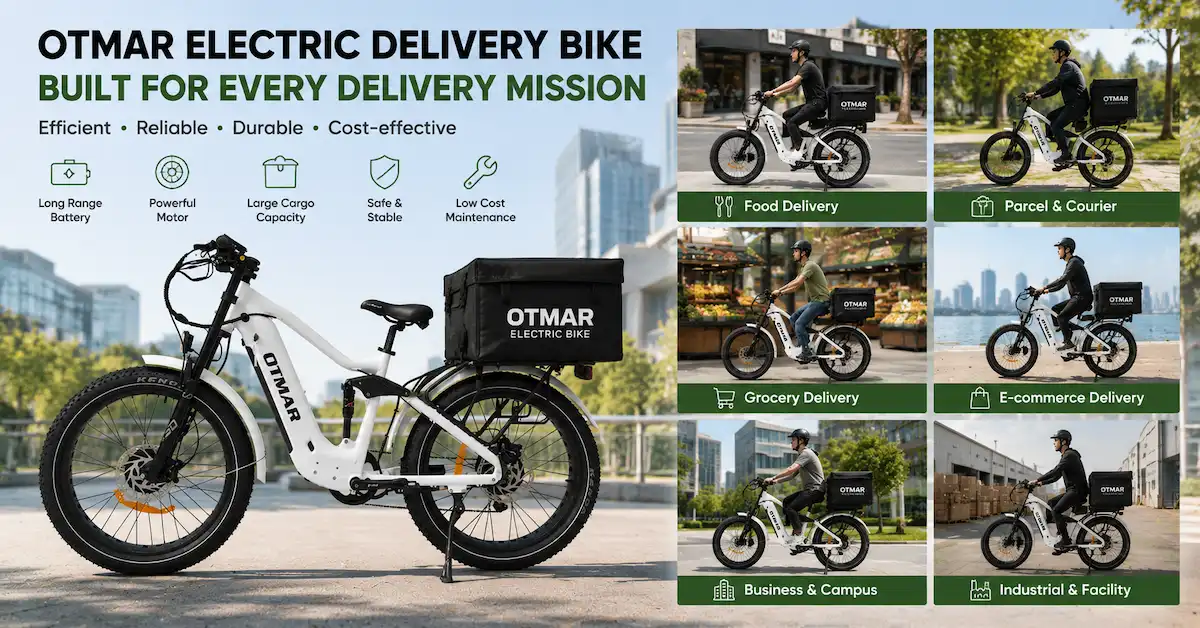
The right delivery e-bike depends heavily on who is using it and what is being transported.
Food Delivery Operators
Food delivery is one of the most demanding urban applications.
A typical route can involve:
- Frequent acceleration
- Frequent braking
- Short-distance trips
- Multiple deliveries per shift
- Variable cargo weight
- Repeated battery charging
Food delivery operators usually care about reliability first.
They need a bike that can carry a delivery box securely while remaining manageable in traffic. Battery planning is also important because a bike that needs to stop for charging in the middle of a shift may reduce fleet utilization.
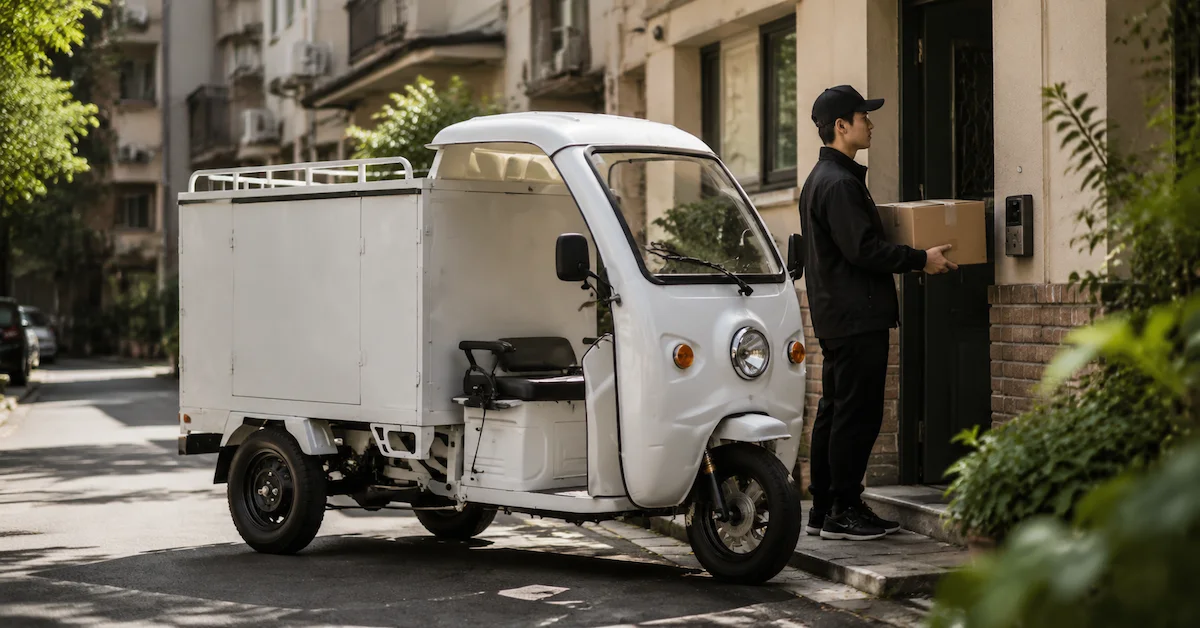
Courier and Parcel Companies
Courier operators have different priorities.
A parcel delivery bike may need:
- Larger cargo capacity
- Lockable storage
- Weather protection
- Stronger racks or boxes
- Long daily operating time
- Easy access to replacement components
The cargo structure should be designed around the actual parcel workflow rather than added to a standard bicycle after production.
Retailers and Distributors
Retailers often need a broader product strategy.
A distributor may sell delivery bikes to:
- Restaurants
- Local retailers
- Small logistics businesses
- Service companies
- Independent couriers
In this case, the supplier needs to offer a commercially attractive product with clear specifications and dependable after-sales support.
Private-Label Brands
Private-label companies usually need more than a standard model.
They may request:
- Brand logo
- Custom frame color
- Cargo box design
- Component selection
- Packaging
- User manuals
- Product labels
An experienced OEM delivery e-bike supplier can help the brand create a product that fits a particular market instead of simply putting a logo on an existing bicycle.
What Makes a Good Electric Delivery Bike?
A delivery e-bike needs to be designed around its workload.
The main question is not:
“How powerful is the motor?”
The better question is:
“Can this bike complete the intended delivery cycle reliably with its expected rider and cargo load?”
That means buyers should look at the whole vehicle.
| Factor | What Buyers Should Check | Why It Matters |
|---|---|---|
| Battery | Capacity, charging, replacement | Determines operating flexibility |
| Motor | Power, torque, configuration | Affects loaded acceleration and hills |
| Cargo system | Size, mounting,load distribution | Determines usable delivery capacity |
| Frame | Strength and geometry | Supports rider and cargo |
| Brakes | Type and loaded performance | Important for frequent stops |
| Tires | Grip, durability,road suitability | Affects stability and maintenance |
| Lighting | Front/rear visibility | Useful for early and late shifts |
| Rack | Structure and compatibility | Supports boxes and bags |
| Service parts | Availability and compatibility | Reduces downtime |
How Much Battery Range Does a Delivery E Bike Need?
There is no single battery capacity that is right for every delivery operation.
The correct battery depends on:
- Daily route distance
- Number of deliveries
- Cargo weight
- Rider weight
- Terrain
- Average speed
- Assistance level
- Weather
- Charging opportunities
A simple planning method is to estimate the complete daily route and then add a practical reserve.
For example, a fleet operating in a dense city may cover relatively short distances but make frequent stops. Another fleet may travel fewer delivery legs but cover longer suburban routes.
Those two businesses should not necessarily use the same battery configuration.
Why Real-World Testing Matters
A published range figure is useful for comparison, but it should not be treated as a guaranteed commercial result.
Before placing a large order, test the bike under representative conditions:
- Use the intended cargo box.
- Add the expected payload.
- Follow a typical delivery route.
- Record battery consumption.
- Repeat the test at different assistance levels.
- Check charging time and daily operating requirements.
This gives the buyer a much better basis for fleet planning than a single laboratory-style range number.
What Motor Configuration Is Suitable for Delivery?
Motor selection should follow the application.
A delivery bike carrying a light food box on relatively flat roads may have very different requirements from one carrying heavy parcels through hilly streets.
Buyers should consider:
- Motor power
- Torque
- Controller configuration
- Battery voltage
- Wheel size
- Vehicle weight
- Payload
- Terrain
More motor power does not automatically mean a better delivery bike.
A high-output configuration may increase energy consumption, weight, or regulatory complexity without providing meaningful benefits on a flat urban route.
The goal is to create a balanced system in which the motor, controller, battery, frame, and braking system work together.
Cargo Design Is a Major Supplier Selection Factor
The cargo area is often the part of a delivery e-bike that receives the most attention after the initial purchase.
A good cargo solution should consider:
- Cargo volume
- Maximum intended load
- Weight distribution
- Box mounting
- Waterproofing
- Security
- Rider visibility
- Ease of loading
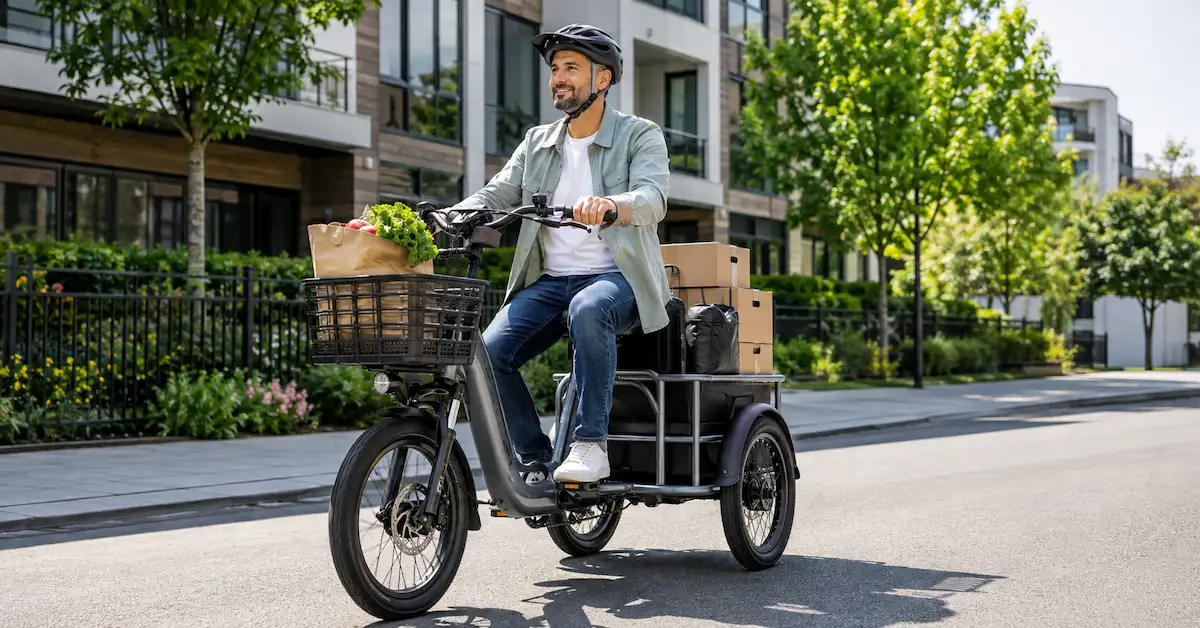
Rear Cargo Solutions
Rear cargo systems are useful for:
- Food delivery boxes
- Grocery bags
- Small parcels
- Work equipment
The mounting structure should remain stable when the bike accelerates, brakes, and turns.
Front Cargo Solutions
Front cargo can provide useful visibility for the rider, but the design needs careful attention to steering and weight distribution.
A large front load can affect handling if the frame and steering system were not designed for it.
Custom Delivery Boxes
For commercial fleets, a custom box may include:
- Insulation
- Lockable access
- Waterproof construction
- Brand graphics
- Internal partitions
This is one area where OEM cooperation can create meaningful product differentiation.
Frame and Braking Requirements for Commercial Delivery
Delivery bikes experience more repeated loading and unloading than many recreational e-bikes.
Frame Design
The frame needs to support:
- Rider
- Battery
- Motor system
- Cargo
- Road impacts
Buyers should inspect:
- Welding quality
- Frame alignment
- Rack attachment
- Cargo mounting points
- Overall rigidity
The frame should also remain practical for the rider. A strong frame that is difficult to mount, maneuver, or park may not be the best fleet solution.
Braking
Delivery riders may make frequent stops throughout the day.
Brake evaluation should include:
- Loaded braking
- Lever feel
- Repeated braking
- Wet-road behavior
- Maintenance accessibility
- Replacement parts
The correct brake system depends on vehicle weight, operating environment, and local requirements.
What Quality Control Should an Electric Delivery Bike Supplier Have?
A serious B2B supplier should be able to explain how quality is controlled before, during, and after assembly.
Incoming Component Inspection
Key components can include:
- Frames
- Motors
- Batteries
- Controllers
- Displays
- Chargers
- Brake components
- Tires
The purpose is to prevent unsuitable components from entering the production process.
Assembly Inspection
During assembly,quality checks should cover:
- Wiring
- Brake adjustment
- Wheel alignment
- Fastener installation
- Component mounting
- Cargo-system installation
Final Testing
A finished delivery bike should be checked for:
- Electrical operation
- Motor response
- Battery charging
- Braking
- Lighting
- Display function
- General assembly quality
OTMAR states that its manufacturing operation uses a multi-stage testing process and that its quality approach is supported by certifications including EN 15194, UL, CE, UKCA, and ISO 9001.Certification and documentation should still be confirmed for the exact model and configuration being purchased.
How to Compare Electric Delivery Bike Suppliers
Price is only one part of the comparison.
A more useful supplier evaluation looks like this:
| Evaluation Area | Questions to Ask |
|---|---|
| Product | Does the supplier have a suitable delivery platform? |
| Engineering | Can they adjust the configuration for the application? |
| Battery | Can they provide appropriate battery options? |
| Cargo | Can the cargo structure be customized? |
| QC | How is each production batch tested? |
| OEM | Can they support private-label requirements? |
| Spare parts | Which replacement parts are available? |
| Production | Can they handle repeat orders? |
| Compliance | What documentation is available for the target market? |
| Communication | Can technical requirements be confirmed clearly? |
This approach helps distinguish a manufacturer that can support a long-term project from a supplier that is simply quoting an existing product.
Why OTMAR Can Be Considered for Delivery E Bike Projects
OTMAR's current business positioning combines electric bike and electric trike manufacturing with OEM/ODM cooperation.
According to the company's official information, Jinhua Otmar Technology Co., Ltd. has more than 17 years of R&D experience, more than 10 years of export experience, and an export network covering 48+ countries, including the USA, Canada, EU, UK, Australia, and New Zealand.
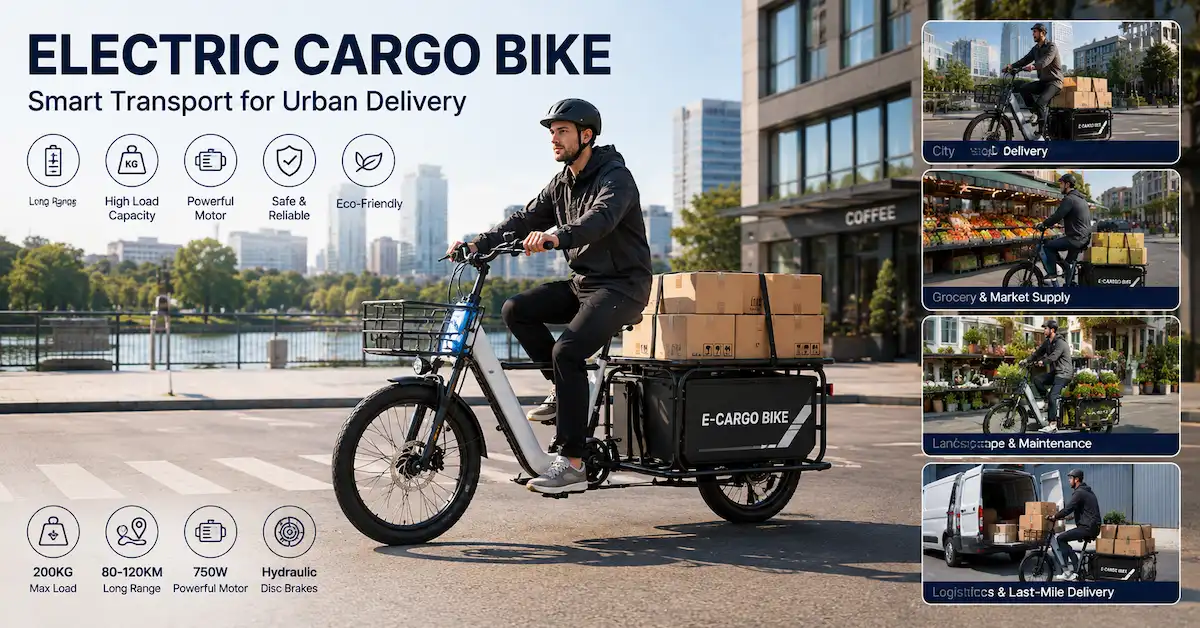
Its product portfolio includes electric bikes, electric trikes, and trailers, while the electric-bike range includes a dedicated Cargo eBike category.
For delivery projects, this creates a useful starting point because buyers can discuss the vehicle as part of a broader mobility product program rather than sourcing a cargo accessory separately.
You can learn more about OTMAR through the company profile.
OEM and Private Label Electric Delivery Bike Process
For brands planning a private-label delivery e-bike, a structured development process can reduce unnecessary revisions.
Step 1: Define the Delivery Application
Provide:
- Target market
- Delivery distance
- Typical cargo
- Expected payload
- Working hours
- Terrain
- Climate
Step 2: Select the Product Platform
Decide whether an existing cargo e-bike can meet the requirements or whether modifications are needed.
Step 3: Confirm Components
Discuss:
- Motor
- Battery
- Controller
- Brakes
- Tires
- Cargo rack
- Delivery box
- Lighting
Step 4: Develop the Sample
The sample should be tested under actual or representative delivery conditions.
Step 5: Confirm Branding
OEM elements may include:
- Logo
- Colors
- Decals
- Packaging
- Cargo box
- Manuals
Step 6: Approve Mass Production
Once specifications and samples are confirmed, the manufacturer can move into production planning, inspection, packaging, and shipment.
OTMAR's official site identifies OEM/ODM as a core part of its business and presents product development, engineering, production, and technical support as part of its manufacturing proposition.
What Does an Electric Delivery Bike Supplier Need to Support After Sales?
A delivery fleet cannot afford long periods of downtime.
Common replacement items may include:
- Brake components
- Tires
- Chargers
- Controllers
- Displays
- Battery systems
- Electrical components
For this reason, spare-parts planning should happen before the bulk order.
A good supplier should be able to provide clear information about:
- Available replacement parts
- Part compatibility
- Ordering process
- Technical troubleshooting
- Warranty handling
OTMAR's website also maintains an accessories range covering electrical components, mechanical parts, trailers, and other accessories, which can be relevant when planning a broader product and replacement-parts strategy.
Explore the OTMAR accessories range when planning supporting components for an e-bike program.
Common Mistakes When Choosing an Electric Delivery Bike Supplier
Choosing the Cheapest Quotation
A lower unit price may not remain lower after:
- Spare parts
- Warranty claims
- Product returns
- Maintenance
- Fleet downtime
The better comparison is total operating value.
Treating a Commuter E-Bike as a Delivery Bike
Adding a delivery box to a standard commuter model does not automatically create a commercial delivery vehicle.
Cargo weight, frame loading, braking, battery use, and component durability need to be considered together.
Ordering Without a Sample
Sample testing is particularly important for delivery projects.
Test:
- Loaded handling
- Braking
- Battery consumption
- Cargo stability
- Rider comfort
before committing to a large order.
Ignoring the Target Market
Motor, battery, charger, speed, and certification requirements can vary by market.
Confirm the target-country requirements before finalizing the production specification.
How to Request a Better Quote From an Electric Delivery Bike Supplier
A detailed inquiry usually produces a more useful quotation than simply asking:
“Please send me your best price.”
Instead, provide:
- Target country
- Business type
- Delivery application
- Expected order quantity
- Cargo weight
- Cargo box size
- Daily operating distance
- Terrain
- Battery expectations
- Motor requirements
- Branding requirements
- Packaging requirements
- Certification requirements
- Spare-parts requirements
- Target delivery date
This gives the supplier enough information to recommend a configuration rather than quoting an unsuitable standard model.
For a project inquiry, buyers can contact OTMAR with their target market, application, quantity, and preferred configuration.
FAQ About Electric Delivery Bike Supplier
What is an electric delivery bike supplier?
An electric delivery bike supplier provides electric bicycles configured for commercial delivery applications. Depending on the supplier, services may include product selection, OEM customization, sample development, quality inspection, spare parts, and bulk production.
What is the difference between a delivery e-bike and a regular e-bike?
A delivery e-bike is designed around commercial workloads. It may require stronger cargo mounting, greater load capability, appropriate braking, battery planning, and components suited to frequent daily operation.
What should I look for in an electric delivery bike supplier?
Look at product suitability, engineering capability, battery and motor options, cargo design, quality control, OEM support, spare parts, compliance documentation, and production consistency.
Can I customize an electric delivery bike?
Yes. Depending on the supplier and project, customization can include branding, colors, cargo boxes, racks, batteries, motors, components, packaging, and other product details.
How much battery range does a delivery e-bike need?
The required range depends on the daily route, cargo weight, rider weight, terrain, speed, assistance level, temperature, and charging opportunities. Real-route testing is the best way to establish fleet requirements.
Is a powerful motor always better for delivery?
No. Motor selection should match the payload, terrain, route, battery system, and local regulations. Excessive power may add cost and energy consumption without improving the actual delivery operation.
What cargo capacity should a delivery e-bike have?
There is no universal capacity. Food delivery, parcel delivery, grocery transport, and service applications have different requirements. Buyers should specify the actual cargo weight and dimensions when requesting a quotation.
Should I test an electric delivery bike before a bulk order?
Yes.A sample should ideally be tested with the intended cargo load and on a representative route. This helps evaluate battery use, braking, stability, comfort, and practical cargo handling.
Can an electric delivery bike supplier provide private-label products?
Many OEM/ODM manufacturers can provide private-label services. Typical options include logos, colors, packaging, cargo boxes, component configurations, and product-specific adjustments.
How can I reduce the risk of choosing the wrong delivery e-bike supplier?
Define the application first, test a sample, confirm the final specifications in writing, verify applicable market requirements, and discuss spare parts and after-sales support before placing the bulk order.
Conclusion
Choosing an electric delivery bike supplier should start with the delivery operation, not the supplier's price list.
A restaurant delivery fleet may need a different solution from a parcel company. A distributor may prioritize product versatility, while a private-label brand may need a customized platform that fits its market positioning.
The most important factors are:
- Suitable cargo design
- Reliable battery and motor configuration
- Stable frame and braking performance
- Practical maintenance
- Quality control
- OEM/ODM flexibility
- Spare-parts support
- Market-specific compliance
OTMAR provides electric bikes, electric trikes, and related mobility products for global B2B customers, with more than 17 years of R&D experience and export experience covering 48+ countries according to its official company information.
For buyers developing a delivery fleet, distribution program, or private-label product, start with the application and required specifications. Then compare suppliers based on the complete business solution—not simply the unit price.
Explore OTMAR Electric Bikes, learn more about OTMAR's manufacturing and OEM capabilities, or contact OTMAR to discuss your electric delivery bike project.