
An electric bike may look like a conventional bicycle with a motor and battery added, but producing a reliable e-bike involves a much more complex manufacturing system.
A professional electric bike manufacturer must coordinate mechanical engineering, electrical integration, supply-chain management, component compatibility, product testing, branding, packaging, and export delivery.
The complete process usually involves:
- Market and buyer research
- Product positioning
- Frame design and engineering
- Motor and battery selection
- Controller and display matching
- Mechanical component sourcing
- Prototype development
- Sample testing
- Production planning
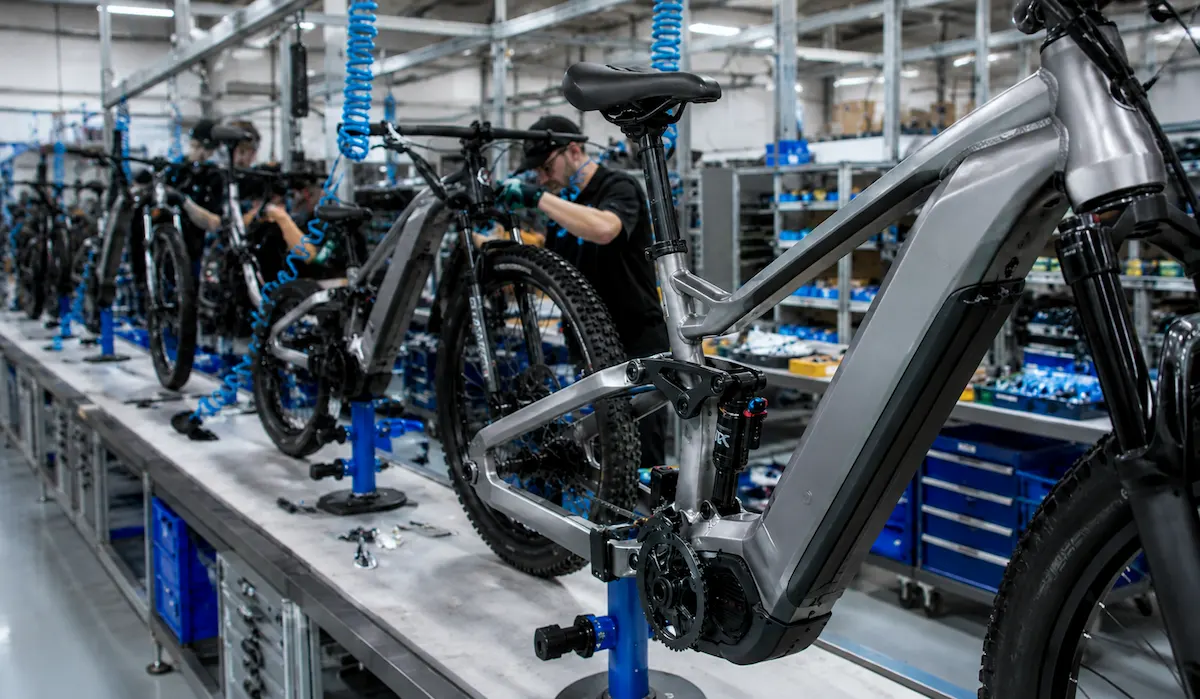
- Assembly-line control
- Quality inspection
- OEM/ODM customization
- Export packaging
- After-sales and spare-parts support
For dealers, distributors, and private label brands, understanding this process makes it easier to distinguish a genuine manufacturing partner from a supplier that only offers standard catalog products.
Why the Manufacturing Structure Matters to B2B Buyers
The quality of an electric bike does not depend on one component alone.
A premium battery cannot compensate for a weak frame. A powerful motor cannot solve poor controller calibration. Strong brakes may still perform inconsistently if wheel alignment and assembly torque are not controlled.
The finished e-bike is the result of multiple systems working together:
- The frame supports the rider and electrical components.
- The motor delivers assistance based on riding input.
- The controller regulates electrical output.
- The battery supplies and manages energy.
- The display communicates speed, battery level, and assistance mode.
- The drivetrain transfers rider and motor power.
- The brakes control the complete system weight.
- The tires connect the bike with the intended road surface.
A capable electric bike manufacturer must treat these components as one integrated product rather than a collection of independent parts.
The Electric Bike Manufacturing Process
Market Research and Product Positioning
Every successful electric bike project should begin with a clear target market.
Before engineering starts, the manufacturer and buyer should define:
- Target country or region
- Customer age and riding habits
- Intended application
- Expected retail price
- Motor and speed requirements
- Battery range expectations
- Road and terrain conditions
- Preferred frame style
- Required accessories
- Compliance and documentation needs
A city commuter e-bike requires a different configuration from an electric mountain bike, cargo e-bike, touring model, or electric trike.
For example, an urban dealer may prioritize a lightweight or step-through frame, smooth assistance, low maintenance, and clean styling. A commercial fleet buyer may care more about payload, battery replacement, braking durability, and spare-parts availability.
Product positioning should guide every later manufacturing decision.
Industrial Design and Engineering
Once the target application is defined, engineers develop the product structure.
This stage may include:
- Frame geometry
- Rider posture
- Wheel size
- Battery position
- Motor position
- Cable routing
- Controller location
- Cargo or rack interfaces
- Suspension layout
- Component clearance
- Appearance and branding areas
Computer-aided design can help engineers evaluate dimensions, component installation, structural relationships, and appearance before a physical sample is produced.
The objective is not only to make the bike look attractive. The design must also support balanced handling, practical assembly, convenient maintenance, and stable mass production.
Prototype and Sample Development
A digital design cannot reveal every real-world issue. A physical prototype or sample is therefore essential.
Sample evaluation may include:
- Mounting and dismounting
- Rider posture
- Steering response
- Frame stability
- Motor assistance
- Hill starts
- Brake response
- Display operation
- Battery removal
- Rack or basket installation
- Cable routing
- Packaging dimensions
For OEM buyers, the sample also confirms logo placement, paint color, decals, accessories, manuals, and packaging.
Any necessary adjustments should be completed before bulk production begins.
Frame Engineering and Production
Selecting the Frame Structure
The frame determines the bike’s geometry, strength, appearance, and component layout.
Common electric bike frame types include:
- High-step frames
- Step-through frames
- Folding frames
- Fat-tire frames
- Cargo frames
- Mountain-bike frames
- Touring frames
- Compact urban frames
Each structure creates different engineering requirements.
A step-through frame must balance easy access with structural reinforcement. A cargo frame must manage additional load and weight distribution. A folding frame requires a dependable hinge and locking system. An eMTB frame must accommodate suspension movement and off-road forces.
Material and Manufacturing Considerations
Electric bike frames are commonly designed around weight, strength, cost, corrosion resistance, and manufacturing consistency.
During production, buyers should pay attention to:
- Tube dimensions
- Forming accuracy
- Welding consistency
- Fixture alignment
- Battery-compartment dimensions
- Motor-mount positioning
- Surface preparation
- Coating consistency
- Final frame alignment
The most important issue is repeatability. A strong sample is not enough if the same geometry and alignment cannot be maintained across a bulk order.
Surface Finish and Branding
After structural processing, the frame receives its surface finish.
Depending on the project, this may include:
- Surface cleaning
- Primer
- Paint or powder coating
- Color matching
- Decal placement
- Logo application
- Protective finish
- Visual inspection
OEM buyers should confirm color codes, logo size, logo position, finish type, and acceptable appearance standards before production.
Building the Electric Drive System
Motor Selection
The motor must match the product’s intended application.
Common drive layouts include:
- Front hub motor
- Rear hub motor
- Mid-drive motor
- Dual-motor system
A hub motor provides a relatively direct and practical configuration for many city, fat-tire, and general-purpose e-bikes. A mid-drive motor applies power through the drivetrain and may provide a different weight balance and climbing experience.
The manufacturer should evaluate more than rated wattage.
Important motor factors include:
- Torque
- Power delivery
- Controller compatibility
- Wheel size
- Rider and cargo load
- Hill performance
- Heat management
- Noise level
- Maintenance requirements
- Target-market restrictions
The correct motor is the one that delivers the desired riding experience within the project’s technical, commercial, and regulatory limits.
Controller and Sensor Integration
The controller regulates how the battery supplies power to the motor.
Its settings influence:
- Acceleration
- Assistance smoothness
- Power limits
- Riding modes
- Energy consumption
- Heat performance
- Error protection
Depending on the product, an electric bike may use cadence sensing, torque sensing, or another assistance-control method.
The controller, motor, sensor, battery, and display must be tested as a complete system. Poor matching can create jerky acceleration, inaccurate battery readings, excessive energy use, or inconsistent riding behavior.
Display and User Interface
The display gives the rider access to essential operating information.
Common functions include:
- Speed
- Battery level
- Assistance mode
- Riding distance
- Trip information
- Error codes
- Lighting control
- Walk-assist mode
For rental fleets and entry-level riders, simple operation may be more valuable than a complex interface. For premium consumer products, buyers may request larger displays, connectivity, or additional riding data.
Battery Pack and Power Management
Battery Configuration
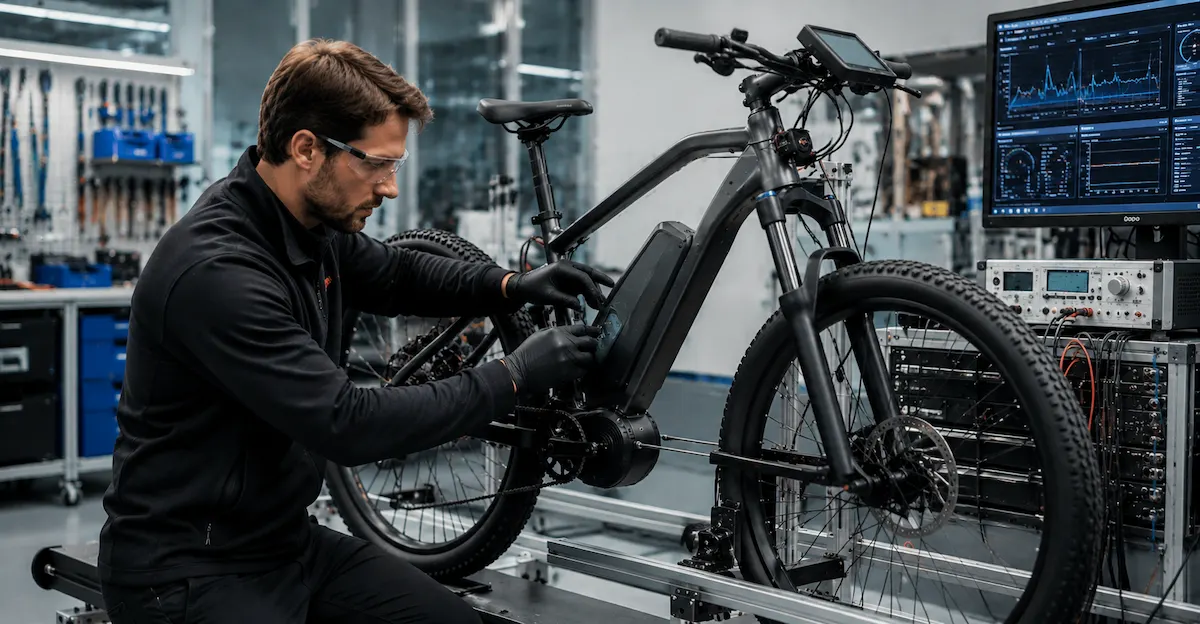
The battery directly affects range, product weight, frame design, charging, and retail positioning.
Manufacturers and buyers should confirm:
- Voltage
- Capacity
- Cell selection
- Battery layout
- Removable or integrated design
- Connector type
- Charger compatibility
- Housing protection
- Mounting security
- Replacement availability
A larger battery may increase potential range, but it also increases weight, cost, charging time, and shipping complexity.
The correct battery should match real customer use rather than one marketing number.
Battery Management System
A battery management system helps supervise and protect battery operation.
The complete battery system should be evaluated for:
- Charging behavior
- Discharging behavior
- Temperature conditions
- Cell consistency
- Connector stability
- Vibration exposure
- Installation security
- Charger compatibility
B2B buyers should ask how battery systems, chargers, motors, and controllers are matched and inspected before shipment.
Realistic Range Communication
Range is influenced by more than battery capacity.
Actual results may change according to:
- Rider weight
- Cargo load
- Motor assistance level
- Speed
- Hills
- Tire pressure
- Tire width
- Temperature
- Wind
- Stop-and-go traffic
- Road surface
A reliable electric bike manufacturer should help buyers establish realistic range expectations for the target application.
Mechanical Components and System Compatibility
Braking System
Electric bikes are usually heavier than conventional bicycles and may operate under greater loads.
The brake system should be selected according to:
- Bike weight
- Motor configuration
- Intended speed
- Rider weight
- Cargo capacity
- Terrain
- Maintenance environment
Buyers should confirm brake type, rotor size, stopping response, component availability, and adjustment procedures.
Brake performance must be evaluated after the complete bike is assembled.
Drivetrain
The drivetrain may include:
- Crankset
- Chainring
- Chain or belt
- Cassette or freewheel
- Derailleur
- Internal gearing
- Pedals
The gear range should match the motor, wheel size, terrain, and intended rider.
Commercial and rental projects may prioritize low maintenance, while performance-focused products may require a wider gear range or more responsive shifting.
Wheels and Tires
Wheel quality affects alignment, stability, comfort, and long-term maintenance.
Manufacturing checks may include:
- Rim condition
- Spoke tension
- Wheel trueness
- Hub installation
- Tire mounting
- Tire pressure
- Disc alignment
- Load suitability
Tire selection should reflect the intended application:
- Narrower city tires for efficiency
- Wider tires for comfort
- Fat tires for grip and visual positioning
- All-terrain tires for mixed roads
- Reinforced tires for cargo or fleet use
Supply-Chain Management
Most electric bike factories rely on specialist component suppliers for parts such as motors, battery cells, controllers, displays, brakes, gears, tires, saddles, and lighting systems.
The manufacturer’s role is to control this network and ensure that components meet the approved specification.
Effective supply-chain management includes:
- Qualified supplier selection
- Incoming component inspection
- Specification records
- Batch consistency
- Alternative component planning
- Lead-time coordination
- Cost management
- Replacement-parts availability
For B2B buyers, supply-chain stability is especially important for repeat orders. A model can become difficult to support if its display, controller, battery connector, or brake components change without approval.
The purchase specification should define which substitutions require buyer confirmation.
Electric Bike Assembly Process
Pre-Assembly Preparation
Before the bike reaches the assembly line, the factory should verify:
- Frame model and color
- Approved components
- Battery and charger
- Motor and controller
- Logo and decals
- Accessories
- Packaging materials
- Production instructions
This prevents different project versions from being mixed during manufacturing.
Mechanical Assembly
Mechanical assembly may include:
- Fork installation
- Handlebar and stem fitting
- Wheel installation
- Drivetrain installation
- Brake installation
- Saddle and seat-post fitting
- Pedal installation
- Rack and fender mounting
Fasteners should be tightened according to controlled assembly requirements.
Electrical Installation
The electrical stage includes:
- Motor connection
- Controller installation
- Sensor connection
- Display connection
- Wiring-harness routing
- Battery-mount installation
- Lighting connection
- Functional calibration
Wires and connectors should be protected against movement, abrasion, poor routing, and accidental disconnection.
Final Adjustment
Before inspection, technicians adjust:
- Brake alignment
- Gear shifting
- Wheel position
- Tire pressure
- Handlebar alignment
- Display settings
- Pedal assistance
- Lighting
- Accessories
The objective is to deliver a bike that requires minimal corrective work at the destination.
Quality Control and Testing
Incoming Quality Control
Incoming inspection verifies critical components before assembly.
Items may include:
- Frames
- Motors
- Batteries
- Chargers
- Controllers
- Displays
- Brakes
- Wheels
- Tires
- Paint and branding materials
Problems identified before assembly are less expensive to correct than finished-bike defects.
In-Process Inspection
Quality checks should continue throughout assembly.
Inspectors may verify:
- Correct components
- Cable routing
- Fastener installation
- Battery mounting
- Brake alignment
- Wheel condition
- Electrical connections
- Logo placement
This reduces the risk of repeating one error across an entire production batch.
Finished-Bike Inspection
Final inspection should cover mechanical, electrical, and visual performance.
A typical checklist may include:
| Inspection Area | Key Checks |
|---|---|
| Frame | Alignment, finish, welding appearance |
| Motor | Assistance, noise, response |
| Battery | Charging, mounting, connection |
| Controller | Power delivery and mode switching |
| Display | Speed, battery, assistance information |
| Brakes | Alignment, lever response, stopping function |
| Drivetrain | Shifting, chain condition, pedal operation |
| Wheels | Trueness, tire installation, pressure |
| Lighting | Headlight, rear light, controls |
| Accessories | Rack, fenders, basket, kickstand |
| Branding | Logo, color, labels, manual |
| Packaging | Protection, quantity, carton condition |
A functional riding test or controlled performance check can help confirm that the complete system operates correctly before packaging.
OEM, ODM, and Private Label Manufacturing
OEM Electric Bike Production
In an OEM project, the buyer defines the product requirements and the factory manufactures the approved configuration.
OEM may involve:
- Buyer-owned design
- Custom component specification
- Exclusive branding
- Custom packaging
- Market-specific configuration
- Defined inspection requirements
This model is suitable for established brands that need more control over the finished product.
ODM Electric Bike Production
In an ODM project, the manufacturer offers an existing platform that the buyer can adapt.
Customization may include:
- Logo
- Color
- Battery
- Motor
- Display
- Tires
- Accessories
- Packaging
ODM can reduce development time and risk because the base model already exists.
Private Label Electric Bikes
Private label projects usually use a proven product with branding and selected configuration changes.
They are suitable for:
- New e-bike brands
- Dealers testing a market
- Regional distributors
- Retail chains
- Rental operators
The correct cooperation model depends on order volume, budget, launch schedule, product uniqueness, and technical resources.
OEM vs ODM Comparison
| Cooperation Model | Product Ownership | Development Level | Best For |
| Standard Wholesale | Manufacturer’s existing product | Minimal changes | Trial orders and dealers |
| Private Label | Existing platform with branding | Basic customization | New brands and distributors |
| ODM | Manufacturer platform with configuration changes | Moderate customization | Faster branded launches |
| OEM | Buyer-defined specifications | High customization | Established brands |
| Full Development | New engineering project | Maximum customization | Strategic long-term programs |
Branding and Packaging
Branding should be confirmed before mass production.
Important items include:
- Logo artwork
- Logo size
- Logo position
- Frame color
- Decal finish
- Model name
- Product labels
- User manual
- Charger label
- Carton artwork
- Shipping marks
Packaging should protect the frame, motor, battery, display, wheels, brakes, and accessories during international transport.
Because many e-bikes are partially disassembled for shipping, the factory should also consider the dealer or customer assembly experience.
Clear instructions, organized accessories, and protected components can reduce complaints after delivery.
How to Evaluate an Electric Bike Manufacturer
Confirm Relevant Product Experience
Ask whether the manufacturer has experience with the type of e-bike you need:
- City e-bikes
- Electric mountain bikes
- Touring e-bikes
- Cargo e-bikes
- Gravel e-bikes
- Hybrid e-bikes
- Step-through e-bikes
- Fat-tire e-bikes
- Electric trikes
Relevant category experience reduces development uncertainty.
Review Technical Communication
A capable manufacturing partner should answer detailed questions about the frame, motor, battery, controller, brakes, tires, payload, range, packaging, and testing.
Vague technical answers may indicate limited product control.
Request Samples
Samples allow buyers to verify:
- Riding feel
- Component quality
- Battery operation
- Brake response
- Frame finish
- Branding
- Accessories
- Packaging
Sample approval should be documented before bulk production.
Understand Quality Control
Ask which checks take place during incoming inspection, assembly, final testing, and packaging.
The buyer should also confirm how nonconforming products are identified and corrected.
Confirm Repeat-Order Support
A strong manufacturing relationship should support:
- Component records
- Consistent specifications
- Spare parts
- Replacement batteries
- Technical assistance
- Repeat orders
- Product upgrades
Why Work with OTMAR?
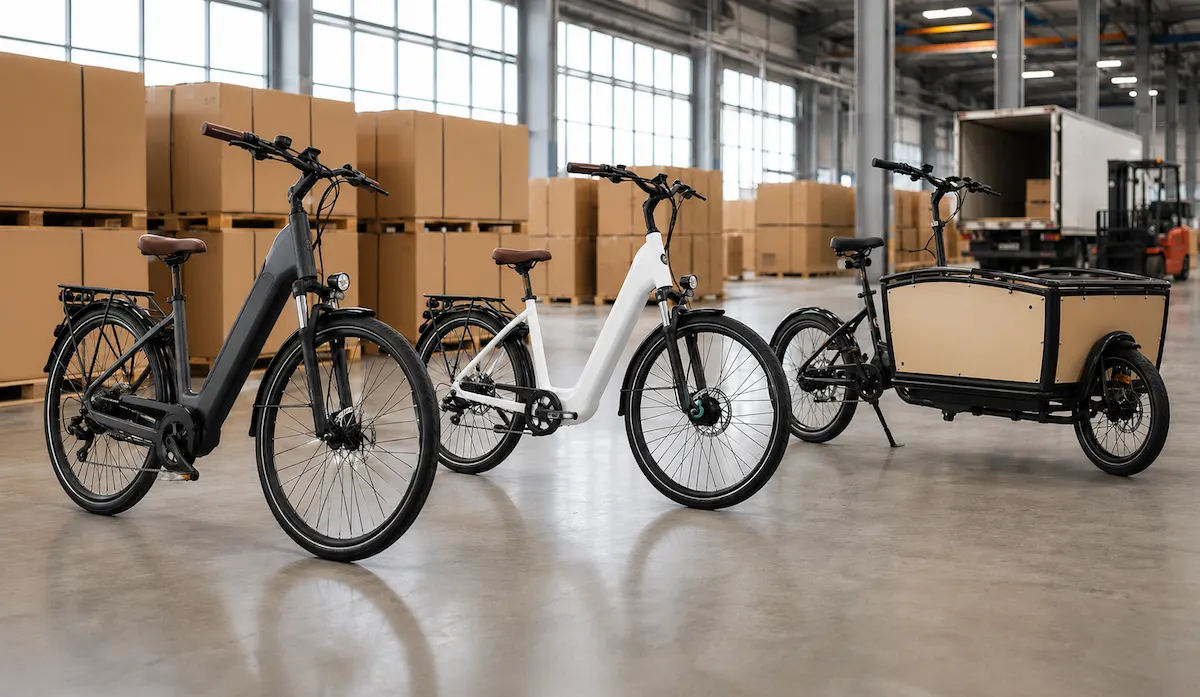
OTMAR provides OEM and ODM solutions for electric bikes, electric trikes, and related mobility products.
The OTMAR product range includes city e-bikes, eMTBs, touring e-bikes, cargo e-bikes, gravel e-bikes, hybrid e-bikes, and multiple electric-trike categories.
For global dealers, distributors, private label brands, and commercial buyers, OTMAR can support:
- Product selection
- Configuration planning
- OEM/ODM customization
- Sample development
- Branding
- Quality inspection
- Export packaging
- Bulk-order communication
- After-sales coordination
Buyers can browse OTMAR Electric Bikes, review the company’s manufacturing background through About OTMAR, or submit project requirements through Contact OTMAR.
Buyer Inquiry Checklist
Prepare the following information before contacting an electric bike manufacturer:
- Target country or region
- Buyer type and sales channel
- Intended e-bike category
- Target customer
- Expected order quantity
- Target price range
- Frame style and wheel size
- Motor and torque requirements
- Battery and range expectations
- Brake and drivetrain preferences
- Required accessories
- Logo and color requirements
- Packaging requirements
- Certification or documentation needs
- Spare-parts requirements
- Expected delivery date
A detailed inquiry helps the manufacturer recommend an appropriate platform and provide a more accurate quotation.
FAQ
What does an electric bike manufacturer do?
An electric bike manufacturer manages product engineering, component sourcing, frame and electrical integration, assembly, testing, branding, packaging, and bulk production.
Does an electric bike factory make every component itself?
Usually not. Manufacturers commonly work with specialist suppliers for motors, battery cells, controllers, brakes, gears, tires, and displays. The factory is responsible for component selection, integration, inspection, and production control.
What should buyers check before choosing an electric bike manufacturer?
Buyers should evaluate product experience, technical communication, component specifications, sample quality, QC procedures, OEM capability, packaging, delivery planning, and after-sales support.
What is the difference between OEM and ODM electric bikes?
OEM generally follows buyer-defined product specifications, while ODM uses a manufacturer-developed platform that can be adapted with selected configuration and branding changes.
Can an electric bike manufacturer add a buyer’s logo?
Yes. Common branding options include frame logos, colors, decals, product labels, packaging, user manuals, and carton artwork.
Why is sample testing important?
Sample testing allows buyers to verify riding performance, component compatibility, battery operation, motor response, brakes, appearance, accessories, and packaging before mass production.
How is electric bike quality controlled?
Quality control can include incoming component inspection, in-process assembly checks, electrical tests, brake and drivetrain adjustments, finished-bike inspection, functional testing, and packaging inspection.
What certifications should buyers discuss?
Certification and documentation requirements depend on the destination market and product configuration. Buyers should confirm applicable requirements before sample approval and mass production.
Can OTMAR support private label electric bikes?
OTMAR supports OEM/ODM cooperation, including product selection, configuration planning, branding, sample development, production, inspection, and export communication.
How can I request an OTMAR quotation?
Send OTMAR your target market, product category, quantity, motor, battery, accessories, customization, packaging, compliance, and delivery requirements.
Conclusion
An electric bike manufacturer is responsible for much more than final assembly. The manufacturer must combine engineering, supply-chain control, frame production, electrical integration, component matching, testing, branding, packaging, and delivery into one repeatable system.
For B2B buyers, the strongest manufacturing partner is not simply the company offering the lowest quotation. It is the company that can explain its product decisions, control specifications, validate samples, maintain batch consistency, and support the product after shipment.
OTMAR provides electric bike and electric trike OEM/ODM solutions for global dealers, distributors, brands, and commercial mobility buyers. Explore the available product range or contact OTMAR to discuss your next electric bike manufacturing project.