
What Should an E Bike for Urban Mobility Actually Solve?
An e bike for urban mobility should solve a clearly defined transportation problem rather than simply add electric assistance to a conventional bicycle. For a commuter, that problem may be moving between home, a transit station and the workplace without relying on a car. For a hotel or rental operator, it may be giving different riders an accessible way to travel around a city or resort district. For an employer, campus or property operator, the goal may be helping staff move between buildings while carrying light equipment. For distributors and private-label brands, the challenge is broader: they must select a product platform that fits the intended customer, target price, local market requirements and after-sales capability.
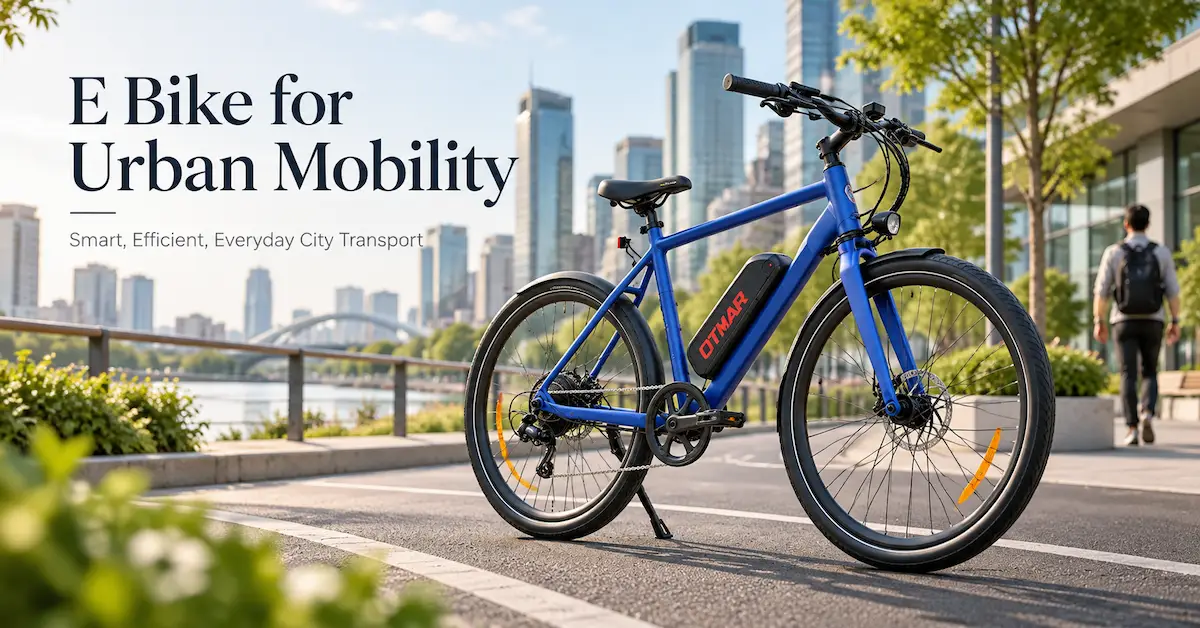
OTMAR's electric bike range provides several product platforms that can be evaluated for these urban applications. The important purchasing principle is to start with route and user requirements, then select the vehicle configuration. A city e-bike should not be approved simply because it has a rear rack, suspension or a particular motor rating; the buyer should confirm rider fit, battery configuration, braking, tires, accessories, servicing and documentation for the actual model being ordered.
Which Buyers Need an Urban Mobility E-Bike Platform?
An e bike for urban mobility can be relevant to electric-bike distributors, city-bike retailers, rental companies, hotels, campuses, property-management operators, employers developing mobility programs and private-label brands building commuter-oriented product lines. Their purchasing priorities are not identical. A distributor may care about a clear model hierarchy and replacement-part availability, while a hotel may place more emphasis on simple rider adjustment, charging procedures and easy daily inspection. A private-label brand may need configuration differentiation, packaging and repeatable production control, while a commercial operator may care more about fleet uptime than visual customization.
The platform may be less suitable when the operating task requires heavy commercial cargo, passenger transport or specialized off-road performance that has not been validated for the selected city model. Buyers should therefore separate ordinary urban mobility from specialized applications before asking for a quotation. The purpose of the specification is not to make one bicycle serve every possible user; it is to define a vehicle that performs predictably in its intended urban role.
Start With the Urban Route Before Selecting the Bike
Urban mobility is not a single operating condition. A five-kilometer trip through flat residential streets differs from a longer route with repeated hills, rough pavement, traffic lights and frequent stops. A rental bicycle shared by many riders also faces different requirements from an e-bike used by one employee every day. Before evaluating OTMAR's City eBike range, buyers should document typical route distance, gradient, road condition, stop frequency, rider height range, storage location, charging availability and any planned cargo or accessories.
For dense city centers, maneuverability, practical rider fit and simple servicing may matter more than maximum specification. For suburban commuting, buyers may place greater weight on battery planning, rider comfort and the ability to carry a bag or small daily load. For campuses or large residential developments, repeated starts and stops, parking and easy rider adjustment may become more important. These differences should be reflected in sample testing rather than hidden behind a generic description such as “perfect for city riding.”
Build an Urban E-Bike Requirement Specification Before Buying
A controlled specification makes supplier comparisons more meaningful because every candidate is evaluated against the same operating requirements. The following table is a procurement framework, not a universal specification for every OTMAR model.
| Requirement Area | What the Buyer Should Confirm | Why It Matters for Urban Mobility |
|---|---|---|
| Route profile | Distance, gradients, road quality and stop frequency | Defines the real operating duty cycle |
| Rider fit | Height range, saddle adjustment, handlebar position and mounting ease | Fleet bicycles may be shared among different users |
| Motor system | Drive location, rated/peak terminology, controller and assistance settings | Power alone does not determine urban suitability |
| Battery | Voltage, Ah, Wh, removal method, charger and replacement identification | Determines charging and fleet-management planning |
| Braking | Brake type, replacement parts and behavior under the intended load | Frequent city stops make maintenance important |
| Tires | Complete dimensions, pressure guidance and replacement availability | Influences comfort, rolling behavior and service cost |
| Suspension | Front or other suspension where applicable | Should match road conditions rather than marketing preference |
| Carrying equipment | Rack, basket or approved accessory and separate load limits | Daily urban users may need to carry bags or work items |
| Lighting | Installed system and operating instructions | Relevant to visibility and daily vehicle checks |
| Vehicle dimensions | Overall size, storage requirements and rider adjustment | Important for apartments, fleet rooms and shared storage |
| Service parts | Brake, tire, drivetrain, battery and electrical replacement references | Supports predictable fleet maintenance |
| Documentation | Final model, revision, instructions and applicable documents | Prevents specification confusion after purchase |
A buyer should distinguish between a required value, a supplier proposal and an approved value. If a component changes between sample and production, the specification should show whether the change has been reviewed. This approach is especially valuable for distributors and fleets ordering the same platform over multiple production batches.
Battery Planning Should Follow Real Urban Travel Patterns
Battery selection should be based on the actual mobility pattern rather than a single advertised range number. Frequent stopping, hills, rider weight, additional baggage, assistance level, temperature and tire pressure can change energy consumption. A useful purchasing process therefore begins with the distance between realistic charging opportunities and an agreed reserve rather than asking only, “How many kilometers can this bike travel?”
When testing an e bike for urban mobility, record the sample configuration, rider, route, load, assistance setting and starting and ending battery condition. The result becomes more useful when the conditions are documented because the buyer can compare several models using the same route. If removable batteries are important to a hotel, apartment-based commuter or commercial fleet, confirm the removal process, approved charger and replacement battery identification rather than assuming all battery systems are equally convenient.
Rider Fit and Everyday Usability Can Matter More Than Maximum Power
A city e-bike spends much of its working life at low and moderate speeds: starting from intersections, maneuvering around parked vehicles, stopping outside buildings and being moved into storage. Rider interaction therefore matters. Saddle adjustment, handlebar position, step-over geometry, bicycle dimensions and control layout should all be assessed with representative riders.
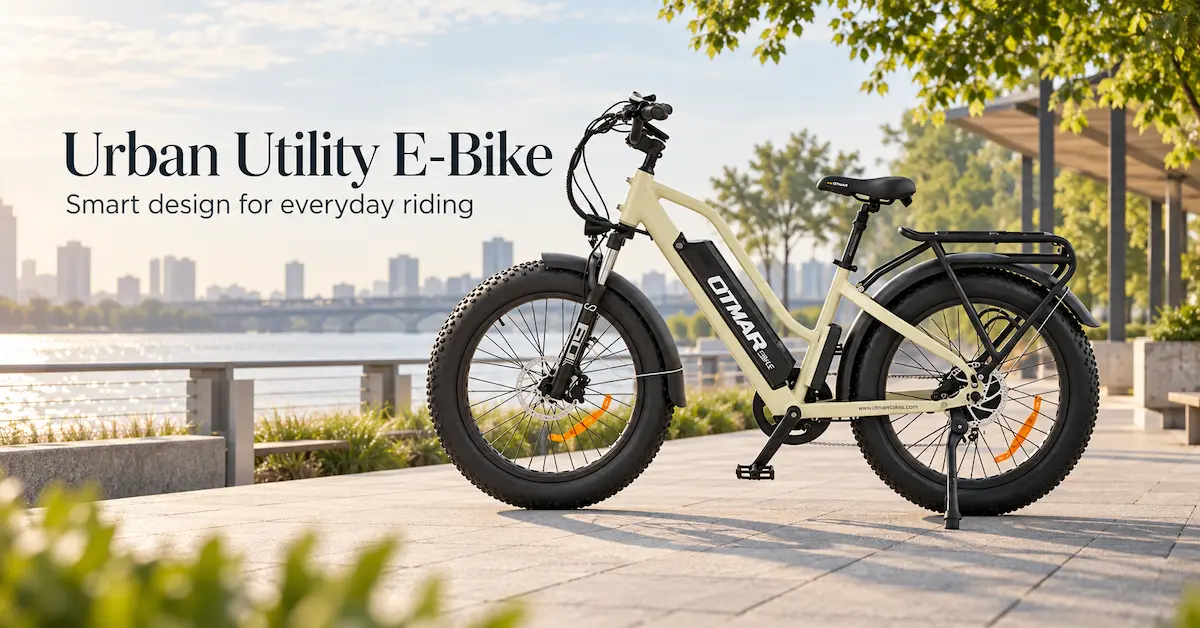
OTMAR's OTM-M9 is described as a 26-inch city e-bike with a 500W rear-drive system, hidden battery, disc brakes, ergonomic saddle and adjustable handlebars. Those published features make it a useful platform to evaluate where a buyer wants a conventional city layout with rider-adjustment considerations. They do not, however, establish a universal rider-height range, battery capacity or operating distance; those values should be confirmed from the project specification before a fleet decision.
Choose Tires, Suspension and Components for the Actual Street Environment
A buyer operating primarily on maintained city streets may prioritize predictable replacement parts and efficient everyday operation. Where the route includes damaged pavement, brick paths or less-uniform surfaces, wider tires or suspension may be worth evaluating. The key word is evaluating: more suspension and wider tires are not automatically better for every city fleet because they can change weight, maintenance requirements, rolling behavior and replacement cost.
The OTM-K6 is currently described with 24-inch wheels, a 750W rear-drive system, wider tires, front suspension, disc brakes and a rear rack. That configuration provides a different starting point from a conventional city model when a buyer expects more varied road surfaces. Before choosing it for a fleet, confirm complete tire dimensions, rider fit, battery information, rack limitations and how the final configuration performs on the routes that matter to the buyer.
Serviceability Should Be Treated as a Fleet Specification
For a single consumer, a component problem affects one rider. For a rental company or commercial mobility operator, the same problem repeated across twenty or fifty bicycles becomes an operational issue. Urban fleet procurement should therefore identify common service items before the purchase order is placed. Ask for tire and tube references where applicable, brake service parts, drivetrain components, charger identification, battery references and relevant electrical assemblies.
The goal is not necessarily to specify the most expensive component. It is to create a configuration that the buyer's service system can understand and support. A standardized model family can simplify stocking and technician training if the production specification remains consistent. Buyers should also ask how component substitutions are communicated, because a replacement introduced after sample approval may affect compatibility or future parts planning.
How Should Workmanship and Quality Control Be Evaluated?
OTMAR presents itself as an OEM/ODM electric mobility manufacturer and describes manufacturing and testing capabilities on its About Us page. For a professional buyer, factory equipment is only one part of supplier evaluation. The more practical question is how the selected configuration is inspected before shipment and how the production batch is compared with the approved sample.
The purchasing team can ask how wheel assembly, steering, brakes, fasteners, electrical function, battery installation, lighting and accessory mounting are checked. Inspection records should identify the applicable model or production version where possible. If a buyer requires additional checks for a rental or commercial fleet, those requirements should be agreed before production. Quality control is more useful when acceptance criteria are defined than when both parties rely on general phrases such as “high quality.”
Review Documentation Together With the Physical Sample
A good sample may demonstrate that the basic product concept works for the buyer, but it does not answer every documentation question. The destination market, selected electrical configuration and final product version should be considered when reviewing applicable documents. Buyers should match the model identity and configuration on the supplied documentation with the actual product instead of assuming that a general list of certifications automatically applies to every version.
During sample approval, retain the agreed specification and record outstanding changes. If the final production version changes battery, motor, controller, brakes or another meaningful component, determine whether additional review is necessary. This creates a clearer connection between sample approval and mass production.
Compare OTMAR Models for Different Urban Mobility Requirements
No single city platform is automatically best for every urban mobility buyer. The following comparison uses information currently presented for three OTMAR products and highlights what a buyer should evaluate next rather than declaring a universal winner.
| Model | Published Product Direction | Potential Urban Use | Key Items to Confirm |
|---|---|---|---|
| OTM-C1 | 26-inch city e-bike, 500W rear drive, aluminum frame, rear rack, fenders and disc brakes | Everyday commuting, distributor city-bike range, light utility use | Battery capacity, vehicle weight, rider range, rack limit and final component specification |
| OTM-M9 | 26-inch, 500W rear drive, hidden battery, disc brakes, adjustable handlebar and ergonomic saddle | Commuting and city mobility where integrated appearance and rider adjustment are important | Battery specification, adjustment ranges, total weight and final drivetrain configuration |
| OTM-K6 | 24-inch, 750W rear drive, wide tires, front suspension, disc brakes and rear rack | Urban routes with less-uniform pavement or buyers seeking a different wheel/tire platform | Tire dimensions, battery specification, rack limit, rider fit and route performance |
The OTM-C1 is a logical starting platform where the buyer wants a conventional city bicycle with practical features such as a rear rack and fenders. The OTM-M9 offers another city-oriented configuration and places more emphasis on integrated battery presentation and rider-adjustment features. The OTM-K6 shifts toward wider tires and front suspension. A distributor could use these differences to build a more clearly segmented product range, while a fleet operator could sample-test them against the same route and rider requirements.
Urban Mobility Cost Is More Than the Purchase Price
Unit price is important, but fleet buyers should also compare the cost of accessories, packaging, transport, assembly, routine maintenance, replacement parts, chargers and future battery planning. A lower purchase price may be less attractive if replacement components are difficult to identify or a configuration creates unnecessary service complexity.
For commercial operators, downtime also has value. A bicycle that cannot be used while waiting for a small component creates an operational cost even if the repair itself is inexpensive. Buyers can therefore evaluate total ownership using a defined period and common assumptions rather than comparing only initial quotations. The purpose is not to produce an artificial “lowest cost” claim but to understand which configuration is easier for the operator to support.
OEM/ODM Urban E-Bikes Should Start With Market Requirements
Distributors and private-label brands may want more than an existing catalogue model. OTMAR describes its business around OEM/ODM cooperation, making existing city platforms a possible starting point for project discussion. Buyers can review OTMAR's company and manufacturing information and partner cooperation page before defining project requirements.
Visual customization such as logos, colors and packaging should be managed separately from technical modifications. A different battery, controller, rack, tire or electrical component can influence compatibility, testing and documentation, so those changes should be controlled through the product specification and sample process. For a private-label urban mobility range, it is useful to establish clear differences between entry, commuter and mixed-road platforms rather than creating several models with only cosmetic changes.
Confirm MOQ, Sample Terms and Lead Time for the Exact Project
There is no reliable reason to assume that one MOQ or lead time applies to every OTMAR model and every customization project. Buyers should request these conditions for the selected model, order quantity and customization scope. Separate the sample stage from mass production and distinguish manufacturing time from international transport time.
A practical project schedule can include requirement confirmation, candidate-model selection, sample preparation, buyer evaluation, final specification approval, component preparation, production, inspection and shipment. When branding or technical changes are involved, identify which buyer approvals can delay the next stage. This makes the delivery plan more meaningful than a single generic number.
What Information Should You Send Before Requesting a Quote?
A strong inquiry for an e bike for urban mobility should provide the destination market, buyer type, estimated order quantity, target users, average route, road conditions, rider-size requirements, charging plan, required accessories, branding requirements and expected launch schedule. For fleet projects, also explain how many riders may share each bicycle and how maintenance will be handled. For private-label projects, distinguish mandatory specifications from items that can be recommended by the manufacturer.
Buyers can first compare OTMAR's electric bike products and then send the project requirements through the Contact Us page. A detailed requirement brief helps both sides discuss a candidate model, sample configuration and quotation on the same basis.
Frequently Asked Questions About E Bikes for Urban Mobility
1. What type of e-bike is best for urban mobility?
There is no universal best configuration. Buyers should match wheel size, rider fit, motor system, battery, tires, brakes, accessories and service requirements to the actual city route and user group. A conventional city platform may suit smooth commuting routes, while wider tires or suspension may be worth evaluating for rougher streets.
2. How much motor power does an urban e-bike need?
Motor wattage alone should not decide the purchase. Route gradients, rider and cargo weight, assistance settings, local requirements and intended operating conditions all matter. Compare complete motor and controller specifications and test the final configuration under representative conditions.
3. How should buyers evaluate battery range?
Use a representative route with a realistic rider and load instead of relying only on a catalogue range figure. Record route length, terrain, assistance setting and battery use so several models can be compared under similar conditions.
4. Is a removable battery useful for urban fleets?
It can be valuable where bicycles are stored away from charging points or batteries are managed centrally. Buyers should confirm how the battery is removed, locked, identified, charged and replaced before deciding whether the configuration supports their operating process.
5. Are wide tires better for city riding?
Not automatically. Wider tires may be useful on rougher surfaces, but buyers should also consider rolling behavior, bicycle dimensions, replacement availability and maintenance. Tire selection should follow the real route.
6. Should an urban mobility e-bike have a rear rack?
A rear rack can be useful for bags or light utility requirements, but its permitted load and attachment method should be confirmed for the selected model. Do not treat the overall vehicle load and rack load as the same specification.
7. What should rental operators test before buying a fleet?
Evaluate rider adjustment, mounting and dismounting, braking, low-speed handling, charging, parking, routine inspection and common maintenance tasks. Shared fleets should also test the bicycle with riders of different sizes within the approved range.
8. Can an urban e-bike be customized for a private-label brand?
OTMAR presents OEM/ODM cooperation as part of its business, so branding and configuration discussions are possible. The exact customization scope, MOQ, engineering implications, sample requirements and documentation should be confirmed for the selected project.
9. What documents should a B2B buyer request?
Request the final model and specification, component information relevant to service, operating instructions, applicable test or conformity documents and records needed for the buyer's inspection process. Confirm that documents correspond to the actual supplied configuration.
10. What should be included in an urban e-bike RFQ?
Include the destination market, quantity, target customer, route conditions, rider requirements, accessories, charging strategy, branding scope and project schedule. The clearer the requirement, the easier it is to compare models and receive a useful quotation.
Conclusion
Choosing an e bike for urban mobility is ultimately a question of matching a vehicle platform to real users, real routes and a manageable operating system. Instead of beginning with the highest motor rating or the longest advertised range, professional buyers should define the urban duty cycle, evaluate rider fit, battery planning, braking, tires, carrying requirements, maintenance and documentation, and then verify those requirements through a representative sample.
OTMAR's city and electric bike platforms, including the OTM-C1, OTM-M9 and OTM-K6, provide different starting points for commuter, distribution, rental and private-label projects. Their final suitability depends on the confirmed configuration and intended market rather than the category name alone. Buyers preparing a city mobility program can contact OTMAR with the destination market, quantity, route, rider requirements and customization needs to discuss an appropriate base model, sample plan and project-specific quotation.