
What Should an Electric Delivery Bike Factory Deliver?
An electric delivery bike factory should help turn an operating requirement into a clearly specified vehicle, a representative sample and a repeatable production configuration. For a fleet buyer, the approval question is not simply whether a bicycle has a rear rack or a powerful motor. It is whether the agreed vehicle can complete the intended route, carry the permitted load, accommodate the delivery equipment and be maintained within the operator’s service arrangements. OTMAR’s OEM/ODM manufacturing capabilities cover electric bicycles and tricycles, providing product platforms for project discussions. Delivery suitability should then be established for the selected configuration rather than assumed from a general product category.
Which Buyers Benefit From a Factory-Led Delivery Project?
This approach is intended for restaurant groups specifying a shared delivery fleet, courier operators comparing vehicle layouts, distributors developing commercial product lines and private-label brands preparing repeat orders. Each buyer should set a different approval priority: a restaurant group might emphasize box installation and shift charging, while a distributor should also examine replacement parts, configuration consistency and customer-facing specifications. An individual rider seeking an immediately available retail bicycle may not need this development process. Projects involving heavy freight, temperature-controlled transport or passenger carrying should be scoped separately; they should not enter production as an ordinary rear-rack modification without the relevant engineering review and supporting documentation.
Translate Delivery Routes Into a Written Operating Brief
Before asking an electric delivery bike factory for a recommendation, describe a working shift rather than supplying only a daily-distance estimate. For food delivery, record the box dimensions, empty box weight, maximum contents, collection frequency and time available between delivery periods. For parcels, include the largest package dimensions, loading access and whether the vehicle returns to a depot during the route. For campus or business-park deliveries, record entrances, narrow passages, parking locations and storage arrangements. Include representative riders, road surfaces, slopes, seasonal conditions and where charging will occur. Treat these as proposed project inputs, not proof that an existing model already meets them. The result should be a brief that a product team can use to assess a candidate vehicle and define sample evaluation.
Confirm the Specifications That Control Delivery Suitability
Use the following table as a specification brief for discussion, not as a published specification sheet for any OTMAR model. Ask the supplier to return a completed, revision-controlled version before sample approval. Load definitions deserve particular attention: a vehicle’s permitted total mass and its rear carrier limit are separate fields, and the manufacturer should explain what each includes. As a hypothetical example, an 8 kg box assembly containing 22 kg of goods places 30 kg on its supporting structure before additional accessories are counted. That calculation is not an OTMAR load rating; it illustrates why the container must be included when defining the required carrying arrangement.
| Specification item | What to confirm in writing | Evidence to request |
|---|---|---|
| Vehicle and carrier loads | Permitted total mass, its definition, rider limits and separate rack or platform limits | Model-specific instructions and relevant load-validation records |
| Delivery box installation | Box dimensions, empty weight, attachment points and permitted loading arrangement | Installation drawing and approval of the complete assembly |
| Battery configuration | Nominal voltage, capacity in Ah and Wh, pack identification and removal method | Battery specification and approved charger pairing |
| Drive system | Motor location, rated and peak power descriptions, controller and assistance settings | Configuration sheet and representative loaded-route evaluation |
| Brakes and parking | Component models, replacement parts and any parking arrangement | Inspection criteria, operating instructions and sample assessment |
| Wheels and tires | Complete sizes, operating pressure guidance and replacement specifications | Component identification and maintenance documentation |
| Rider and site fit | Seat adjustment, access to controls, overall dimensions and storage requirements | Dimensioned drawing and user-fit evaluation |
| Environmental conditions | Permitted operating and storage conditions, exposure limitations and cleaning instructions | Applicable product documentation and supporting test scope |
| Service support | Replaceable assemblies, part numbers, compatible revisions and ordering procedure | Parts list and agreed support arrangements |
Plan Battery Capacity Around Charging Opportunities
For a delivery bike battery plan, define the distance between realistic charging opportunities and agree on an operating reserve. A useful planning relationship is: required usable energy equals measured route consumption multiplied by the distance between charging opportunities, plus the chosen reserve. Obtain the consumption figure from representative evaluation rather than inventing it from motor wattage or a catalogue range claim. Record the load, rider, assistance setting and conditions alongside the result so it can be interpreted. Where battery removal or swapping is proposed, include that operation in the evaluation and obtain approval for the specific replacement pack and charger.
Select Components Your Service Team Can Maintain
Make maintenance access part of component selection, rather than leaving it until after a vehicle is purchased. Ask a technician to review access to brake adjustment points, wheel removal, electrical connectors and the battery mounting arrangement on the sample. Specify the replacement identifiers for tires, brake pads, controllers, displays and chargers instead of relying on broad descriptions such as “standard components.” For frame and carrier materials, request the applicable specification and construction details rather than treating “aluminum” or “steel” as a complete durability assessment. Where a battery brand is mentioned, distinguish the cell specification from the assembled pack, battery management system and pack supplier. The purchasing objective should be an identifiable, supportable configuration—not merely a list of recognizable component names.
Inspect Workmanship Beyond the Finished Appearance
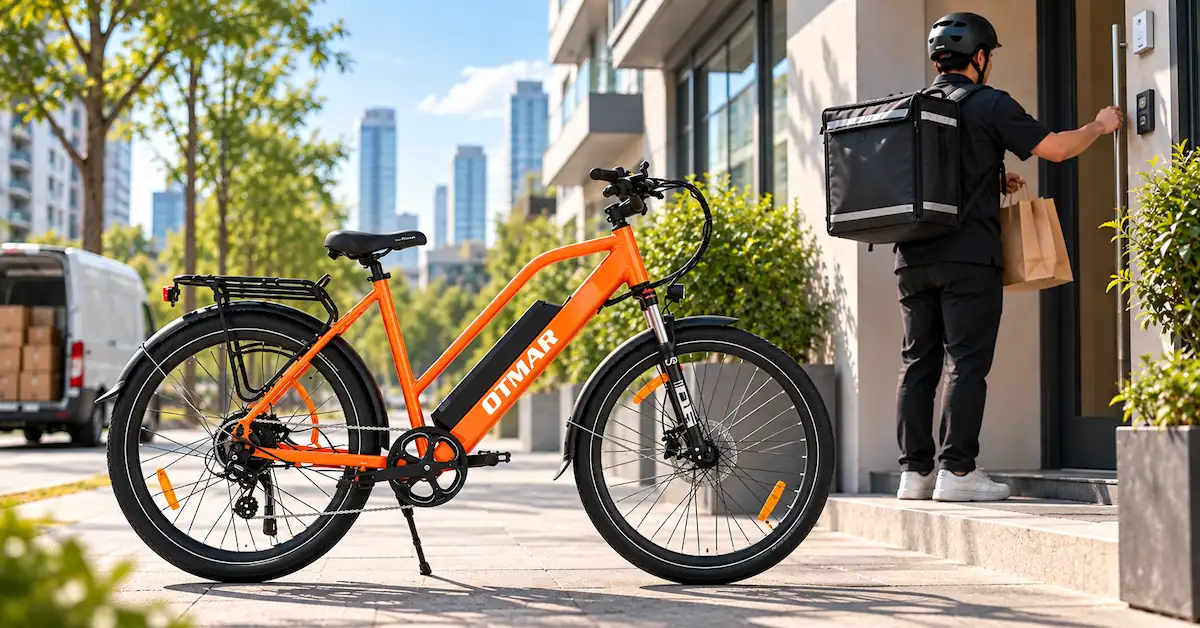
OTMAR describes a self-owned manufacturing facility, Dutch-engineered automatic rim-building machinery and multistage testing before shipment. These statements provide useful subjects for a factory discussion, but they do not replace project-specific inspection evidence. Ask how wheel assembly, brake adjustment, fastener tightening, cable routing and carrier installation are checked on the proposed vehicle. Request examples of the records available for your order and agree which inspections will accompany the shipment. Retain an approved reference sample with its component list and configuration revision. When evaluating an electric delivery bike factory, the practical question is whether the production batch can be checked against that reference—not whether the sample looks impressive in a showroom.
Approve the Loaded Sample and Its Documentation Together
Define sample acceptance criteria before testing begins. A proposed evaluation should cover the intended box installation, loading and unloading, rider access, parking, controlled stopping, representative route operation and maintenance access, all within the manufacturer’s approved limits and with appropriately qualified personnel. Record the sample identity, component configuration, test conditions, observations and corrective actions; a statement that the bicycle “rides well” is not a complete approval record. Review product documentation in parallel. OTMAR’s electric-bike certification guide emphasizes checking requirements against the destination and configuration rather than assuming one certification applies everywhere. Request the relevant report or certificate, covered model, configuration and standard edition, and arrange appropriate verification for the intended market. A route trial and a documentation review answer different questions; neither should be used as a substitute for the other.
Confirm Capacity, MOQ and Production Milestones
Ask the electric delivery bike factory to quote the actual order specification and quantities rather than accepting a general lead-time statement. Separate sample preparation, buyer approval, component allocation, production completion, final inspection and dispatch into identifiable milestones. Establish what starts the production clock and whether the quoted date refers to factory completion or shipment departure. For repeat-order planning, request the proposed allocation for your model and discuss the handling of component substitutions. Record minimum quantities separately for the vehicle, custom colors, packaging and any developed accessory. OTMAR’s published sourcing guidance treats production time and minimum quantities as dependent on project variables; therefore, use a project-specific quotation rather than importing a generic MOQ or delivery period into your purchase plan.
Compare OTMAR Starting Models Without Assuming Delivery Ratings
The OTMAR electric bike range provides several starting points for configuration discussions. The table below separates published product descriptions from proposed evaluation priorities. These are not confirmed purpose-built delivery specifications, and the suggested comparisons are not claims of approved commercial payload, shift range or destination-market suitability. Use the model links to begin a technical discussion, then compare completed specification sheets and samples under the same requirements.
| Model | Published configuration | Proposed evaluation focus | Confirm before delivery approval |
|---|---|---|---|
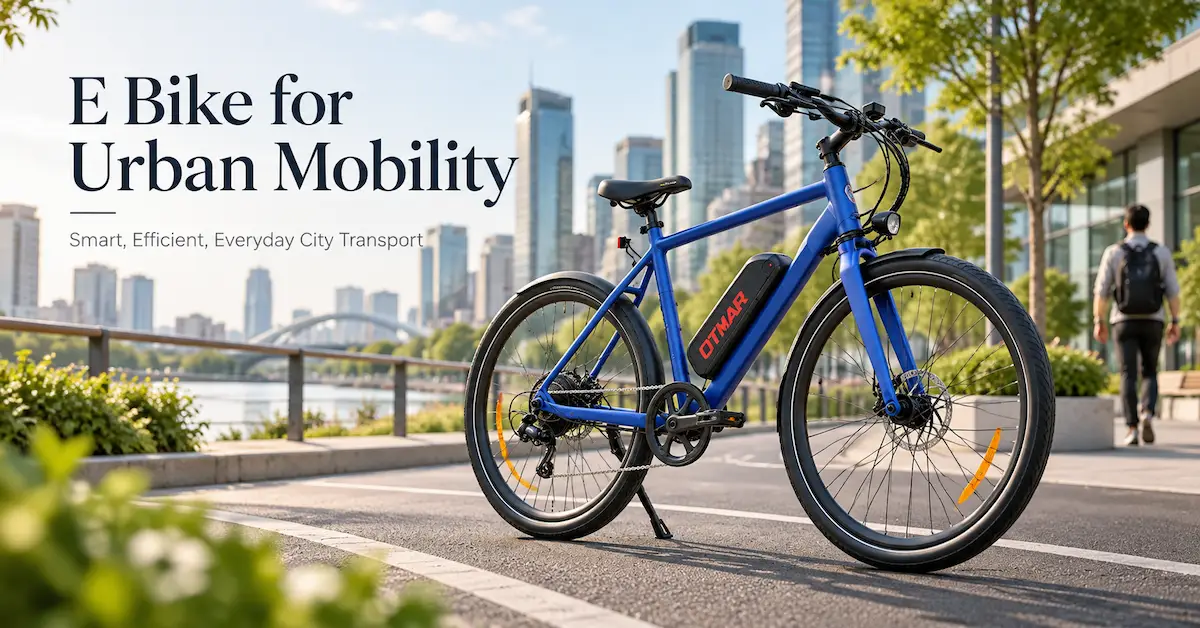
| OTM-C1 | 26-inch city e-bike, 500W rear drive, aluminum frame, rear rack, fenders and disc brakes. | Evaluate the city-bike layout against the rider, storage space and proposed delivery-box arrangement | Carrier rating, installation drawing, battery specification, vehicle mass and loaded-route results |
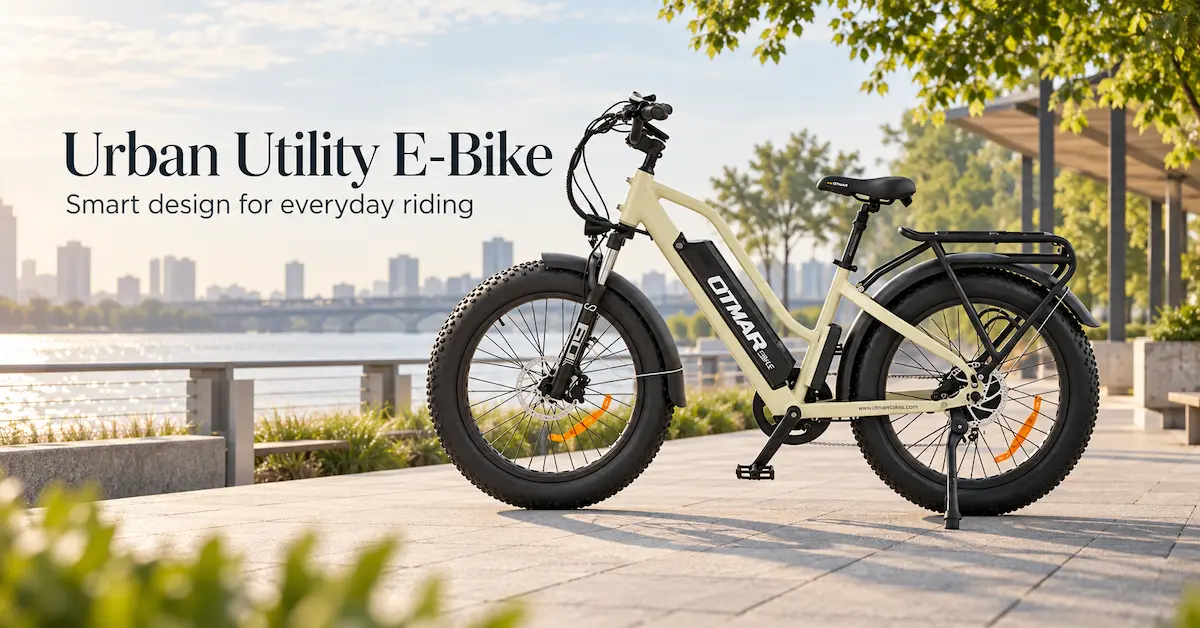
| OTM-K6 | 24-inch e-bike, 750W rear motor, fat tires, front suspension, disc brakes and rear rack. | Compare its wheel, tire and suspension configuration against the actual route and maintenance plan | Complete tire specification, carrier limits, drive configuration and representative energy consumption |
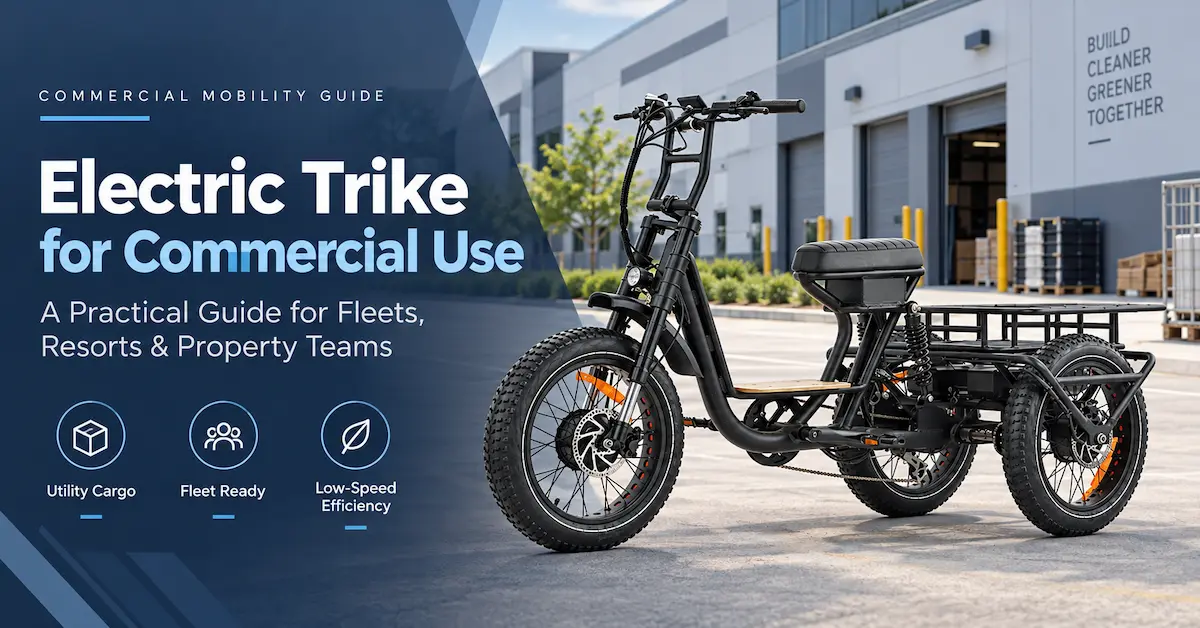
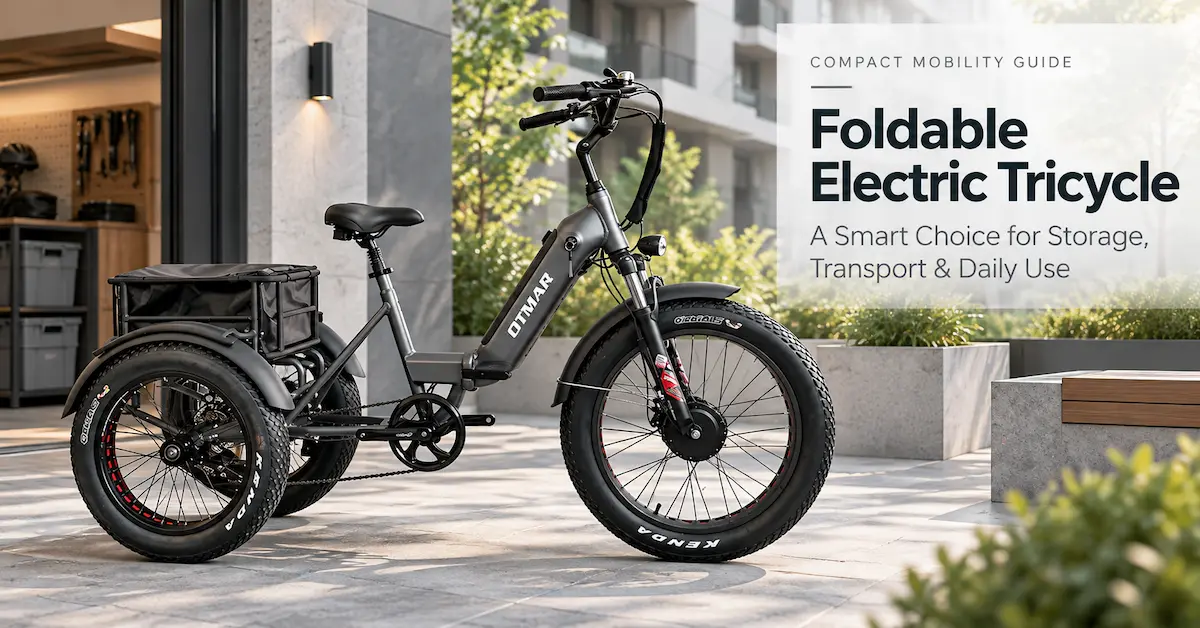
| OTM-T16 | Electric tricycle with a 24-inch front wheel, 20-inch rear wheels, 750W front drive, steel frame, front suspension and rear cargo platform. | Evaluate a three-wheel platform where the project specifically calls for this layout | Overall width, turning and parking requirements, platform load limits and the approved loading arrangement |
Compare Operating Cost, Not Just the Bicycle Price
For quote comparison, place vehicle cost, the approved delivery assembly, packaging, transport, commissioning, planned maintenance and replacement parts in separate fields. Use the same evaluation period and service assumptions for every candidate. One possible internal measure is cost per available bike-day: divide the included acquisition and operating costs by the total bike-days actually available for scheduled work. This is a proposed comparison method, not an industry benchmark or a promised saving. Keep service availability measurable by recording repair time, parts waiting time and substitute-vehicle use during a pilot. When requesting an electric delivery bike factory quotation, ask for the initial spare-parts package and replacement assemblies to be priced separately so the purchasing team can see what the vehicle price excludes.
Separate Private-Label Branding From Engineering Changes
OTMAR presents its manufacturing business as OEM/ODM, making private-label and configuration discussions relevant starting points for a project. However, branding changes and engineering changes should be approved through different records. For logos, colors, labels and packaging, request artwork approval and confirm the included scope. For a different battery, revised carrier, delivery box or altered control configuration, ask what compatibility review, sample work and documentation updates are necessary. OTMAR’s OEM sourcing process describes requirement analysis, product selection, specification confirmation, sample development and production. For a delivery project, add a written approval at each relevant stage and identify which changes require renewed review. The final bill of materials—the agreed list of components—should identify the production version and distinguish it from earlier samples.
Send a Quote Request That Can Become a Sample Order
A useful enquiry should include the destination market, initial quantity, anticipated repeat orders, delivery task, box dimensions and loaded weight, route information, rider requirements, charging arrangements and preferred launch window. Attach delivery-box drawings and site photographs where available. State which items are fixed requirements and which remain open to discussion, including price targets and branding. Through the OTMAR contact page, request a candidate-model proposal, completed specification sheet, sample scope, relevant documentation and itemized quotation. The first deliverable to agree on is a feasible sample plan with clear evaluation criteria; a production commitment should follow the necessary approvals rather than precede them.
FAQ: Working With an Electric Delivery Bike Factory
Are the models above ready-made commercial delivery bikes?
They are published OTMAR bicycle and tricycle configurations presented as starting points for discussion, not as proof of a completed delivery specification. Confirm the chosen model’s permitted loads, delivery attachment, operating conditions and supporting documents before ordering it for fleet service.
What is the minimum order quantity for a delivery project?
Request the MOQ against the exact model and customization scope. Ask whether vehicle quantities, colors, packaging and developed accessories have separate minimums. Obtain sample-order terms independently instead of assuming that sample availability establishes the conditions for a production order.
How should production lead time be confirmed?
Request a dated schedule showing sample readiness, approval, component allocation, production completion, inspection and dispatch. Identify which milestones depend on buyer decisions. Keep factory lead time separate from transportation and destination delivery when setting an operational launch date.
Is a 750W model automatically the better delivery choice?
No such conclusion follows from the power figure alone. Ask for the complete drive specification and evaluate the candidate against the required route, load and operating settings. Confirm the destination requirements separately instead of treating a higher advertised wattage as an approval criterion.
Should a delivery fleet use one battery or two?
Start with measured energy demand and the available charging schedule. Request a single- and dual-battery comparison only where those configurations are supported. Confirm mounting, electrical arrangement, approved charging and replacement procedures rather than assuming a second battery provides a particular operating result.
Can a delivery box be attached to any rear rack?
Do not approve installation from appearance alone. Provide the box drawing, empty weight, contents and attachment method, then request confirmation for that assembly on the selected vehicle. Check the carrier rating separately from the vehicle’s overall load limits.
Which documents should accompany sample approval?
Request the final specification, component list, model and revision identification, operating instructions, delivery-attachment drawing, relevant test records and applicable conformity documentation. Keep the acceptance report and outstanding-action list with those documents so later production checks refer to the same configuration.
How should wet-weather suitability be assessed?
Describe the expected exposure and ask for the model-specific operating limitations, applicable ingress-protection information, test scope, cleaning instructions and storage requirements. Include both electrical components and delivery equipment in the review. Do not substitute a general “all-weather” description for documented conditions.
What should a private-label buyer approve besides the logo?
Approve the model name, artwork, color reference, product labels, packaging, instructions and production configuration. Discuss ownership and permitted use of custom artwork or developed parts, together with the approval process for future changes. Keep these decisions in the project records rather than relying on informal messages.
What after-sales arrangements should be settled before shipment?
Agree on fault-reporting information, diagnostic support, parts identification, compatible component revisions, warranty scope and replacement responsibilities. Request a priced initial spares proposal and replenishment terms. Distinguish services the supplier confirms from support tasks that the importer or local fleet workshop must provide.
Conclusion
Selecting an electric delivery bike factory is a process of approving a working configuration, not choosing a catalogue image. Begin with the delivery route and load, identify a suitable starting model, evaluate the complete sample and establish how production and service will be controlled. OTMAR’s product information provides a basis for that discussion, while project-specific specifications and approvals determine the final vehicle. Discuss your delivery fleet requirements with OTMAR and provide the information needed to develop a candidate configuration, sample plan and comparable quotation before placing a bulk order.