
What Should an Electric Cargo Bike OEM Manufacturer Actually Provide?
An electric cargo bike OEM manufacturer should do more than install a larger rear rack on an existing electric bicycle. Commercial cargo applications change the way a vehicle is loaded, accelerated, stopped, parked, charged, maintained, and used throughout the working day. A serious OEM project therefore begins with the intended load and operating environment, translates those requirements into a controlled vehicle specification, validates a representative sample, and then reproduces the approved configuration during production.
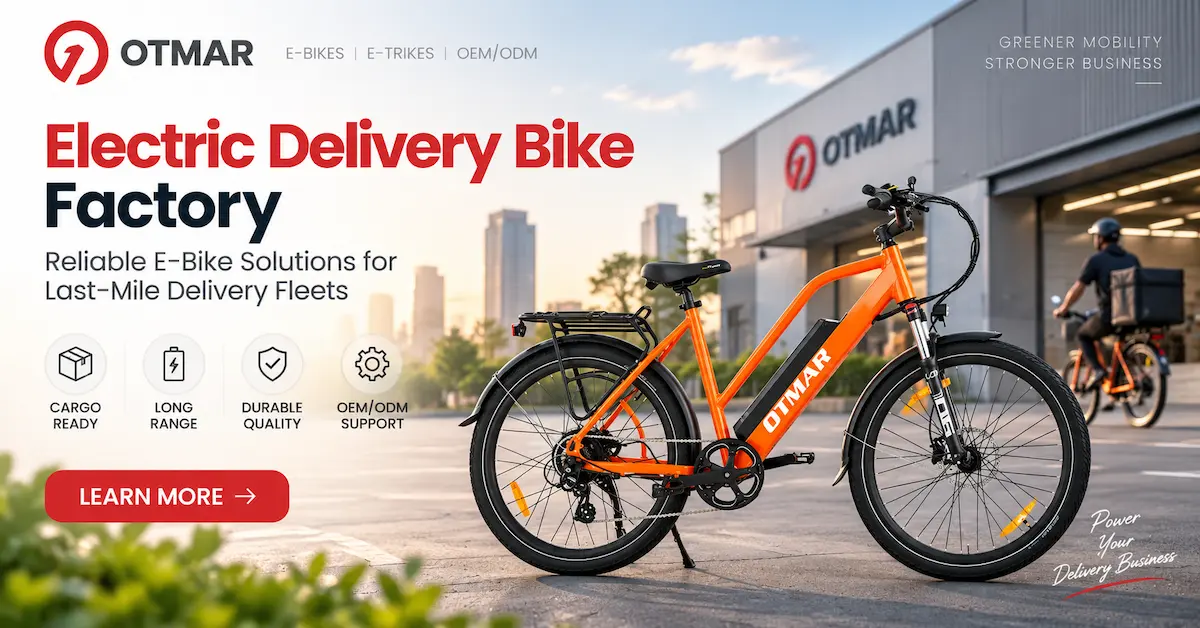
OTMAR positions its business around electric bicycles, electric tricycles, and OEM/ODM cooperation. Buyers can review the current electric bike range, electric trike range, and company manufacturing information before defining a cargo project. One important distinction should remain clear: the currently reviewed public catalog does not provide enough evidence to treat every OTMAR model with a rack or cargo area as a dedicated commercial cargo e-bike. For B2B buyers, the safer approach is to define the required cargo platform first and let the sample, specifications, load limits, and project documentation determine whether an existing vehicle can be adapted or whether deeper OEM/ODM development is required.
Who Should Work With a Cargo E-Bike OEM Manufacturer?
OEM cargo-bike sourcing is particularly relevant to last-mile delivery companies, food-delivery fleets, parcel operators, distributors developing commercial e-bike ranges, rental or mobility operators, facility-management companies, and private-label brands that need a repeatable vehicle configuration rather than a one-time retail purchase. A distributor may be primarily concerned with product differentiation, replacement parts, documentation, and repeat-order consistency, while a delivery fleet may prioritize cargo capacity, route energy use, service downtime, and ease of loading. A private-label brand may require custom graphics and packaging as well as technical changes to the rack, battery, tires, brakes, or accessory system.
OEM development may be unnecessary when an existing standard vehicle already meets the operating requirement without meaningful modification. It is also the wrong starting point when the buyer has not yet defined the cargo weight, box dimensions, route, rider requirements, charging conditions, target market, or expected order volume. Before discussing a custom vehicle, buyers should first establish whether the requirement is light urban utility, professional delivery, larger-volume cargo transport, or an application that may be better served by a three-wheel platform.
Start With the Cargo Task, Not the Motor Wattage
One of the most common sourcing mistakes is beginning with a message such as “We need a 750W cargo bike” or “We need a long-range delivery bike.” Neither statement defines the job the vehicle must perform. The manufacturer needs to know what will be carried, how much it weighs, how it is mounted, how far the vehicle travels between charging opportunities, what gradients appear on the route, how frequently the rider stops, and how many hours the vehicle is expected to operate.
For food delivery, define the insulated box dimensions, empty container weight, typical contents, attachment method, and loading frequency. For parcel delivery, record the largest expected package dimensions, maximum intended load, loading sequence, and whether deliveries begin from a centralized depot. For campuses, industrial parks, resorts, or property operations, identify route width, turning areas, storage conditions, pedestrian interaction, and repeated stop-start usage. These inputs are more useful to an electric cargo bike OEM manufacturer than a requested motor number because they establish the conditions the complete vehicle must be designed or evaluated around.
Build a Cargo E-Bike Requirement Specification Before Quotation
A controlled requirement sheet helps purchasing, engineering, production, and the supplier work from the same definition. It should separate buyer requirements, supplier proposals, approved values, and unresolved items. This becomes especially important when samples go through several revisions because an early quotation should not automatically become the final production specification.
| Requirement Area | What the Buyer Should Define or Confirm | Why It Matters |
|---|---|---|
| Cargo application | Food, parcels, tools, groceries, internal logistics, or other use | Defines the operating purpose |
| Cargo dimensions | Maximum length, width, height, and container shape | Determines rack or platform layout |
| Cargo weight | Container weight plus intended goods | Affects structure, handling, braking, and stability |
| Vehicle load limits | Rider limit, cargo-area limit, and permitted total load | Prevents different load definitions from being confused |
| Route | Distance, gradients, road surface, stop frequency | Defines the real duty cycle |
| Motor system | Drive position, rated/peak terminology, controller, assistance modes | Must suit the intended configuration and target market |
| Battery | Voltage, Ah, Wh, mounting, removal, charger, replacement strategy | Determines operating and charging planning |
| Brakes | Brake system, replacement parts, loaded evaluation | Cargo increases the importance of controlled stopping |
| Tires and wheels | Dimensions, pressure guidance, replacement availability | Influences load support, comfort, and service planning |
| Cargo structure | Rack, platform, box mount, mounting points, fasteners | Must be treated as part of the approved vehicle |
| Parking | Kickstand or other parking arrangement | Loading and unloading require predictable support |
| Lighting | Installed lighting and project-specific requirements | Important for commercial use and daily inspection |
| Service parts | Replacement references and compatible revisions | Reduces fleet downtime |
| Documentation | Final specification, drawings, instructions, and applicable records | Links production to the approved sample |
Payload Must Be Defined More Carefully Than “Carries X Kilograms”
Cargo-bike procurement often becomes confusing because several different load values may appear in the same project. The permitted total vehicle load, rider limit, rear-rack limit, cargo-box limit, and actual goods weight are not automatically the same value. A buyer should therefore ask the manufacturer to define each limit clearly and explain whether vehicle accessories, racks, boxes, and rider equipment are included.
For example, if a delivery container weighs 8 kg before 20 kg of goods are loaded, the supporting structure is already carrying 28 kg before any other attached item is counted. This is only an illustration of the calculation method, not an OTMAR load rating. The correct limits must come from the final model-specific engineering information. Cargo dimensions also matter because the same mass positioned higher or farther behind the rider can affect handling differently. A professional OEM discussion should therefore consider weight distribution and mounting geometry rather than describing cargo capability with one marketing number.
Battery Planning Should Follow the Delivery Duty Cycle
Cargo fleets should not select batteries only by comparing advertised range. Actual energy use depends on payload, rider mass, gradients, acceleration frequency, assistance level, tires, weather, route surface, and operating speed. Delivery vehicles can spend much of the day repeatedly accelerating from stops, which creates a different duty cycle from steady recreational riding.
A better process is to define the distance between realistic charging opportunities and then evaluate a representative sample with the intended load. Record route length, cargo weight, rider, assistance setting, terrain, and battery condition before and after the test. If the project requires removable batteries, battery swapping, or a dual-battery architecture, confirm the approved battery identification, mounting arrangement, electrical strategy, charger, and replacement procedure. A second battery should not be translated automatically into a specific percentage increase in working range without comparable test conditions.
Frame, Rack, and Cargo Interface Should Be Evaluated as One System
A commercial cargo platform is not defined solely by frame material. Steel and aluminum descriptions alone do not tell the buyer whether the structure has been designed for the proposed loading arrangement. The cargo support, mounting points, fasteners, frame geometry, wheelbase, rider position, and parking system work together and should be reviewed as a system.
When a buyer requests a custom delivery box, the supplier should receive the box dimensions, empty weight, intended contents, mounting drawing, and loading method. Changes to the rack or platform should be treated as engineering changes rather than cosmetic accessories if they alter loads or attachment points. Buyers should also examine how the rider gets on and off the vehicle when the cargo container is installed, whether maintenance access remains practical, and whether common components can still be removed without dismantling the complete cargo system.
Choose Components Around Fleet Serviceability
A commercial fleet operates differently from a privately owned bicycle. A small parts problem repeated across dozens of units can create substantial downtime. Buyers should therefore identify tire sizes, brake service components, drivetrain parts, chargers, battery references, controllers, displays, connectors, and cargo-mount hardware before mass production.
The goal is not automatically to specify premium or expensive components. The better objective is a component system that the operator can identify, stock, maintain, and reproduce across repeat orders. Ask how compatible revisions are controlled and what happens when a nominated component becomes unavailable. If substitutions are permitted, define whether the buyer must approve the change before production. This reduces the risk of receiving a later batch that appears similar externally but requires different service parts.
Workmanship Should Be Verified Through the Approved Configuration
OTMAR describes its manufacturing operation as including its own facility, automatic wheel-production equipment using Dutch technology, engineering capabilities, and multistage testing before shipment. Buyers can review these capabilities on the OTMAR About Us page. Factory equipment can support manufacturing capability, but the procurement question is how those resources will be applied to the buyer's particular cargo vehicle.
For a cargo project, buyers should discuss wheel assembly, steering, brakes, fastener control, electrical operation, battery installation, cable routing, cargo-rack installation, and complete-vehicle inspection. An approved reference sample should be associated with the final specification and component list so production units can be inspected against a controlled reference. Visual appearance alone is not enough: the production process should also preserve the functional characteristics that were approved during development.
How Should a Cargo E-Bike Sample Be Validated?
Sample validation should simulate the intended use as closely as practical. Test the bicycle with representative rider and cargo weight, the actual or equivalent cargo container, realistic route surfaces, repeated stopping, hill starts where relevant, parking, loading, unloading, charging, and routine maintenance access. Record the sample identity, configuration, route conditions, observations, required corrections, and final approval status.
The buyer should also inspect what happens when the cargo area is empty, partially loaded, and loaded to the approved project condition. A vehicle that feels acceptable in one state may behave differently in another. The purpose is not to create dramatic demonstration testing but to establish whether the proposed configuration satisfies the agreed purchasing requirements under realistic conditions.
Treat QC and Documentation as Part of the OEM Product
Quality control is more meaningful when the buyer knows what is being inspected and what constitutes acceptance. For a commercial cargo project, the agreed inspection plan may cover vehicle functions, brakes, wheels, steering, electrical operation, charging, battery installation, lighting, cargo attachment, fasteners, labeling, packaging, and any project-specific item defined during development.
Documentation should be tied to the actual configuration. Buyers should identify the destination market early, determine which product documents or conformity information are required, and verify whether existing documentation applies to the final specification. A company-level list of standards or certifications should not automatically be interpreted as proof that every custom model and every component combination is covered. If meaningful electrical or structural changes are made during OEM development, the buyer and manufacturer should determine what review or additional testing is necessary before production approval.
Confirm MOQ, Capacity, and Lead Time for the Exact Configuration
An OEM buyer should avoid treating a general factory capacity statement as a guaranteed project delivery schedule. MOQ and lead time can depend on the selected vehicle, battery, motor, color, packaging, custom rack, tooling requirements, component availability, sample revisions, and order quantity. Ask for terms against the exact project instead of importing a number from an unrelated model.
A useful schedule separates requirement approval, candidate-platform selection, sample preparation, buyer validation, specification freeze, component preparation, production, final inspection, packaging, and dispatch. Buyers working toward a fleet launch should also distinguish production completion from international transport and destination delivery. OTMAR invites distributors and commercial buyers to discuss cooperation through its Partner With Us page, but project-specific quantities, timing, and customization conditions should still be confirmed in the commercial quotation.
Compare the Right OTMAR Platforms Before Starting Cargo Development
The current OTMAR website should not be interpreted as showing that every vehicle below is a dedicated cargo e-bike. Instead, existing products can help buyers understand different platform directions before discussing a custom cargo project. The comparison below deliberately separates published vehicle characteristics from proposed cargo-project evaluation.
| Platform | Current Published Direction | What It Can Help Buyers Evaluate | What Must Be Confirmed |
|---|---|---|---|
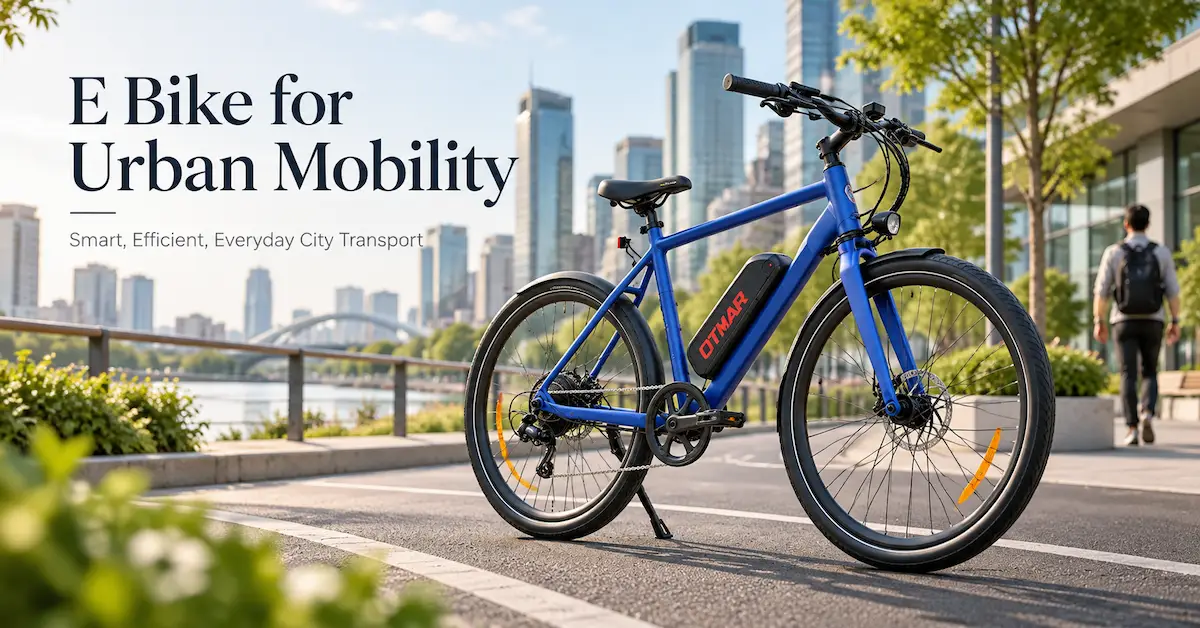
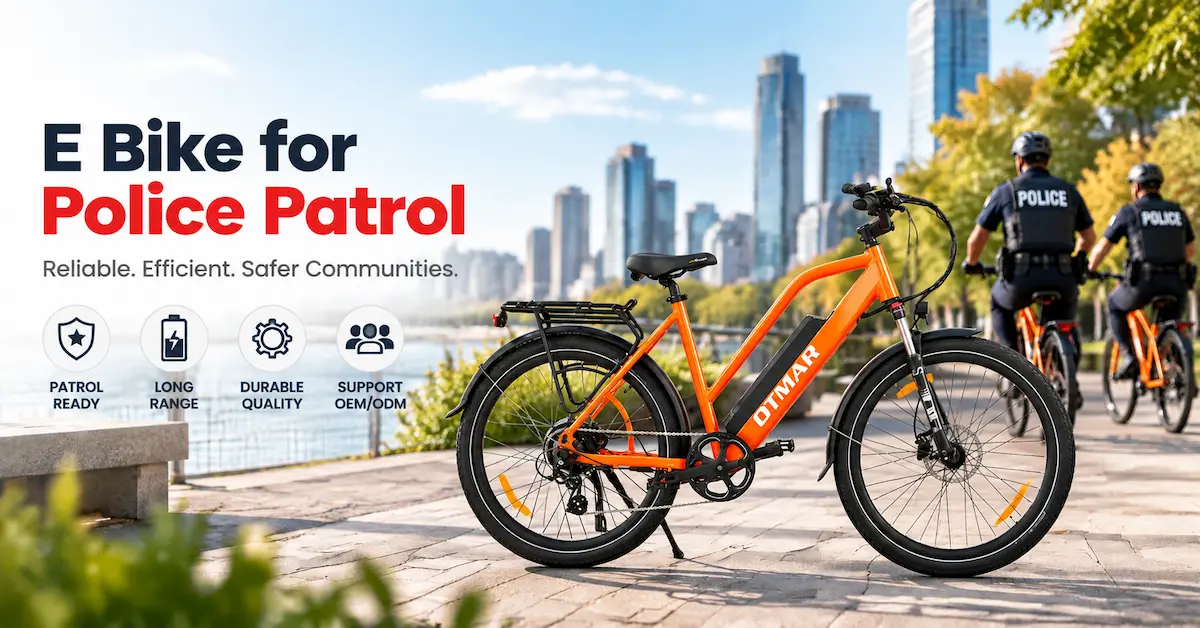
| OTM-C1 | 26-inch city e-bike, 500W rear drive, aluminum frame, rear rack, fenders, disc brakes | Conventional two-wheel city layout and light utility starting point | Rack limit, total load, battery specification, cargo-interface feasibility |
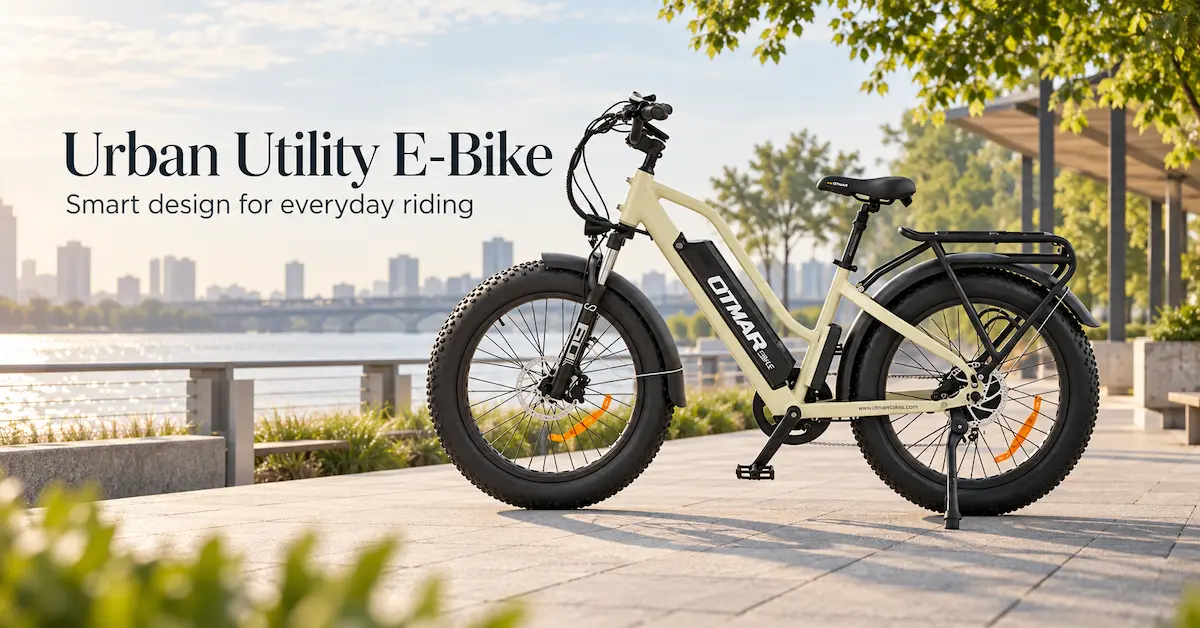
| OTM-K6 | 24-inch, 750W rear drive, wide tires, front suspension, rear rack | Wider-tire platform for routes with less-uniform surfaces | Tire specification, rack load, battery, vehicle mass, final commercial configuration |
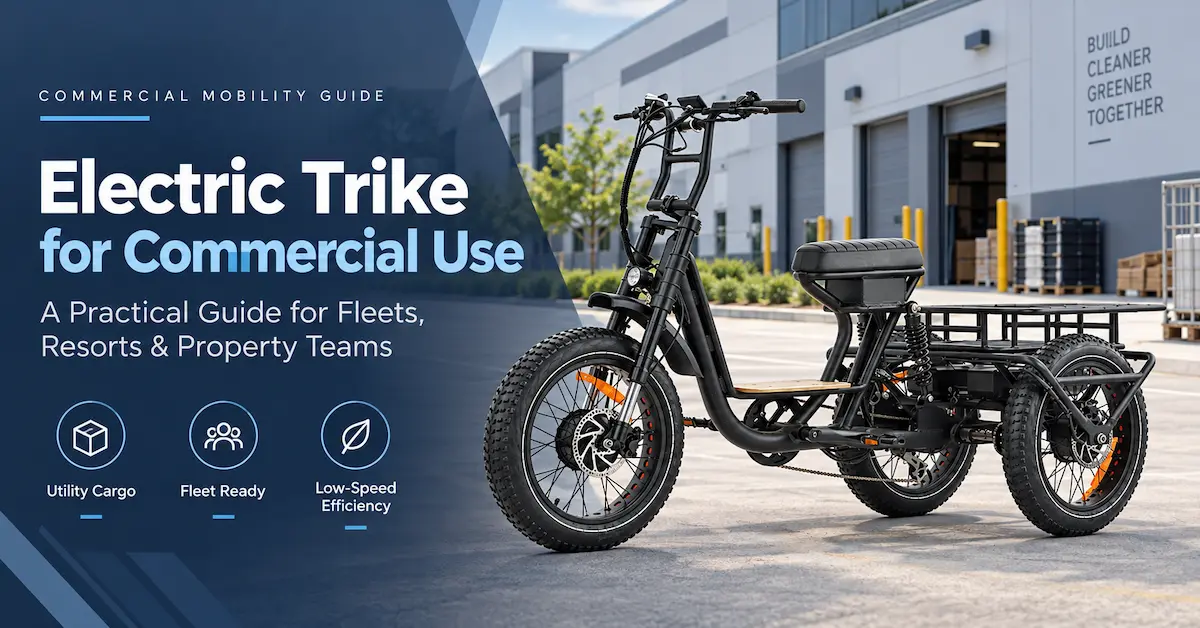
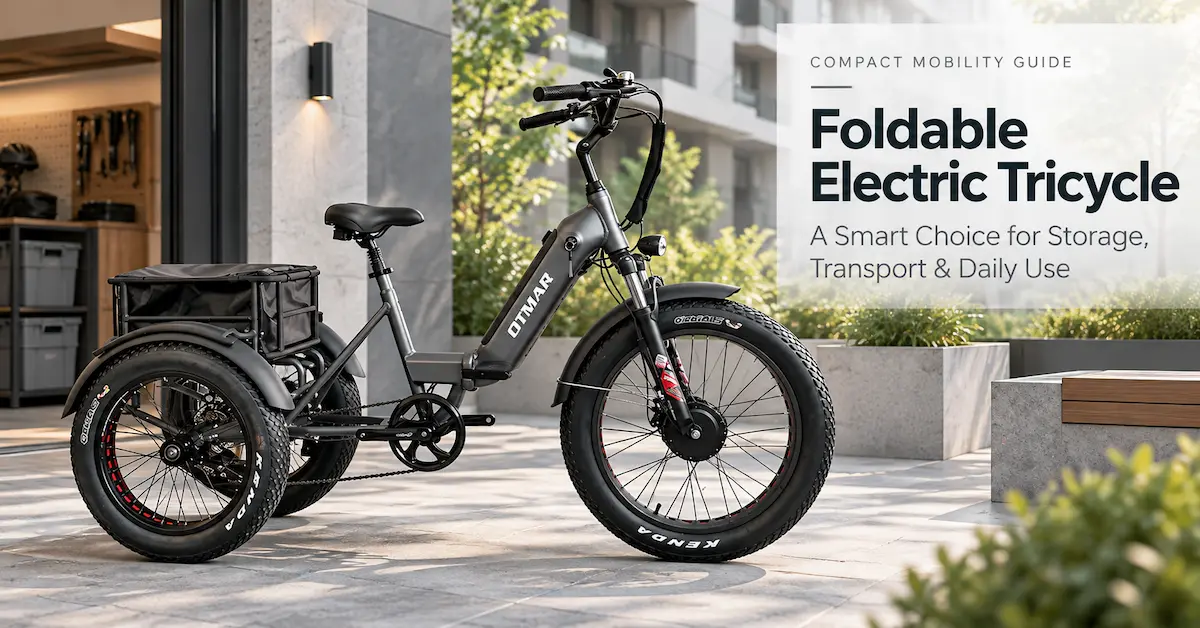
| OTM-T16 | Electric tricycle with 24-inch front/20-inch rear wheels and rear cargo platform | Three-wheel alternative when cargo space and low-speed utility are priorities | Platform load, overall width, turning needs, parking, final cargo arrangement |
The OTM-C1 should not be marketed automatically as a professional cargo bicycle simply because the published configuration includes a rear rack. It can, however, provide a useful reference when a buyer is evaluating a conventional city-based platform for light utility requirements. The OTM-K6 provides another two-wheel configuration with wider tires and front suspension that can be evaluated against rougher urban routes. The OTM-T16 belongs to the electric-tricycle range rather than the two-wheel cargo-bike category, but it may be worth comparing when the application prioritizes a larger rear cargo platform or a different low-speed vehicle architecture. Buyers can review the complete OTMAR electric trike range when a three-wheel solution may fit the operating requirement better.
Cargo Bike Cost Should Be Evaluated Beyond Unit Price
The quotation price is only one part of commercial fleet cost. Buyers should separately evaluate the bicycle, cargo structure, customized parts, sample work, packaging, international transport, spare parts, chargers, maintenance consumables, battery planning, and technician time. When comparing suppliers, use the same assumptions for each quotation so a lower unit price is not created simply by excluding required items.
Downtime should also be considered. A fleet vehicle waiting for an uncommon brake component, controller, charger, or rack fitting may generate more operational disruption than its repair cost suggests. A serious electric cargo bike OEM manufacturer should therefore be able to discuss service parts and production consistency alongside the purchase price. Private-label buyers should also consider the cost of future component changes, packaging revisions, documentation updates, or tooling when comparing an apparently cheaper design with a more controlled long-term platform.
Separate Branding Customization From Engineering Customization
OEM projects often contain several types of customization that should not be treated equally. Logos, colors, graphics, labels, manuals, and packaging are mainly branding or presentation decisions. Changes to the battery, motor, controller, wheels, tires, brakes, rack, frame structure, cargo box, or electrical system can affect product performance, compatibility, testing, and documentation.
OTMAR presents OEM/ODM cooperation as part of its manufacturing business, and buyers can review its company capabilities before defining the development scope. A useful OEM project file should record which items remain standard, which are modified, which require new drawings or samples, and which require further validation. The final production specification should then be connected to the approved sample rather than relying on a collection of emails or photographs from earlier project stages.
How Should Repeat-Order Risk Be Controlled?
The first successful production order does not automatically guarantee that future batches will be identical. Components can be discontinued, suppliers can change, and commercial requirements can evolve. For repeat orders, buyers should maintain a controlled product definition including the model name, revision, bill of materials where applicable, approved drawings, battery and charger references, cargo structure, critical components, labels, packaging, and acceptance requirements.
The buyer and manufacturer should agree how meaningful changes are communicated and approved. This is particularly important for private-label brands and commercial fleets because a silent component substitution can create service-part incompatibility, documentation problems, or different field behavior. Repeatability should therefore be treated as a purchasing requirement, not merely an assumption.
What Should Buyers Send an Electric Cargo Bike OEM Manufacturer?
A useful RFQ should include the final application, destination market, expected initial quantity, forecast repeat volume, rider range, cargo type, maximum intended cargo dimensions and weight, typical route distance, gradients, road conditions, operating hours, charging plan, required rack or box arrangement, desired battery strategy, branding requirements, packaging expectations, documentation needs, and target project schedule. Where possible, provide drawings or photographs of the cargo container, loading process, existing vehicle, and problems the current solution needs to solve.
Buyers can review OTMAR's electric bicycle products and electric tricycle products before deciding which general platform direction is worth discussing. Once the requirements are defined, use the OTMAR Contact Us page to submit the project details and request a candidate configuration, sample scope, applicable technical information, and project-specific quotation.
Frequently Asked Questions About Electric Cargo Bike OEM Manufacturing
1. What is the difference between a standard e-bike and an OEM cargo e-bike?
A standard e-bike is already defined around an existing configuration, while an OEM cargo project may require specific racks, cargo interfaces, batteries, components, branding, packaging, or other approved changes. The exact boundary depends on project scope, so buyers should define what is standard and what requires engineering review before ordering.
2. Does a rear rack make an electric bike a cargo bike?
No. A rear rack indicates that the bicycle has a carrying structure, but it does not by itself establish professional cargo capacity. Confirm the rack limit, vehicle load definition, mounting arrangement, cargo dimensions, weight distribution, and approved intended use.
3. How much payload should an electric cargo bike carry?
There is no single correct payload for every project. The required value should come from the intended goods, container, rider, route, vehicle architecture, and validated design. Buyers should request clearly defined model-specific limits rather than adopting a generic industry number.
4. What battery size is best for a delivery cargo e-bike?
Battery selection depends on the distance between charging opportunities, cargo load, terrain, stop frequency, assistance level, operating temperature, and reserve requirement. Representative route testing is more useful than choosing the largest available battery solely from a specification sheet.
5. Should a cargo fleet choose a two-wheel bike or electric trike?
The answer depends on the task. Two-wheel platforms and three-wheel vehicles differ in dimensions, maneuvering, parking, cargo arrangement, rider behavior, and maintenance. Buyers should compare them against route width, cargo volume, rider training, storage, and operating conditions rather than treating one architecture as universally superior.
6. Can OTMAR customize cargo racks or delivery boxes?
OTMAR presents OEM/ODM cooperation as part of its business, so project-specific customization can be discussed. However, the public information reviewed does not establish that every rack, cargo box, or structural modification is a standard option for every model. Submit the dimensions, weight, drawings, and mounting requirements for engineering evaluation.
7. How should buyers approve an OEM cargo-bike sample?
Approve the sample against the written specification and test it under representative cargo, rider, route, braking, parking, loading, charging, and maintenance conditions. Record the exact configuration and any required corrections before releasing the product for mass production.
8. What should be included in quality control for a cargo e-bike?
The inspection plan should reflect the final configuration and may include brakes, wheels, steering, electrical functions, battery installation, charging, lighting, fasteners, cargo attachment, labels, and other agreed project-specific items. Define acceptance criteria before production rather than relying only on a general statement that the vehicle is tested.
9. How should MOQ and lead time be handled in an OEM project?
Request MOQ and timing for the exact model, custom parts, color, packaging, and quantity. Separate sample development, approval, production, inspection, and shipment so both parties know which stage a quoted lead time refers to.
10. How can buyers reduce risk on repeat cargo-bike orders?
Maintain a controlled production specification linked to the approved sample and identify critical components, cargo structures, batteries, chargers, drawings, labels, packaging, and inspection requirements. Agree that meaningful product changes require documented review before they are introduced into a repeat order.
Conclusion
Selecting an electric cargo bike OEM manufacturer is fundamentally a vehicle-definition, validation, and supply-control decision rather than a search for the highest motor wattage or lowest unit price. Professional buyers should begin with the real cargo task, define payload and dimensions carefully, translate the route into battery and component requirements, evaluate the complete cargo interface, test a representative sample, confirm quality and documentation requirements, and control the approved configuration through mass production and repeat orders.
OTMAR's existing electric bike and electric trike platforms provide useful starting references for discussing different urban utility and cargo architectures, while final commercial suitability must be established through project-specific specifications rather than inferred from a rack, motor rating, or category name. Buyers preparing a delivery, private-label, or commercial mobility project can contact OTMAR with their cargo dimensions, intended load, route, destination market, quantity, charging plan, and customization requirements to evaluate the appropriate development path and sample configuration.