
What Makes an E Bike for Police Patrol Different From a Normal Commuter E-Bike?
An e bike for police patrol should be evaluated as a working fleet vehicle rather than simply a consumer commuter bicycle. Police and public-safety riders may spend repeated hours moving through city streets, parks, pedestrian districts, campuses, transport hubs or event areas, with frequent starts, stops, dismounts and low-speed maneuvering. The purchasing decision therefore needs to consider the complete operating duty cycle: route length, terrain, rider equipment, charging opportunities, visibility requirements, braking behavior, service access and fleet maintenance.
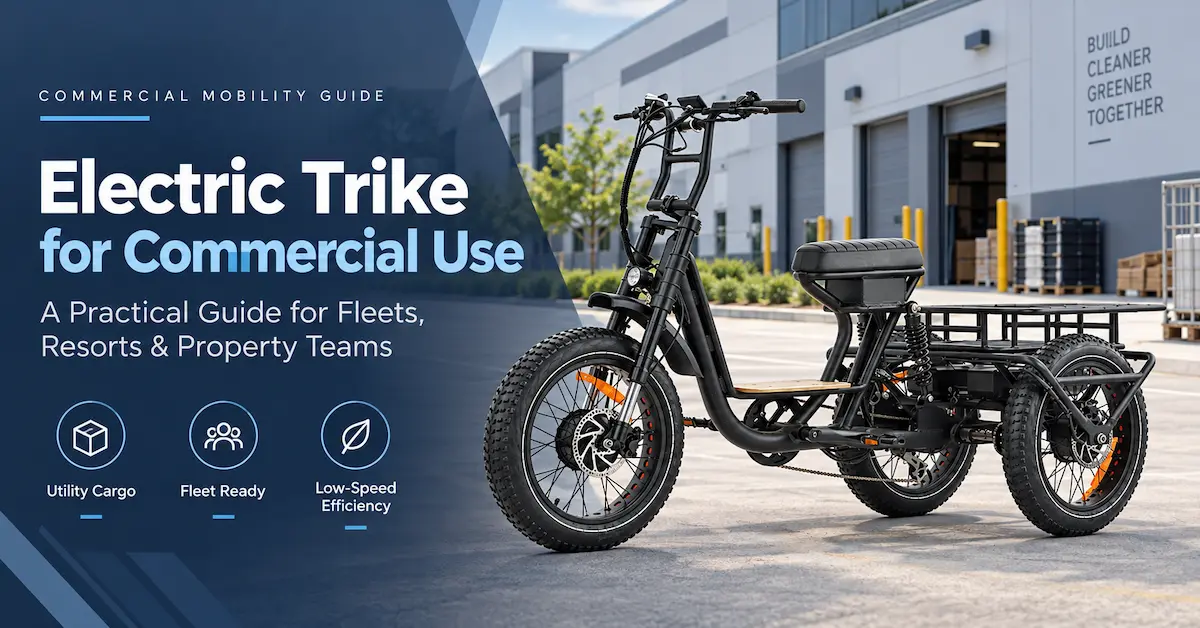
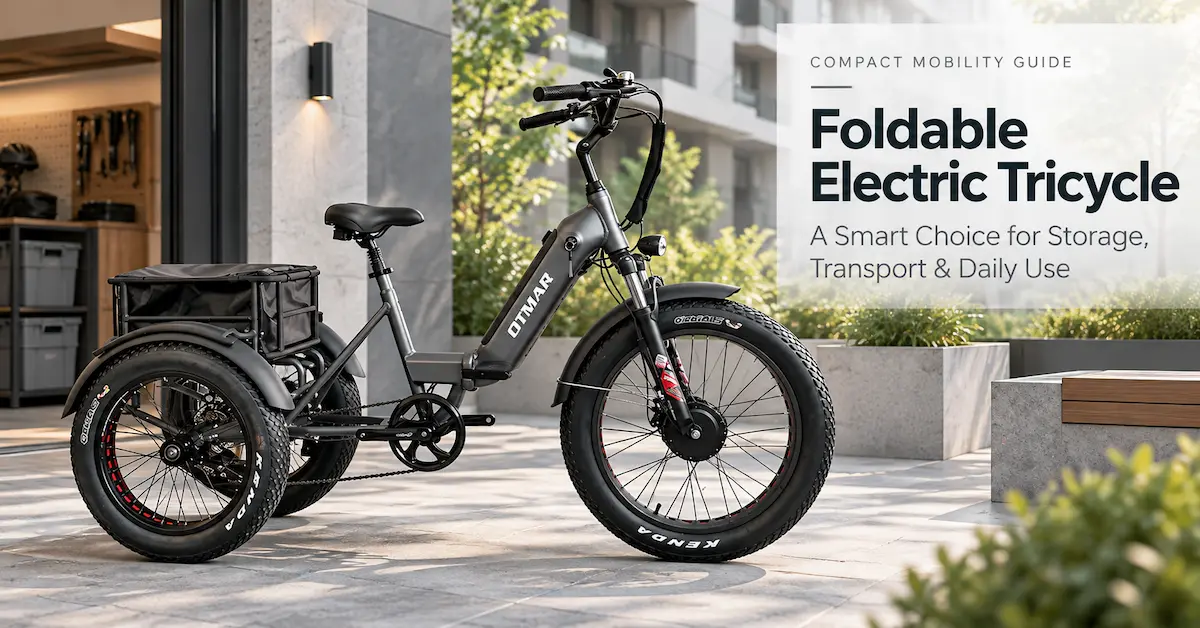
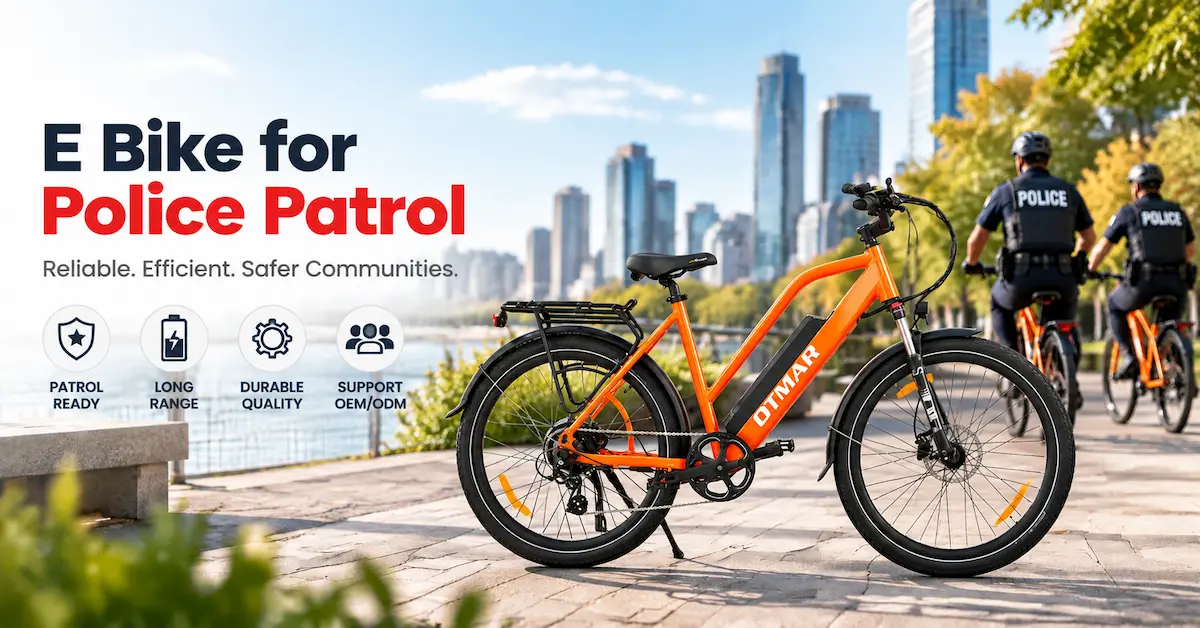
OTMAR currently offers several electric bike platforms that can provide starting points for project evaluation. However, the current catalogue does not identify a dedicated police-specific model with confirmed police accessories, patrol payload limits or agency-specific approval. A buyer should therefore treat an existing OTMAR model as a base platform to evaluate, then define the final patrol configuration through specification review, sample testing and project-specific approval rather than assuming that a standard city or touring bike is automatically police-ready.
Who Should Evaluate a Police Patrol E-Bike Fleet?
This type of procurement is relevant to municipal police departments, campus public-safety teams, park patrol units, community-policing programs, transport or property security operations and distributors or system integrators supplying mobility fleets to institutional customers. Each buyer may have a different priority. A downtown unit may value maneuverability and frequent stop-start operation, while a park patrol team may place greater emphasis on tires, suspension and mixed-surface capability. A campus fleet may prioritize rider fit, maintenance simplicity and predictable charging between shifts.
An e-bike may be less suitable when the operating task requires vehicle characteristics beyond the approved bicycle specification, when routes involve conditions that have not been evaluated, or when required emergency equipment cannot be safely integrated into the electrical or structural system. Specialized equipment such as emergency lighting, communications hardware, additional luggage or other agency-specific accessories should therefore be defined separately and reviewed for mounting, electrical demand and applicable local requirements.
Match the Patrol Bike to the Actual Operating Environment
The most useful starting point is a patrol-route profile. Record the approximate distance per shift, typical continuous riding time, number of stops, gradients, road surfaces, curb transitions where relevant, narrow passages, storage area and charging locations. Then record rider size range and the equipment that will actually be carried. This creates a specification that can be tested instead of relying on broad terms such as “urban patrol” or “all terrain.”
For paved downtown districts, a conventional city-oriented configuration may provide a practical balance of maneuverability, rack utility, fenders and routine serviceability. OTMAR's City eBike range currently includes models such as OTM-C1 and OTM-K6. Mixed-surface environments such as parks, larger campuses and less-developed access roads may justify evaluating wider tires or suspension, but those components should be selected according to the patrol route rather than appearance alone.
Build a Police E-Bike Specification Before Asking for a Quote
A purchase specification prevents the procurement team, supplier and end users from working from different assumptions. The following table is a suggested approval framework rather than an OTMAR police-bike specification. Exact limits must come from the selected model and final project configuration.
| Specification Area | What the Buyer Should Define or Confirm | Why It Matters for Patrol Use |
|---|---|---|
| Patrol route | Distance, gradients, pavement, gravel, park paths and stop frequency | Determines the vehicle configuration and test conditions |
| Rider fit | Rider height range, riding position, mounting and dismounting needs | Multiple officers may share the same fleet vehicle |
| Vehicle load | Rider, duty equipment and any rack or bag load | Prevents accessories from being evaluated separately from total operating load |
| Battery | Voltage, Ah, Wh, removal method, charger and charging schedule | Patrol availability depends on actual shift energy requirements |
| Motor system | Drive location, rated/peak terminology, controller and assistance modes | Must be understood in the context of route and destination requirements |
| Braking | Brake configuration, replacement components and loaded test behavior | Patrol riding may involve frequent braking and repeated stops |
| Tires | Size, width, pressure guidance and replacement availability | Route conditions influence grip, comfort, rolling resistance and service cost |
| Suspension | Front or full suspension where applicable | Should solve a route requirement rather than simply add specification |
| Lighting | Standard bicycle lighting plus any project-specific visibility requirements | Agency equipment may need separate integration review |
| Cargo interface | Rack, bags or approved equipment-mounting locations | Carrying equipment affects weight distribution and service access |
| Maintenance | Common replacement parts, access and compatible revisions | Fleet downtime depends on practical serviceability |
| Documentation | Model, configuration, instructions and relevant conformity documents | Procurement approval must correspond to the actual supplied vehicle |
Battery Planning Should Follow Patrol Duty Cycles
Battery selection should begin with the actual shift rather than a marketing range figure. An officer who rides continuously for long sections has a different energy profile from a community-patrol officer who repeatedly rides, stops, dismounts and restarts. Terrain, rider mass, additional equipment, tire choice, assistance level, temperature and stop frequency can all change energy consumption.
For an e bike for police patrol, a practical sample evaluation should measure energy use on a representative route with the intended rider and approved equipment load. Record the starting and ending battery condition together with distance, assistance mode, terrain and test conditions. If the project considers a removable or dual-battery arrangement, confirm how the batteries are mounted, charged and managed rather than assuming that an additional battery automatically produces a particular patrol range.
Braking, Tires and Handling Matter More Than a Headline Power Number
A police patrol e-bike may operate in areas where riders frequently slow down to observe surroundings, interact with pedestrians, stop at crossings or dismount. This makes predictable low-speed control and repeatable braking important evaluation criteria. Buyers should test braking with the intended rider and equipment load and inspect component condition after repeated use rather than relying only on a catalogue statement such as “disc brakes.”
Tires should also follow the route. A wide tire can be useful to evaluate on uneven surfaces, but it may bring different rolling resistance, replacement and handling considerations. Suspension can improve comfort on rougher routes but also creates additional components to inspect and maintain. The correct specification is therefore the one that solves the department's operating requirement with manageable service complexity.
Evaluate Components as a Fleet Maintenance System
A fleet procurement decision should identify components well enough for technicians to maintain multiple bicycles over several years. Ask for tire sizes, brake service parts, drivetrain components, charger identification, battery specifications, controller information and any project-specific mounting hardware. A replacement part should be associated with an approved model or revision rather than described only as “compatible.”
This becomes especially important when bicycles are shared across shifts. A maintenance technician should be able to determine which component belongs to which vehicle configuration without reverse-engineering the bike every time service is required. The same principle applies to any police-specific accessory developed during an OEM/ODM project: installation drawings, mounting hardware and electrical interfaces should remain linked to the approved production version.
Factory Capability Should Be Connected to Patrol-Fleet Quality Control
OTMAR describes Jinhua Otmar Technology Co., Ltd. as an OEM/ODM manufacturer and states that its facility includes automated rim-building equipment and multistage testing before shipment. For a police fleet buyer, the useful next question is not simply whether the factory owns equipment, but how its processes will be applied to the selected patrol configuration. Learn more about OTMAR's manufacturing background.
Before approving production, define which items will be checked on the patrol model, how component versions will be controlled and what inspection records can accompany the order. Relevant areas can include wheel assembly, brakes, steering, electrical operation, battery installation, fastener checks, rack or accessory mounting and overall functional inspection. OTMAR states that its vehicles undergo a multistage testing process, but exact test methods and acceptance limits for a police project should still be agreed for the final configuration.
How Should an E Bike for Police Patrol Be Sample-Tested?
Sample approval should reproduce the intended patrol environment as closely as practical. Test the vehicle with representative rider sizing and the approved equipment load. Evaluate repeated mounting and dismounting, low-speed maneuvering, controlled stopping, hill starts where relevant, uneven surfaces where relevant, parking, charging and common maintenance tasks. Record the sample identification and exact configuration so later production can be compared against the same reference.
Documentation should be reviewed at the same time. The buyer should identify the destination market and determine which technical or conformity documents are required for the actual supplied configuration. Company-level certification statements should not automatically be treated as proof that every individual model, accessory combination or modification is covered. If the project changes electrical components, battery configuration or significant structural equipment, confirm whether additional evaluation or documentation is necessary.
Confirm MOQ, Lead Time and Production Control for a Police Fleet Order
Police and institutional purchasing schedules often require more planning than an individual consumer purchase. A quotation should therefore distinguish sample preparation, sample approval, final configuration freeze, component preparation, production, inspection, packaging and dispatch. OTMAR's current product pages invite buyers to request bulk pricing and technical specifications, but a universal police-fleet MOQ or fixed lead time is not published on the pages reviewed. Those values should be obtained for the exact model and customization level.
For repeat orders, also ask how relevant component substitutions are managed. A first batch that passes an agency's evaluation has little value if later production changes critical components without review. The approved specification, model revision and documented change process therefore matter as much as the initial sample.
Which OTMAR Models Can Be Evaluated as Police Patrol Platforms?
OTMAR does not currently list a dedicated police model, so the following products should be treated as starting platforms for evaluation, not as confirmed law-enforcement configurations. The intended patrol route, required accessories, final load, market requirements and sample results must determine whether a particular platform is appropriate.
| OTMAR Model | Published Configuration | Potential Patrol Evaluation | Buyer Should Confirm |
|---|---|---|---|
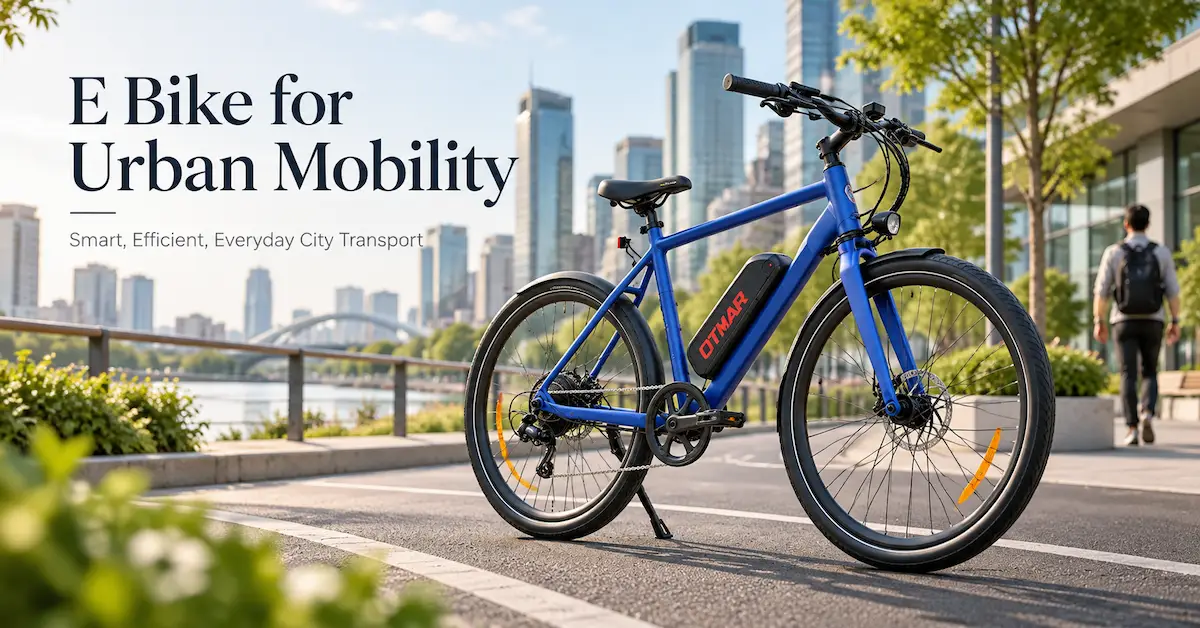
| OTM-C1 | 26-inch city e-bike, 500W rear drive, aluminum frame, rear rack, disc brakes and fenders | Paved urban areas, community patrol and campus-style routes where a conventional city-bike platform is preferred | Battery capacity, vehicle/load limits, rider fit, rack capacity, route results and final regulatory configuration |
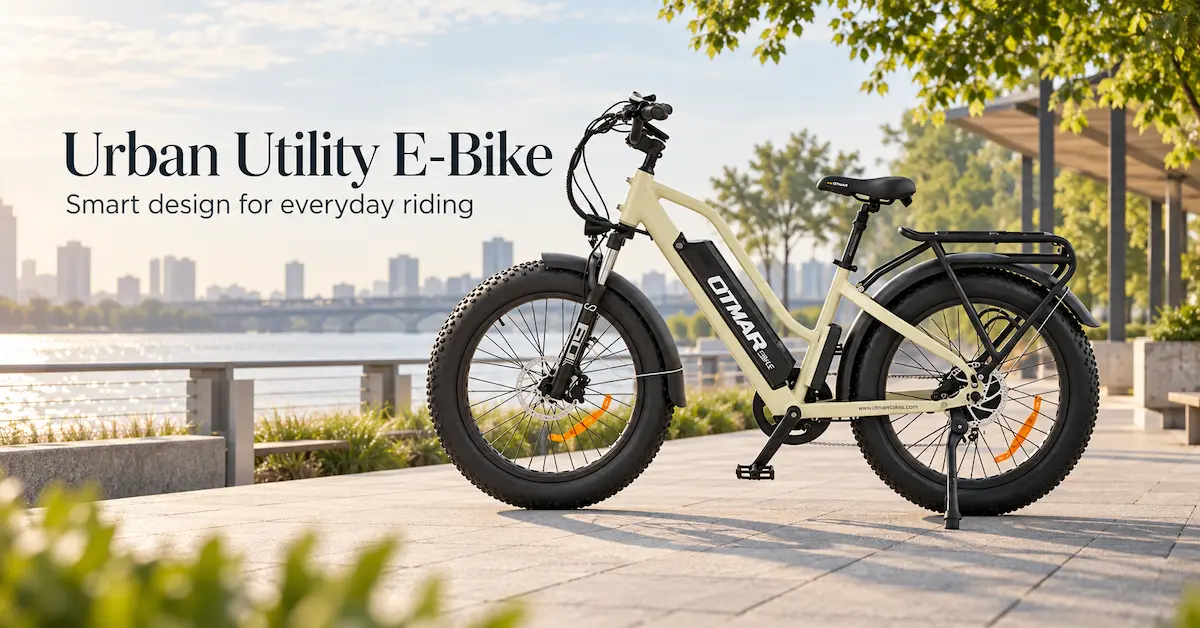
| OTM-K6 | 24-inch, 750W rear motor, wide tires, front suspension, disc brakes and rear rack | Mixed pavement or rougher patrol environments where wider tires and front suspension are worth evaluating | Complete tire specification, battery capacity, load limits, route handling and destination-market configuration |
| OTM-K4 | 26-inch full-suspension platform, dual battery, rear rack and fenders; page describes a “750W dual motor drive” | Longer or mixed-surface patrol projects where the buyer wants to evaluate suspension and dual-battery architecture | Exact motor-power definition, dual-motor architecture, battery specifications, total mass, load limits and applicable market requirements |
The OTM-C1 is a useful starting point for a more conventional urban patrol assessment because its published description includes an aluminum frame, rear rack, disc brakes and fenders around a 26-inch city platform. Those features do not make it a certified police bicycle, but they provide practical areas to evaluate for paved patrol work.
The OTM-K6 introduces wider tires and front suspension together with a 750W rear-drive description and rear rack, making it relevant when a department needs to test a bicycle on less-uniform surfaces. Again, route suitability, power configuration and load limits should be validated rather than inferred from the “all-terrain” marketing language alone.
The OTM-K4 adds full suspension and a dual-battery layout. Its current page describes a “750W dual motor drive,” so buyers should clarify whether the wattage refers to each motor, the system rating or another specification convention before using the number in a procurement document. The same applies to battery capacity and real-world patrol range: they should be confirmed for the final configuration rather than inferred from the words “dual battery.”
Police E-Bike Cost Should Include Fleet Downtime and Support
The lowest unit price is not necessarily the lowest fleet cost. Compare the bicycle, approved accessories, sample work, customization, packaging, transport, spare parts, routine service items, battery replacement planning and technician time under the same assumptions. If a bicycle is inexpensive to purchase but a small replacement component takes the unit out of service for an extended period, the procurement team has not captured the real operating cost.
Buyers should therefore request a proposed spare-parts package and identify parts that may require regular replacement. For a multi-unit police e-bike fleet, the ability to maintain a consistent component specification across repeat orders can have direct operational value because technicians can standardize inspection, stocking and repair procedures.
OEM/ODM Customization Should Start With Function, Not Appearance
A police department, distributor or public-safety integrator may require a visual identity or accessory arrangement that differs from a consumer bicycle. OTMAR describes its business as OEM/ODM manufacturing, so project-specific discussions can begin through its OEM/ODM and company information. However, the website does not currently establish that every existing model supports every police-specific modification.
Brand colors and decals are primarily visual requirements, while battery changes, additional electrical equipment, racks, bags, lighting systems or other mounted hardware can affect structure, power consumption, weight distribution or documentation. These should not be treated as identical customization tasks. For each requested change, define who supplies the component, how it mounts, what electrical load it adds where relevant, how it is tested and whether it affects the approved vehicle configuration.
What Should Buyers Send OTMAR for a Police Patrol E-Bike Evaluation?
A useful inquiry should identify the department or buyer type, destination market, expected quantity, patrol environment, approximate route distance, gradients, road surfaces, rider size range, operating hours, charging arrangement, equipment load, required racks or bags, visibility requirements and target project schedule. If specialized equipment is required, provide drawings, weights, mounting locations and electrical information where applicable. This allows the supplier to evaluate whether an existing platform can be adapted or whether the project requires a deeper OEM/ODM discussion.
Buyers can review the full OTMAR electric bicycle range before sending the project brief. Once the operating requirements are defined, use the OTMAR Contact Us page to request candidate models, project-specific specifications, sample terms, applicable documentation and a comparable quotation.
Frequently Asked Questions About an E Bike for Police Patrol
1. Does OTMAR currently sell a dedicated police e-bike model?
The current product catalogue reviewed does not identify a specific police-only SKU. Existing OTMAR electric bikes should therefore be considered base platforms for technical evaluation. Any police-specific configuration should be confirmed through project specifications and sample approval rather than implied from a standard product page.
2. What is the best motor power for a police patrol e-bike?
There is no single wattage that defines the best police patrol bike. Route gradient, rider and equipment mass, required assistance, local rules and operating conditions all matter. Compare complete drive-system specifications and test the proposed configuration on representative patrol routes.
3. Is a fat-tire e-bike better for police patrol?
Not automatically. Wider tires may be worth evaluating on poor pavement or mixed surfaces, while a conventional tire may be more practical for some paved urban routes. Tire choice also affects replacement cost, rolling behavior and maintenance, so it should follow the operating environment.
4. How should police departments evaluate battery range?
Use a representative patrol duty cycle rather than relying solely on a catalogue range figure. Test the selected vehicle with realistic rider and equipment load, assistance settings, terrain and stop frequency, then record energy use under those conditions.
5. Can police equipment be mounted directly to the rear rack?
Do not assume that any rack can support any equipment. Confirm the rack's permitted load, the total vehicle load definition, equipment weight, attachment method and weight distribution. Project-specific mounting hardware should be reviewed and included in the approved configuration.
6. Should a police patrol bike have suspension?
Suspension should address a defined route requirement. Front or full suspension may be valuable on rougher surfaces, but it also adds components that need inspection and service. Smooth urban patrol routes may not require the same suspension strategy as park or mixed-surface operations.
7. What testing should be completed before a bulk police e-bike order?
The sample should be tested for rider fit, loaded handling, braking, representative route operation, charging, parking and maintenance access. Record the exact sample configuration and close any issues before releasing the production specification.
8. Can OTMAR customize colors and police-specific accessories?
OTMAR describes itself as an OEM/ODM manufacturer, so customization can be discussed. However, the current website does not confirm every police accessory or modification as a standard option. Buyers should submit the required colors, graphics, equipment and installation requirements for project-specific evaluation.
9. How should certifications and compliance be handled?
Start with the destination market and procurement requirements, then verify which documents apply to the selected model and final configuration. Do not assume that a general company certification list automatically covers every bicycle, battery, electrical modification or accessory arrangement.
10. What information is needed to request a police e-bike quotation?
Provide quantity, destination market, patrol environment, route profile, rider requirements, equipment load, charging plan, required customization and project schedule. A detailed operating brief allows the supplier to recommend and quote a specific configuration rather than giving a generic bicycle price.
Conclusion
Choosing an e bike for police patrol is a fleet-engineering and procurement decision rather than a simple comparison of motor wattage, tire size or catalogue appearance. Police departments, public-safety buyers and mobility integrators should begin with the real patrol route, rider and equipment requirements, then evaluate battery strategy, braking, tires, handling, serviceability, documentation and repeat-order control through a representative sample.
OTMAR's existing electric bike platforms, including the OTM-C1, OTM-K6 and OTM-K4, provide different starting configurations for urban and mixed-surface evaluation, but they should not be presented as confirmed police-specific products until the final duty requirements and configuration have been approved. To evaluate a project, send your patrol environment, target market, quantity, equipment requirements and expected customization through OTMAR Contact Us so the appropriate base model, sample plan and project-specific specification can be discussed.