
What Should Buyers Expect From an Electric Tricycle Supplier?
An electric tricycle supplier should provide more than a product catalog and a quotation. For professional buyers, the real value is the ability to match an appropriate vehicle platform to a defined operating requirement, provide clear specifications, support sample validation, maintain production consistency, and communicate changes before repeat orders.
Electric tricycles may be used for personal mobility, community transportation, utility work, cargo movement, resort operations, campus transportation, or other commercial applications. These use cases can require very different frame layouts, wheel arrangements, storage structures, battery strategies, and maintenance plans. A buyer should therefore begin with the application rather than assuming that every three-wheel vehicle is interchangeable.
OTMAR provides electric trike products and OEM/ODM cooperation options for different electric mobility projects. The current catalog can be used as a starting point for platform evaluation, while the final configuration should be confirmed according to application, load, rider, route, and destination-market requirements.
Which Buyers Usually Work With an Electric Tricycle Supplier?
Distributors and Importers
Distributors usually need a product range that can serve different market segments while remaining manageable for inventory and after-sales service. Their priorities often include specification consistency, clear product positioning, spare-parts availability, packaging, documentation, and repeat-order reliability.
A supplier that offers several visually different models but cannot clearly explain the technical differences between them creates unnecessary difficulty for the distributor. The buyer should be able to understand why one platform exists, which customer it targets, and how it differs from other models.
Rental and Tourism Operators
Hotels, resorts, tourist areas, and rental operators may focus more on daily usability. Important questions can include rider access, seat adjustment, charging procedures, inspection routines, storage space, low-speed maneuvering, and maintenance requirements.
For these operators, a vehicle that is easy to explain and maintain may be more valuable than a more complex configuration with features the actual users do not need.
Commercial and Facility Operators
Campuses, parks, residential developments, warehouses, property-management teams, and service organizations may evaluate electric tricycles for internal movement or utility tasks. They should pay close attention to route width, turning space, cargo requirements, rider training, parking, charging, and daily inspection.
Private Label Brands
Private-label buyers may require branding, colors, packaging, documentation, component selection, or deeper product adjustments. They need an electric tricycle supplier that can separate cosmetic customization from engineering changes and explain which modifications require additional validation.
Define the Application Before Comparing Electric Tricycles
A supplier cannot recommend a suitable platform accurately if the buyer provides only a motor power target or price range. Before discussing models, prepare a practical operating brief.
The buyer should define:
- Target country or market
- Buyer type
- Intended users
- Daily route
- Road surface
- Gradient
- Operating hours
- Charging opportunities
- Rider height range
- Cargo requirements
- Storage conditions
- Expected order quantity
- Customization requirements
A resort mobility project may prioritize easy access and straightforward operation. A property-maintenance fleet may need a rear cargo area. A distributor may require several models covering different price points. The supplier should be able to translate these needs into a candidate platform rather than forcing every customer into the same product.
Key Specifications to Confirm With an Electric Tricycle Supplier
Product specifications should be documented in a controlled form before sample approval or production.
| Specification Area | What Buyers Should Confirm | Why It Matters |
|---|---|---|
| Frame structure | Material, geometry, step-through design, structure | Influences rider access and vehicle behavior |
| Wheel layout | Front/rear wheel size and arrangement | Affects dimensions and handling |
| Motor system | Drive position, rated/peak terminology, controller | Needed for proper configuration comparison |
| Battery | Voltage, Ah, Wh, battery location, removal method | Affects charging and operation planning |
| Brakes | Brake type and replacement components | Important for frequent stop-start use |
| Suspension | Front or other suspension structure | Should match route conditions |
| Load limits | Rider, cargo area, and total permitted load definitions | Prevents misuse of one load figure |
| Cargo structure | Basket, platform, box, mounting method | Important for utility applications |
| Vehicle dimensions | Overall width, length, turning requirements | Critical for storage and narrow environments |
| Tires | Size, width, pressure, replacement references | Influences maintenance and route suitability |
| Charging system | Charger specification and charging process | Relevant to fleet operation |
| Documentation | Final specification, manual, model identification | Connects the supplied product to the approved version |
The purpose of the table is not to create more paperwork. It helps prevent one of the most common sourcing problems: the buyer approving one configuration while receiving another because the project definition was never controlled clearly.
Motor Power Alone Does Not Define a Good Electric Tricycle
Motor wattage is easy to compare, which is why it often becomes the first specification buyers ask about. However, it should not be treated as the complete measure of vehicle suitability.
The operating requirement also depends on:
- Vehicle weight
- Rider and cargo load
- Gradient
- Wheel size
- Controller settings
- Battery configuration
- Assistance strategy
- Target-market requirements
If one supplier describes a motor using rated power while another emphasizes peak output, a direct number-to-number comparison may also be misleading. Ask the electric tricycle supplier to explain how the stated figure is defined and how the full drive system is configured.
Battery Selection Should Follow Real Operating Conditions
Battery planning should begin with the expected duty cycle rather than only an advertised range claim. Energy use can change with:
- Rider weight
- Cargo weight
- Route gradient
- Stop frequency
- Tire pressure
- Temperature
- Assistance level
- Riding speed
- Surface conditions
A commercial buyer should test a representative sample using the actual or expected operating environment. Record route distance, rider, load, assistance mode, battery condition, and test conditions. This produces more useful information than a single theoretical range figure.
If the project requires removable batteries or centralized charging, confirm battery removal, locking, approved charger, replacement-battery identification, and storage procedures before ordering.
Cargo Requirements Need Clear Load Definitions
Some electric tricycles include rear baskets, platforms, or cargo-related structures. That does not automatically mean that every configuration is suitable for professional cargo use.
Buyers should distinguish:
Rider Limit
This refers to the permitted rider-related load according to the applicable product definition.
Cargo Structure Limit
A rear rack, basket, or platform may have its own separate limit.
Total Permitted Load
This may include the rider, cargo, accessories, and other installed items depending on the manufacturer's definition.
These values should not be treated as interchangeable.
For example, if a storage box weighs 10 kg before goods are added, that empty box already contributes to the cargo structure load. The calculation should include both the container and its contents. This is a general procurement principle, not a published OTMAR load rating.
Electric Tricycle Dimensions Matter More Than Many Buyers Expect
Three-wheel vehicles occupy more space than two-wheel bicycles, so width and turning requirements deserve specific attention.
Buyers should evaluate:
- Overall width
- Wheel track
- Parking area
- Turning space
- Door or gate width
- Elevator access where relevant
- Storage room layout
- Loading and unloading area
A model that performs well in an open outdoor environment may not be convenient in a narrow hotel corridor, service entrance, campus pathway, or storage facility. For fleet projects, the route should therefore be measured before mass production.
Evaluate Braking, Steering, and Low-Speed Operation
Electric tricycles are often used in situations involving repeated stops, low-speed riding, parking, and loading. Buyers should test these functions with the actual intended configuration.
Important sample checks can include:
- Start-up behavior
- Controlled acceleration
- Low-speed steering
- Repeated braking
- Turning
- Parking
- Loading
- Rider mounting and dismounting
- Operation with realistic load
The sample should be tested by representative riders rather than evaluated only in a factory showroom.
How to Evaluate Electric Tricycle Components
Electrical Components
Ask for clear information about:
- Battery
- Charger
- Motor
- Controller
- Display
- Wiring interfaces
The buyer should know how these parts are identified and replaced.
Mechanical Components
Confirm:
- Brake parts
- Tires
- Tubes where applicable
- Wheels
- Bearings
- Drivetrain components
- Steering parts
For fleet customers, component standardization can reduce downtime and simplify spare-parts stocking.
Utility Components
For practical-use tricycles, also evaluate:
- Rear basket
- Cargo platform
- Fenders
- Lighting
- Parking system
- Accessories
These parts should be considered during sample evaluation rather than added after the vehicle has already been approved.
What Manufacturing Capability Should Buyers Check?
OTMAR presents itself as an OEM/ODM electric mobility manufacturer and provides information about its manufacturing and testing capabilities on its About Us page.
For a B2B buyer, the most useful questions are not simply “How large is the factory?” or “How many years have you been manufacturing?” The more practical questions are:
- How is the approved specification controlled?
- Which components are inspected?
- How are production changes communicated?
- How is the finished vehicle tested?
- Can inspection records be provided for the order?
- How are recurring quality issues handled?
Factory equipment is useful, but production control determines whether the buyer receives a repeatable product.
Quality Control Should Be Defined Before Production
A strong quality plan should reflect the final vehicle configuration.
Typical inspection areas may include:
Mechanical Inspection
- Frame
- Steering
- Wheels
- Fasteners
- Brakes
- Drivetrain
Electrical Inspection
- Motor
- Controller
- Display
- Battery
- Charger
- Lights
Functional Inspection
- Power-on
- Assistance operation
- Braking
- Steering
- Parking
- Charging
Project-Specific Inspection
- Cargo platform
- Custom accessories
- Branding
- Labels
- Packaging
The buyer and supplier should agree on the inspection scope before mass production instead of defining quality requirements only after a problem appears.
Compare OTMAR Electric Tricycle Platforms
OTMAR currently provides several electric tricycle platforms that can be reviewed according to different application requirements. The following comparison uses the current product direction as a starting point and does not assume that every vehicle is suitable for every application.
| Model | Current Product Direction | Buyer Evaluation Focus |
|---|---|---|
| OTM-T10 | Folding electric trike platform | Storage, folding structure, rider access, compact mobility |
| OTM-T16 | Electric trike with rear utility/cargo platform | Commercial utility, cargo arrangement, width, turning space |
| OTM-T5 | Practical three-wheel mobility platform | Daily mobility, carrying layout, route suitability |
OTM-T10
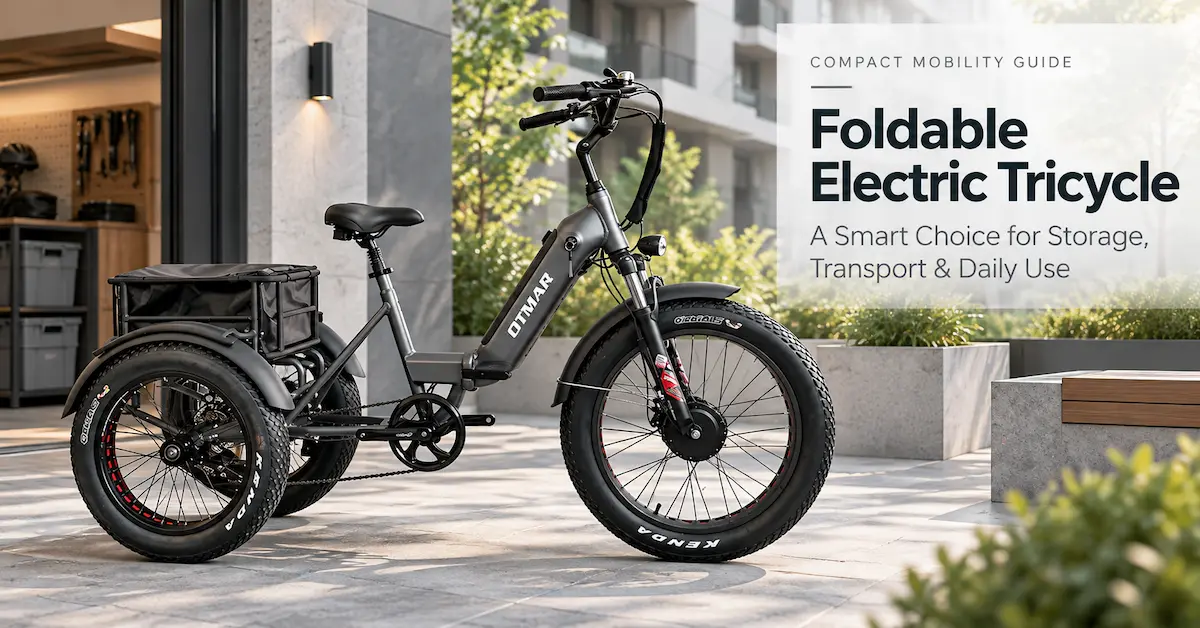
The OTM-T10 can be evaluated when buyers are interested in a folding electric trike platform. The current product information presents it as a folding model with a low-step structure and rear storage/cargo area.
Before selecting it for a fleet, buyers should confirm folding dimensions, locking mechanism, overall weight, load definitions, battery specification, and storage requirements.
OTM-T16
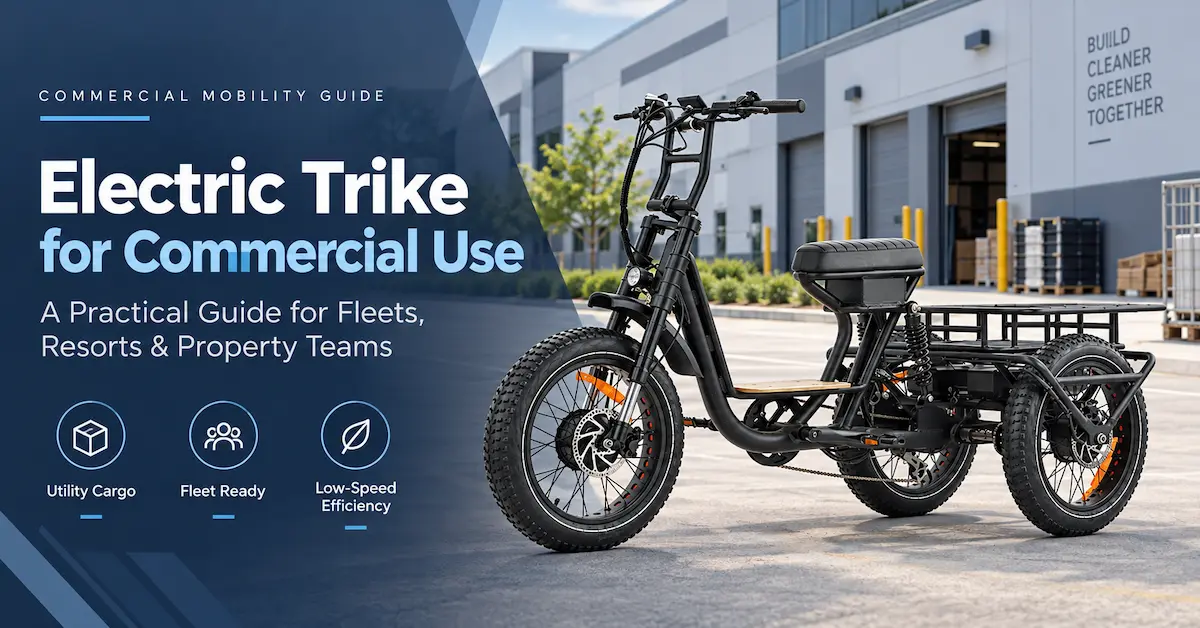
The OTM-T16 is more relevant when the project requires a utility-oriented rear platform. It can serve as a useful starting point for evaluating property-management, campus, resort, or internal transportation projects.
Important items to confirm include rear-platform load, overall width, vehicle weight, turning requirements, braking configuration, and final cargo arrangement.
OTM-T5
The OTM-T5 provides another three-wheel platform for practical mobility evaluation. However, its current public product description contains specification wording that should be clarified before using the model for a detailed procurement comparison.
For this reason, buyers should request the latest confirmed specification directly before relying on motor, battery, or application claims.
Buyers can review the full OTMAR electric trike range before choosing a candidate model.
OEM and Private Label Electric Tricycle Projects
A private-label project usually includes several different types of customization.
Branding Customization
This may include:
- Logo
- Color
- Decals
- Packaging
- Product labels
- User manuals
Configuration Customization
This may include:
- Battery
- Motor
- Tires
- Brakes
- Cargo equipment
- Lighting
- Other accessories
Structural Customization
This may involve:
- Frame changes
- Cargo structure changes
- Mounting points
- Seating or utility layout
The deeper the modification, the more important sample approval and technical review become.
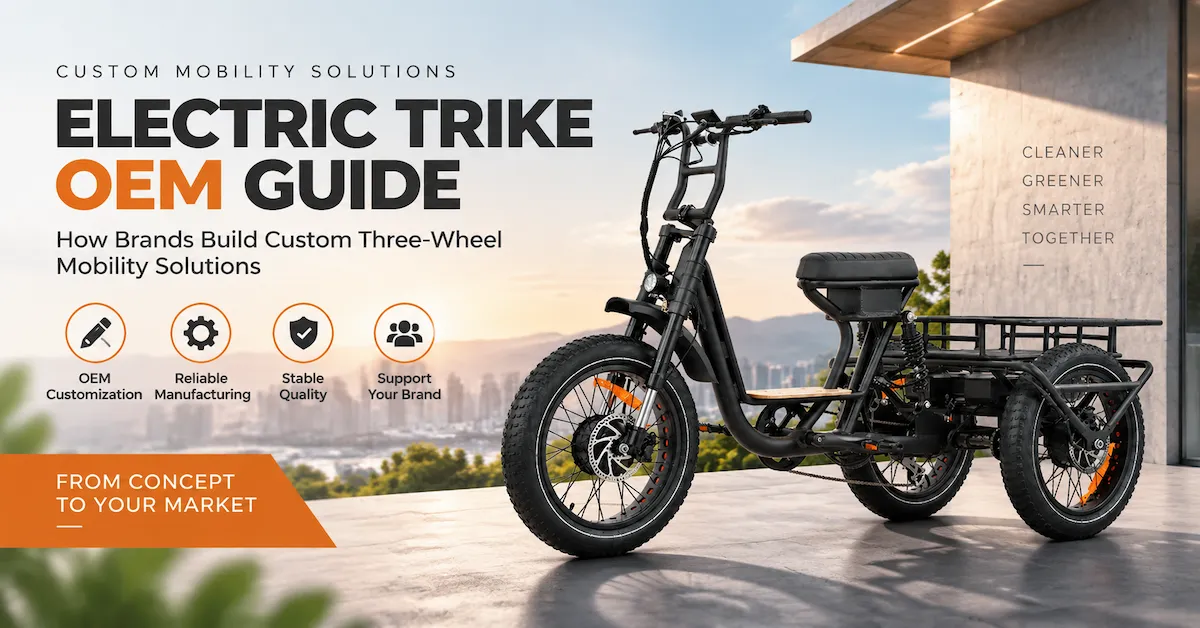
OTMAR provides OEM/ODM cooperation options through its Partner With Us page. Buyers should provide clear project requirements before requesting customization so that visual changes and engineering changes can be discussed separately.
How to Evaluate MOQ and Lead Time
MOQ and production timing should always be confirmed for the actual project.
They may vary according to:
- Model
- Quantity
- Custom color
- Packaging
- Battery specification
- Components
- Custom accessories
- Sample requirements
A practical project timeline can include:
- Requirement confirmation
- Platform selection
- Specification confirmation
- Sample preparation
- Sample evaluation
- Final approval
- Production
- Inspection
- Packaging
- Shipment
For repeat orders, buyers should also confirm whether components can change without approval. Production continuity is an important part of supplier evaluation.
How Should Buyers Compare Electric Tricycle Pricing?
A professional cost comparison should include more than unit price.
Compare:
- Vehicle price
- Custom components
- Packaging
- Spare parts
- Chargers
- Battery planning
- Transport
- Maintenance
- Replacement components
For a fleet buyer, downtime may also create cost. A lower-priced electric tricycle may become more expensive to operate if replacement components are difficult to identify or obtain.
For this reason, the best electric tricycle supplier should be evaluated on both initial purchasing cost and long-term support structure.
How to Prepare an Electric Tricycle RFQ
A strong RFQ should provide enough information for the supplier to recommend a meaningful configuration.
Include:
- Destination market
- Expected quantity
- Buyer type
- Application
- Rider profile
- Route
- Load requirements
- Storage requirements
- Charging strategy
- Customization requirements
- Packaging needs
- Target schedule
Instead of asking only:
“Please send the best electric tricycle price.”
A more useful request would explain:
“We need electric tricycles for a resort mobility program. The vehicles will be shared by different riders, operated on paved roads, stored in a limited area, and charged centrally.”
The second version gives the supplier enough context to evaluate product suitability.
Buyers can submit project requirements through the OTMAR Contact Us page.
Frequently Asked Questions About Electric Tricycle Suppliers
What should I check before choosing an electric tricycle supplier?
Evaluate product platforms, specifications, quality control, manufacturing capability, spare-parts support, customization, documentation, and repeat-order consistency.
Is an electric tricycle manufacturer different from a supplier?
The terms may overlap in B2B sourcing. Buyers should verify whether the company is directly involved in product development and production and what manufacturing responsibilities it actually controls.
Can electric tricycles be customized for private-label brands?
Yes, customization can be discussed for branding, packaging, components, and other project requirements. The actual scope should be confirmed for the selected platform.
What is the best electric tricycle for commercial use?
There is no universal best model. The right vehicle depends on route, rider, load, dimensions, maintenance capability, and application.
How should battery range be evaluated?
Use representative route testing with realistic rider and load conditions rather than relying only on a catalog range figure.
Can an electric tricycle carry cargo?
Some platforms include cargo or storage structures, but buyers should confirm the specific structure, load limit, and approved application before ordering.
What should buyers test before mass production?
Evaluate rider fit, handling, braking, turning, parking, charging, loading, maintenance access, and the final project-specific configuration.
How should electric tricycle QC be managed?
The buyer and supplier should define inspection areas, acceptance requirements, and production records before the production batch begins.
What affects electric tricycle MOQ?
MOQ may depend on model, components, color, packaging, custom parts, and order quantity.
What information should I send for an electric tricycle quotation?
Provide the target market, application, quantity, rider requirements, load, route, charging plan, customization, and project schedule.
Conclusion
Choosing an electric tricycle supplier requires more than comparing model photos, motor wattage, or price. Professional buyers should begin with their actual operating requirements, define the correct platform and specifications, evaluate rider and load conditions, confirm battery and maintenance planning, validate a representative sample, and establish quality and configuration control before mass production.
OTMAR currently provides several electric trike platforms, including the OTM-T10, OTM-T16, and OTM-T5, that can serve as starting points for different mobility and utility projects. Final suitability should still be confirmed through model-specific specifications and project requirements rather than assumed from a category name or product appearance. Buyers preparing a distribution, commercial, rental, or private-label project can contact OTMAR with their application, quantity, route, load, and customization requirements to discuss an appropriate electric tricycle solution.