
What Should Buyers Evaluate Before an Electric Trike Wholesale Order?
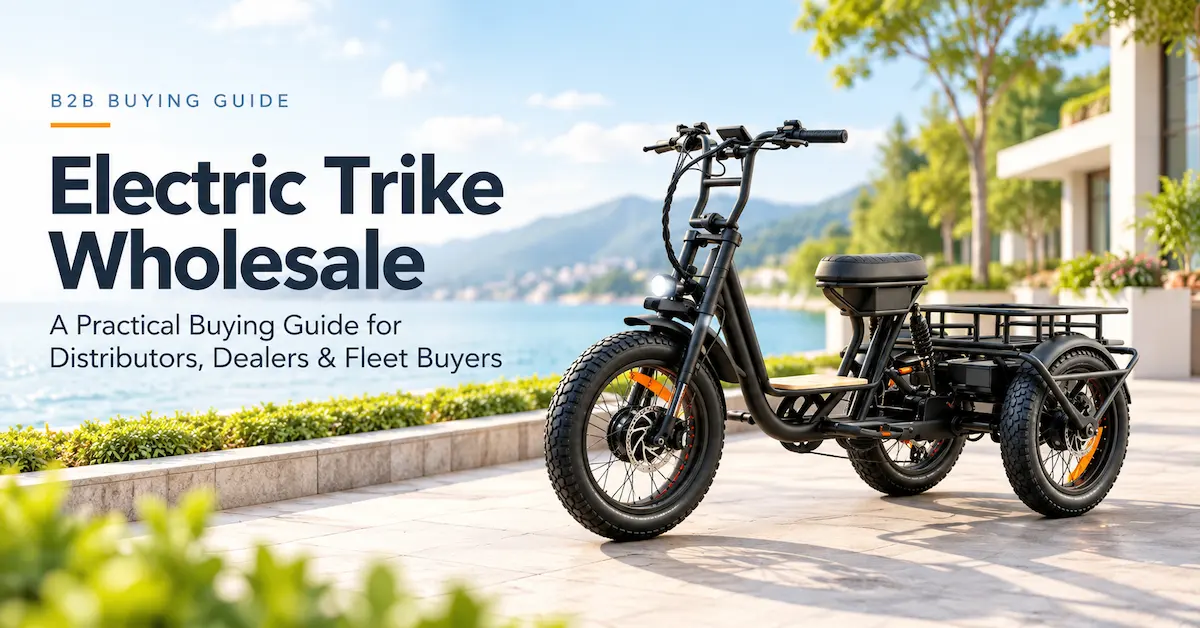
Electric trike wholesale purchasing should start with the intended market and application—not with the lowest unit price.
For distributors, importers, dealers, mobility brands, and commercial operators, a bulk order creates several connected decisions: which vehicle platform fits the customer, which specifications should remain standardized, which options require customization, how the sample will be approved, how production quality will be controlled, and how replacement parts will be managed after delivery.
A wholesale electric trike may look acceptable in a catalog but still be unsuitable for the intended market if the frame layout, vehicle width, cargo structure, battery configuration, braking system, rider access, storage requirements, or local compliance expectations are not considered early enough.
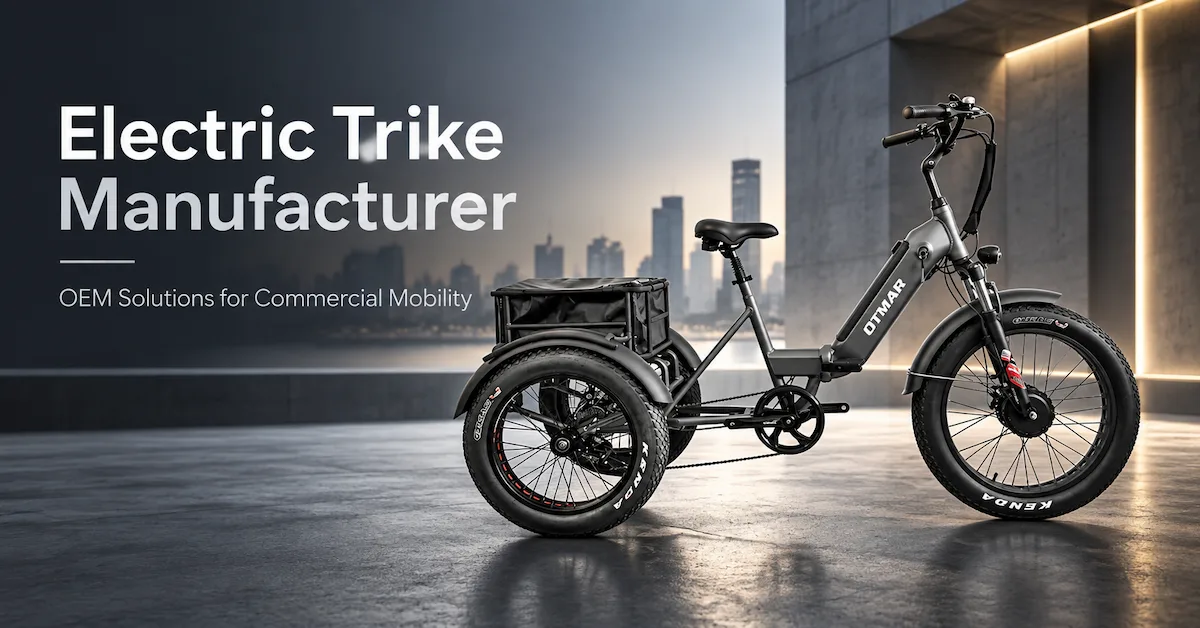
OTMAR's current electric trike product range provides a starting point for distributors and fleet buyers comparing three-wheel electric mobility platforms.
The final wholesale configuration should still be confirmed according to the destination market, rider profile, operating route, expected load, order quantity, and required customization.
For wholesale buyers, the key question is not simply “What is the price per unit?” It is “Which configuration can I sell, support, reorder, and maintain consistently in my target market?”
Who Typically Buys Electric Trikes Wholesale?
Electric trike wholesale demand comes from several buyer groups, but their purchasing priorities are different.
Distributors and Importers
Distributors normally require a product that can be sold repeatedly rather than a one-time attractive sample.
They typically evaluate:
-
Product-market fit
-
Reliable specifications
-
Repeat-order consistency
-
Packaging efficiency
-
Spare-parts availability
-
Documentation
-
Branding options
-
After-sales support
-
Destination-market requirements
For an importer, a slightly cheaper initial order may create higher downstream cost if specifications change between batches or replacement components cannot be identified.
Dealers and Retail Networks
Dealers need electric trikes that are easy to explain, demonstrate, service, and position for clear customer groups.
Their questions often include:
-
Who is this model designed for?
-
What makes it different from another trike?
-
Is it easy to get on and off?
-
What type of terrain is appropriate?
-
What storage or cargo capability does it offer?
-
Which parts may require regular maintenance?
-
Can the same specification be reordered later?
A strong wholesale assortment should therefore contain clearly differentiated products rather than several models with overlapping positioning.
Private-Label and Mobility Brands
Private-label buyers usually require more than wholesale supply.
They may need:
-
Custom frame colors
-
Logo application
-
Decals
-
Model naming
-
Packaging
-
Accessories
-
Display options
-
Tire selection
-
Battery configuration
-
Market-specific labeling
In this case, electric trike wholesale purchasing may develop into an OEM/ODM project.
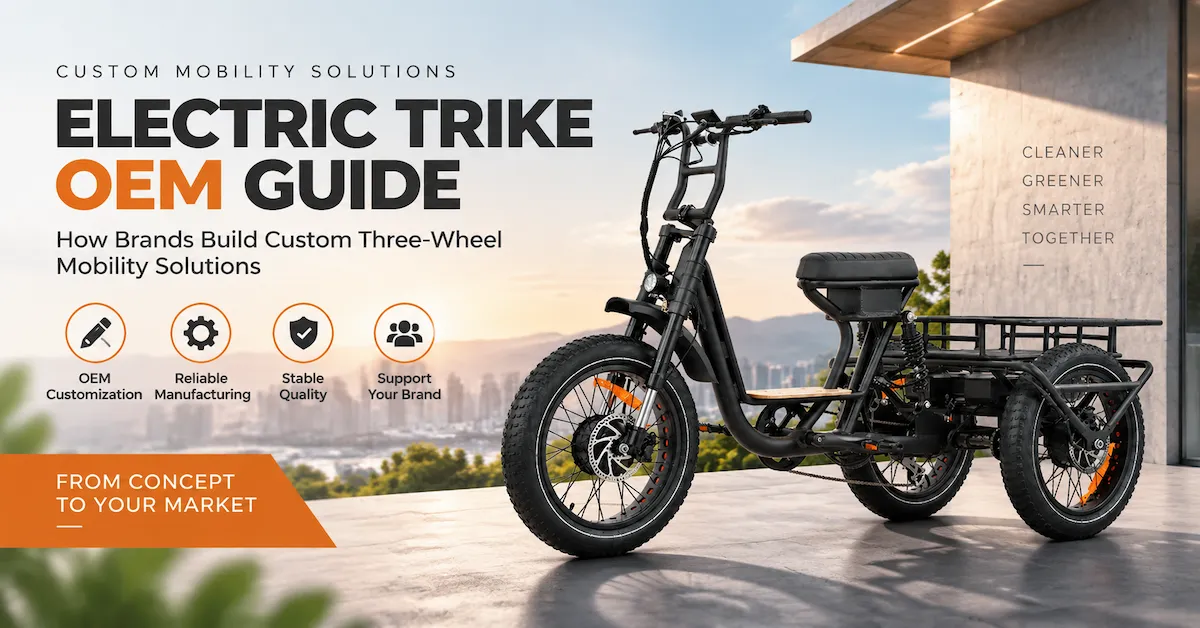
Buyers planning deeper customization can review OTMAR's electric trike OEM guide before defining the project scope.
Commercial and Fleet Buyers
Fleet demand may come from:
-
Hotels and resorts
-
Campuses
-
Property-management companies
-
Tourist facilities
-
Warehouses
-
Industrial sites
-
Local delivery operations
-
Community mobility programs
These buyers often place less emphasis on retail styling and more emphasis on durability, serviceability, storage, cargo capability, rider access, battery management, braking, spare parts, and vehicle standardization.
Start With the Application, Not the Motor Rating
One of the most common mistakes in electric trike wholesale sourcing is comparing vehicles primarily by motor power.
Motor specification matters, but it is only one part of the vehicle system.
A buyer should first define:
-
Where will the trike operate?
-
Who will ride it?
-
What will it carry?
-
How frequently will it operate?
-
Where will it be stored?
-
How will batteries be charged?
-
Who will maintain it?
-
What regulations apply in the destination market?
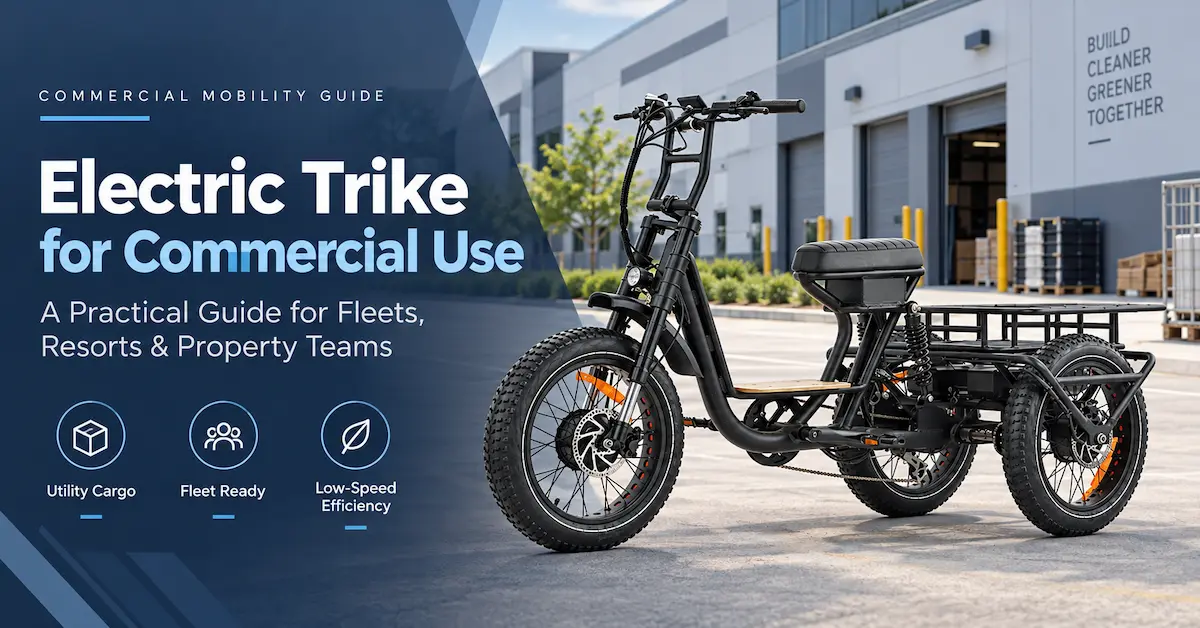
A trike intended for a paved resort route may require a different configuration from one used to carry tools around a large property.
Likewise, a distributor serving mobility-oriented consumers may prioritize low-step access and easy handling, while a commercial operator may prioritize cargo structure and component standardization.
This is why electric trike wholesale selection should be treated as an application-matching exercise rather than a specification contest.
Which Electric Trike Specifications Matter Most for Wholesale Buyers?
Frame Layout and Rider Access
The frame affects more than appearance.
Wholesale buyers should evaluate:
-
Step-through height
-
Rider mounting and dismounting
-
Frame structure
-
Seating position
-
Overall dimensions
-
Rider fit
-
Vehicle stability
-
Intended load
Low-step structures may be particularly important for customers who prioritize easy access, while utility-oriented applications may place greater emphasis on structural strength and rear carrying space.
Vehicle Width and Turning Space
Three-wheel vehicles behave differently from conventional two-wheel e-bikes.
For commercial fleets, resorts, campuses, warehouses, and residential communities, buyers should consider:
-
Overall width
-
Aisle or pathway width
-
Turning area
-
Parking space
-
Storage space
-
Loading and unloading conditions
A trike that performs well on an open road may be inconvenient inside a narrow storage room or facility route.
For wholesale purchasing, dimensional suitability should therefore be confirmed before approving large quantities.
Motor and Drive Configuration
Motor position can affect traction, steering feel, maintenance, and product positioning.
Buyers should verify:
-
Rated motor power
-
Motor position
-
Intended terrain
-
Target rider profile
-
Load expectations
-
Destination-market rules
Higher power should not automatically be treated as a better wholesale feature.
A configuration that is attractive in one market may not be appropriate in another.
Battery System
Battery evaluation should go beyond the brand printed on the specification sheet.
Important questions include:
-
Battery voltage
-
Capacity
-
Cell specification
-
Removability
-
Charging method
-
Charger specification
-
Replacement availability
-
Storage procedures
-
Battery mounting structure
For commercial fleets, battery standardization may be especially valuable because it can simplify charging, spare-battery planning, and service operations.
Braking
An electric trike may carry more total weight than a conventional bicycle, particularly when cargo is involved.
Wholesale buyers should therefore confirm:
-
Brake type
-
Front and rear braking arrangement
-
Adjustment requirements
-
Replacement parts
-
Performance under intended load
-
Parking-related requirements where applicable
Braking should be evaluated with the intended use case rather than only under unloaded sample conditions.
Tires, Wheels, and Suspension
Wheel and tire selection affects comfort, rolling resistance, terrain capability, maintenance, and product positioning.
Consider:
-
Wheel dimensions
-
Tire width
-
Tire supplier
-
Paved-road use
-
Gravel or mixed surfaces
-
Comfort requirements
-
Puncture and replacement planning
-
Suspension configuration
A wider tire may support certain uneven-road applications, but it can also influence weight and rolling characteristics.
Wholesale selection should reflect the customer's actual riding environment.
Cargo and Storage Structure
For utility and commercial applications, cargo capability may be more important than peak motor output.
Buyers should evaluate:
-
Rear platform dimensions
-
Basket or compartment structure
-
Intended load
-
Load distribution
-
Access to cargo
-
Custom box compatibility
-
Attachment points
If a product will carry tools, groceries, supplies, or commercial equipment, the actual intended load should be tested during sample evaluation rather than assumed from appearance alone.
Comparing OTMAR Electric Trike Platforms
OTMAR currently presents several electric trike platforms through its electric trike category.
These models should not be treated as interchangeable products.
| Model | Product Direction | Wholesale Evaluation Focus |
|---|---|---|
| OTM-T10 | Folding / compact electric trike | Storage, folding structure, rider access, daily mobility |
| OTM-T16 | Utility-oriented electric trike | Cargo arrangement, width, turning requirements, commercial use |
| OTM-T5 | Practical three-wheel mobility platform | Carrying layout, route suitability, daily transportation |
OTM-T10: When Storage Flexibility Matters
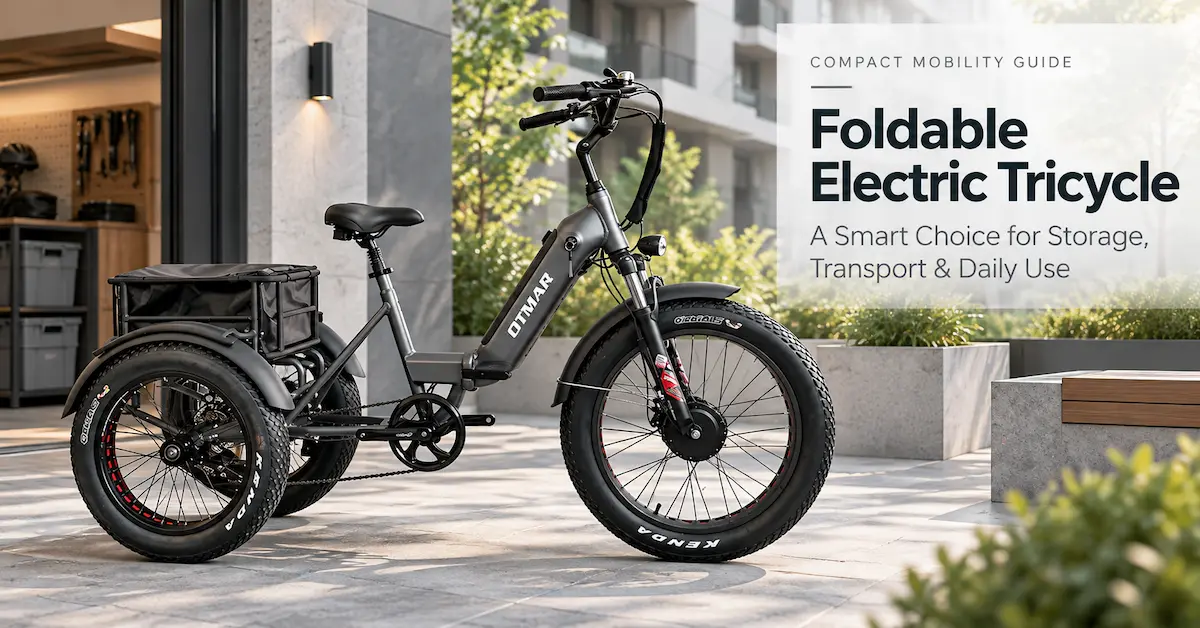
OTM-T10 is positioned as a folding electric trike platform.
For wholesale buyers, useful evaluation points include:
-
Folding dimensions
-
Folding-lock structure
-
Overall vehicle weight
-
Step-through accessibility
-
Rear storage arrangement
-
Battery specification
-
Storage requirements
It may be relevant to markets where users value compact storage or practical urban mobility.
Before a bulk order, the approved sample should confirm that the folding mechanism, dimensions, and intended load are suitable for the target customer.
OTM-T16: Utility-Oriented Wholesale Projects
OTM-T16 is more relevant when the buyer needs a rear utility or cargo-oriented platform.
For commercial evaluation, confirm:
-
Rear carrying structure
-
Actual intended load
-
Vehicle width
-
Turning space
-
Braking
-
Rider ergonomics
-
Route conditions
-
Final cargo arrangement
The model can provide a useful starting platform for projects involving campuses, properties, resorts, facilities, or other utility applications, but final suitability should be validated for the actual project.
OTM-T5: Practical Mobility and Carrying Applications
OTM-T5 can be considered for projects requiring a practical three-wheel layout with carrying functions.
Its product direction includes front and rear carrying features, making it relevant to applications such as local transportation or light utility use.
However, wholesale buyers should always request the latest confirmed specification before relying on website wording for detailed procurement decisions.
How Should Buyers Compare Electric Trike Wholesale Prices?
The lowest quoted unit price does not always produce the lowest purchasing cost.
A proper electric trike wholesale comparison should include the complete cost structure.
Compare More Than EXW Unit Price
Evaluate:
-
Vehicle price
-
Customization cost
-
Packaging
-
Spare parts
-
Chargers
-
Additional batteries if required
-
Inspection requirements
-
Freight preparation
-
Shipping
-
Duties and destination charges
-
Local assembly if applicable
-
Warranty support
-
Future replacement components
A lower-priced trike can become more expensive if buyers later encounter component inconsistency, difficult servicing, high damage rates, or unavailable spare parts.
Consider SKU Complexity
Wholesale buyers also need to control product complexity.
For example, ordering several models with different:
-
Batteries
-
Chargers
-
Displays
-
Brake parts
-
Tires
-
Controllers
may create an unnecessarily complicated after-sales system.
A smaller range of well-positioned, serviceable products may be more profitable than a large assortment with poor component commonality.
Think About Repeat Orders
The first electric trike bulk order is only part of the commercial relationship.
Before approving a supplier, ask:
-
Can the same configuration be reordered?
-
How are component changes communicated?
-
Is there an approved specification record?
-
Can spare parts be identified by model?
-
Will packaging remain consistent?
-
How are production revisions controlled?
For distributors, repeat-order consistency often matters more than saving a small amount on the first shipment.
Why Sample Approval Matters Before a Bulk Order
A product photo cannot validate an electric trike wholesale project.
Before mass production, the buyer should evaluate a representative sample under realistic conditions.
Sample Checks Should Include
Mechanical checks
-
Frame condition
-
Wheel installation
-
Steering
-
Brakes
-
Fasteners
-
Drivetrain
-
Folding mechanism where applicable
Electrical checks
-
Motor operation
-
Battery installation
-
Controller
-
Display
-
Charger
-
Lighting
-
Power-assist operation
Application checks
-
Rider access
-
Comfort
-
Turning
-
Parking
-
Cargo loading
-
Storage
-
Intended route
-
Charging procedure
Commercial checks
-
Branding
-
Labels
-
Packaging
-
Manuals
-
Accessories
-
Spare parts
The final approved sample should become a reference for mass production.
This reduces one of the most important wholesale risks: receiving a large shipment that differs from the product originally evaluated.
How Quality Control Should Work for Electric Trike Wholesale Orders
Wholesale quality control should begin before production, not after finished vehicles are already packed.
A stronger approach uses several control points.
1. Specification Confirmation
Buyer and supplier confirm:
-
Model
-
Components
-
Color
-
Branding
-
Accessories
-
Packaging
-
Documentation
-
Inspection requirements
2. Approved Sample
The sample becomes the practical benchmark for the production version.
3. Incoming Component Control
Important components should be checked before or during assembly according to the agreed quality plan.
4. Assembly and Functional Inspection
The production process should verify major mechanical and electrical functions.
5. Final Inspection
Before shipment, buyers should confirm the agreed inspection scope, including product function, appearance, customization, packaging, and project-specific features.
OTMAR describes itself as an OEM/ODM e-mobility manufacturer serving wholesalers, distributors, and growing e-bike brands. More company and manufacturing information is available on the OTMAR About Us page.
For wholesale procurement, however, the inspection plan should still be defined for the actual order rather than assumed from a general factory statement.
OEM and Private-Label Options for Wholesale Buyers
Electric trike wholesale and OEM often overlap.
A distributor may begin with a standard model and later require market-specific differentiation.
Possible customization areas include:
-
Logo
-
Frame color
-
Decals
-
Product naming
-
Packaging
-
Accessories
-
Battery configuration
-
Motor selection
-
Display
-
Tires
-
Cargo structures
The important point is that every customization can affect more than appearance.
Changing a battery, controller, tire, cargo system, or electrical component may affect compatibility, testing, service documentation, spare-parts planning, and production control.
Wholesale buyers should therefore separate customization into two groups.
Brand Customization
Usually includes:
-
Logo
-
Color
-
Decals
-
Packaging
-
Product naming
These changes mainly support market positioning and brand identity.
Technical Customization
May include:
-
Motor
-
Battery
-
Controller
-
Display
-
Tires
-
Cargo structure
-
Selected electrical or mechanical components
Technical changes require more careful confirmation because they can affect product performance, compatibility, service requirements, and target-market compliance.
For buyers developing private-label projects, OTMAR's OEM electric trike information can be used as a starting point before discussing the final configuration.
What Information Should an Electric Trike Wholesale RFQ Include?
A detailed RFQ produces a more useful quotation.
Instead of sending only:
“Please send your best electric trike wholesale price.”
Provide:
-
Destination country
-
Buyer type
-
Target customer
-
Expected order quantity
-
Preferred product type
-
Intended application
-
Rider profile
-
Route and terrain
-
Cargo requirements
-
Storage limitations
-
Charging strategy
-
Required customization
-
Packaging requirements
-
Spare-parts expectations
-
Sample requirements
-
Target schedule
This allows the supplier to recommend a relevant product rather than quoting a generic model.
If your project requirements are already clear, you can submit the target market, quantity, application, and customization details through the OTMAR Contact Us page.
Common Electric Trike Wholesale Sourcing Risks
Choosing by Price Alone
Low unit price does not compensate for unsuitable specifications or inconsistent production.
A cheaper product may create greater cost later through service problems, component changes, difficult parts replacement, or poor application fit.
Ordering Before Testing the Application
A vehicle should be tested in conditions that resemble its actual operating environment.
This is particularly important for cargo applications, fleet operations, rider-access requirements, and locations with limited turning or storage space.
Ignoring Overall Dimensions
Width, storage space, parking, and turning requirements can create operational problems after delivery.
For three-wheel products, dimensions should be treated as a core purchasing parameter.
Over-Customizing the First Order
Too many changes increase validation, service, inventory, and repeat-order complexity.
For a first wholesale project, a proven platform with focused customization may create lower risk.
Failing to Define Component Changes
If a component becomes unavailable, buyers should know:
-
Whether substitution is allowed
-
Which component can be changed
-
Who approves the change
-
Whether another sample is needed
-
How the change will be documented
Ignoring Spare Parts
A wholesale order without an after-sales parts plan can create dealer and distributor problems later.
Buyers should identify critical service components before shipment rather than waiting for field failures.
Assuming One Configuration Fits Every Market
Speed, motor power, labeling, electrical safety, and vehicle classification requirements may vary by destination.
Wholesale specifications should therefore be confirmed for the actual target market before production.
Electric Trike Wholesale Buyer Checklist
Before placing a bulk order, confirm the following.
Product Fit
-
Is the model appropriate for the target customer?
-
Is the frame layout suitable?
-
Is rider access acceptable?
-
Does the trike fit the intended route and storage area?
-
Is the cargo structure suitable?
Technical Configuration
-
Motor specification confirmed?
-
Battery specification confirmed?
-
Charger confirmed?
-
Brakes confirmed?
-
Tires and wheels confirmed?
-
Display and controller confirmed?
Commercial Terms
-
Quantity confirmed?
-
Packaging confirmed?
-
Customization scope confirmed?
-
Spare-parts plan confirmed?
-
Shipping requirements confirmed?
Quality
-
Representative sample approved?
-
Inspection criteria defined?
-
Component substitutions controlled?
-
Final specification recorded?
-
Packaging inspection included?
Long-Term Supply
-
Can the configuration be reordered?
-
Are replacement parts identifiable?
-
Is technical documentation available?
-
Is there a clear communication process for product revisions?
If several of these items remain unanswered, the project is probably not ready for mass production.
Frequently Asked Questions About Electric Trike Wholesale
What quantity is considered an electric trike wholesale order?
There is no universal wholesale quantity.
Order requirements can depend on model, customization level, packaging, destination, and production planning.
Buyers should request current terms for the specific project rather than assuming one MOQ applies to every model.
Should I order a sample before placing a bulk electric trike order?
For most new B2B projects, sample evaluation is highly valuable.
It allows the buyer to confirm dimensions, riding characteristics, braking, cargo layout, components, branding, and packaging before mass production.
What is the difference between electric trike wholesale and OEM?
Wholesale generally means purchasing multiple units for resale or commercial use.
OEM normally involves additional product or brand customization.
A project can include both—for example, a distributor ordering wholesale quantities with custom colors, branding, and packaging.
Which electric trike is best for wholesale?
There is no single best model for every buyer.
The correct platform depends on customer profile, destination market, route, storage, rider requirements, cargo needs, service strategy, and local regulations.
What should distributors prioritize when comparing suppliers?
Important factors include:
-
Product-market fit
-
Production consistency
-
Clear specifications
-
QC
-
Spare parts
-
After-sales support
-
OEM capability
-
Communication
-
Repeat-order stability
These factors should be evaluated alongside unit price.
How should I compare electric trike wholesale prices?
Compare the complete purchasing cost, including vehicle price, customization, packaging, spare parts, batteries or chargers, logistics, duties, maintenance, and future replacement components.
Can electric trikes be customized for private-label brands?
Customization may include logos, colors, decals, naming, packaging, accessories, and selected technical configurations.
The final customization scope should be confirmed for the specific model and target market.
What information should I send when requesting a quotation?
Provide:
-
Destination market
-
Quantity
-
Application
-
Target customer
-
Route conditions
-
Cargo requirements
-
Customization
-
Packaging
-
Sample requirements
-
Expected schedule
The more complete the RFQ, the easier it is to compare relevant quotations.
Why is repeat-order consistency important?
A distributor needs to support products already in the market.
Uncontrolled component changes can complicate spare parts, service, documentation, customer expectations, and future purchasing.
Where can I review current electric trike models?
Buyers can review the current OTMAR electric trike range and then compare platforms according to application, target market, and wholesale requirements.
Conclusion
A successful electric trike wholesale project depends on more than finding a competitive unit price. Buyers should match the vehicle to the real application, confirm the technical configuration, approve a representative sample, define QC expectations, plan spare parts, and consider repeat-order consistency before committing to volume.
If you are sourcing electric trikes for distribution, private label, or commercial fleets, send your target market, order quantity, application, and customization requirements through the OTMAR Contact Us page to discuss a suitable wholesale configuration and next-step sample plan.