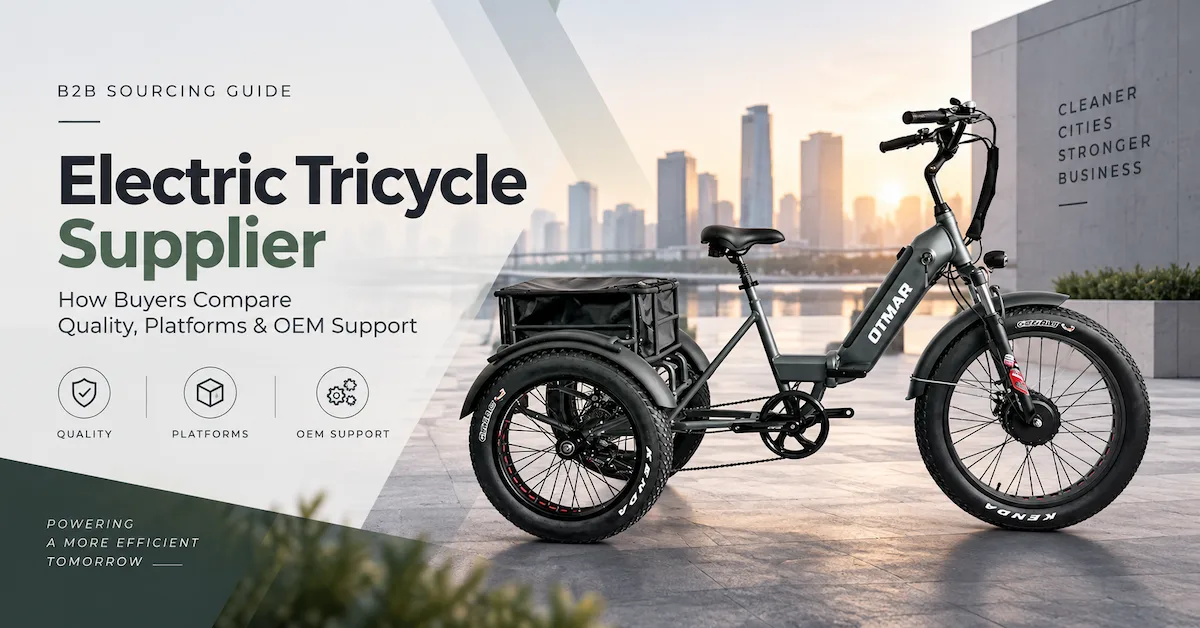

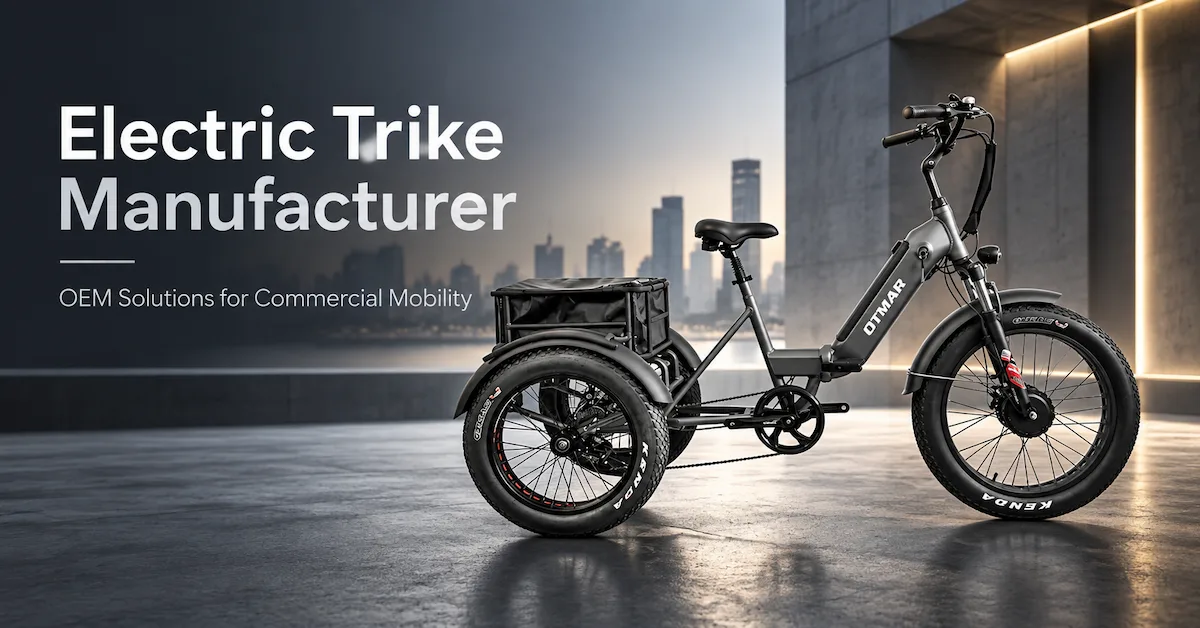
What Should Buyers Expect From an Electric Trike Manufacturer?
Selecting an electric trike manufacturer is not only about purchasing a three-wheel electric vehicle. For distributors, commercial operators, rental companies, and private-label brands, the manufacturer must provide a suitable product platform, consistent production quality, clear specifications, and the ability to support different application requirements.
Electric trikes are often selected because they provide additional stability, easier low-speed control, and practical transportation solutions for specific mobility needs. However, different projects require different vehicle characteristics. A resort rental fleet, a community mobility program, an internal transportation project, and a cargo application may require different frame structures, storage solutions, battery configurations, and maintenance considerations.
OTMAR focuses on electric mobility products, including electric bikes and electric trikes, with OEM/ODM cooperation options. Buyers can review the available electric trike products and evaluate suitable platforms based on their target market, application environment, and project requirements.
Who Needs an Electric Trike Manufacturer?
Distributors and Dealers
Distributors usually need products that can fit different customer groups while maintaining stable supply. Their main concerns often include:
- Product differentiation
- Reliable specifications
- Replacement parts availability
- Packaging and shipping requirements
- Repeat-order consistency
An electric trike manufacturer should help distributors understand product positioning instead of only providing a product catalog.
Rental and Commercial Operators
Rental businesses, resorts, communities, and property operators usually evaluate electric trikes from an operational perspective. They may focus on:
- Easy rider operation
- Daily inspection requirements
- Charging management
- Durability during repeated use
- Maintenance convenience
For these buyers, the most important question is not only “what features does the vehicle have?” but also “how does the vehicle perform in daily operation?”
Private Label Brands
Private-label customers usually need more than adding a logo. They may require:
- Custom colors
- Branding elements
- Packaging solutions
- Product configuration adjustments
- Market-specific requirements
A professional OEM partner should help define which changes are visual customization and which changes require engineering review.
How to Choose the Right Electric Trike Platform?
Before selecting a supplier, buyers should define the intended application clearly.
Important questions include:
- Is the vehicle mainly for transportation, cargo, or passenger use?
- How much weight does it need to carry?
- Who will operate the vehicle?
- What type of environment will it be used in?
- How many hours will it operate daily?
- Where will charging and storage take place?
For example, a community mobility project may prioritize comfort and accessibility, while a commercial utility project may require stronger carrying capability and easier maintenance.
OTMAR provides different electric trike platforms through its electric trike category, allowing buyers to compare available structures before discussing project-specific requirements.
Key Specifications to Confirm With an Electric Trike Manufacturer
A reliable purchasing process should convert business requirements into measurable product specifications.
| Specification | Buyer Should Confirm | Why It Matters |
|---|---|---|
| Frame design | Material, structure, and geometry | Influences stability and durability |
| Wheel configuration | Wheel size and layout | Affects handling and riding experience |
| Motor system | Motor position, power rating, controller | Determines assistance characteristics |
| Battery system | Voltage, capacity, charging method | Affects operation planning |
| Load capacity | Rider load, cargo load, total load definition | Prevents incorrect usage |
| Braking system | Brake type and maintenance requirements | Important for safe operation |
| Suspension | Front or full suspension options | Should match application conditions |
| Storage structure | Basket, platform, or cargo area | Determines practical usability |
| Vehicle dimensions | Width, length, turning space | Important for commercial environments |
| Service parts | Replacement components | Supports long-term operation |
Buyers should avoid selecting an electric trike only by comparing motor power or battery size. A complete evaluation should consider the entire vehicle system and actual operating requirements.
Cargo and Passenger Requirements Must Be Defined Separately
Cargo Electric Trike Requirements
Cargo applications require clear definitions of:
- Cargo size
- Cargo weight
- Loading method
- Platform structure
- Weight distribution
- Daily operating frequency
A rear platform or basket does not automatically mean that a vehicle is suitable for every cargo application. Buyers should confirm the approved load conditions and intended use with the manufacturer.
Passenger Electric Trike Requirements
Passenger-oriented applications require different considerations:
- Seating structure
- Rider access
- Stability
- Space requirements
- Operating environment
A cargo-focused electric trike should not automatically be considered a passenger vehicle, and a passenger configuration should not automatically be used for cargo transportation.
Battery Planning for Commercial Electric Trikes
Battery selection should be based on real operating conditions rather than only advertised range.
Factors affecting energy usage include:
- Vehicle weight
- Rider weight
- Cargo or passenger load
- Road conditions
- Riding speed
- Stop frequency
- Charging schedule
For commercial projects, buyers should evaluate battery performance through representative operation.
Recommended evaluation items:
| Test Item | Information to Record |
|---|---|
| Route distance | Actual operating distance |
| Vehicle condition | Selected model and configuration |
| Load condition | Rider and cargo/passenger condition |
| Riding mode | Assistance level |
| Battery status | Start and end battery condition |
| Environment | Road and weather conditions |
If a project requires removable batteries or special charging solutions, these requirements should be discussed before production.
Evaluate Electric Trike Components for Long-Term Maintenance
Commercial buyers should evaluate not only the vehicle itself but also future service requirements.
Important areas include:
Battery and Electrical Components
Confirm:
- Battery specifications
- Charger compatibility
- Replacement process
- Electrical component identification
Mechanical Components
Confirm:
- Brake parts
- Tire specifications
- Wheel components
- Steering components
- Common replacement items
Cargo and Utility Components
Confirm:
- Platform structure
- Basket or rack compatibility
- Mounting method
- Replacement availability
A good electric trike manufacturer should support buyers with clear product information so distributors and operators can manage future maintenance more efficiently.
How Should Buyers Evaluate Manufacturing Capability?
Factory capability is an important part of supplier evaluation, but buyers should connect manufacturing claims with the actual product project.
OTMAR introduces itself as an OEM/ODM electric mobility manufacturer and provides company information through its About Us page.
For B2B buyers, important evaluation points include:
- Engineering communication
- Production process
- Component control
- Inspection procedures
- Sample approval process
- Production consistency
A successful OEM project depends not only on factory equipment but also on whether the supplier can maintain the approved product configuration during production.
Quality Control Requirements Before Mass Production
Before placing a large order, buyers should define inspection requirements.
Typical inspection areas include:
- Frame assembly
- Wheel installation
- Brake operation
- Electrical system function
- Battery installation
- Lighting system
- Fastener inspection
- Packaging condition
The sample vehicle should become the reference point for production approval.
The buyer and manufacturer should confirm:
- Final specifications
- Product version
- Component changes
- Inspection requirements
- Packaging details
This reduces risks between sample approval and mass production.
Compare OTMAR Electric Trike Platforms
Different electric trike structures may serve different applications. Buyers should compare platforms based on their project requirements.
| Model | Product Direction | Evaluation Focus |
|---|---|---|
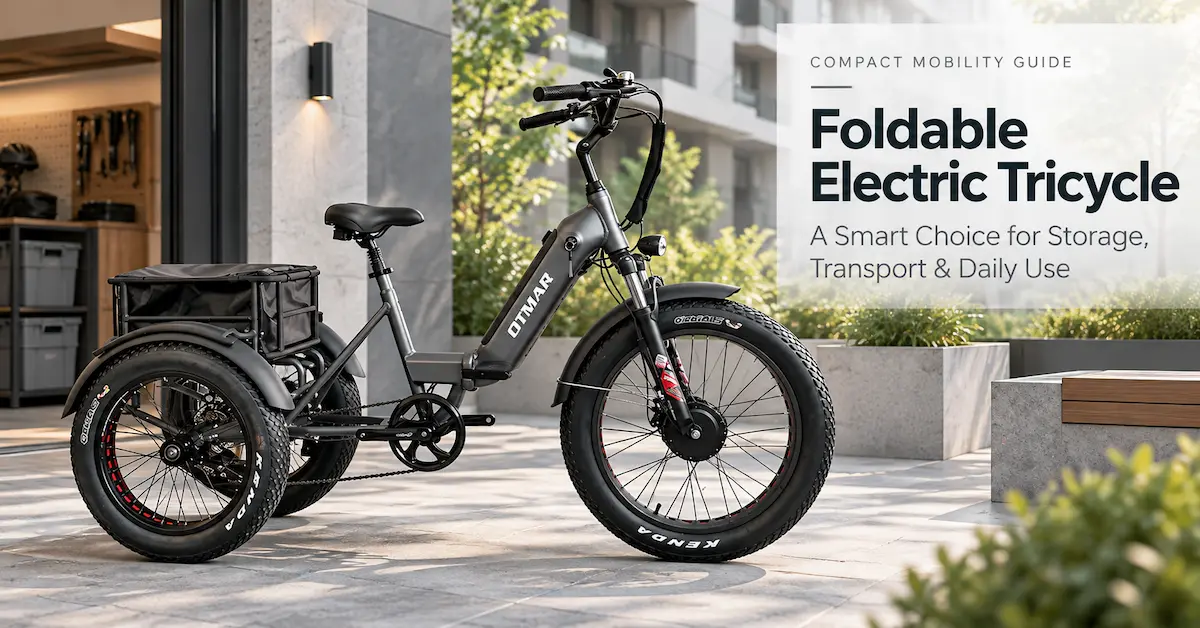
| OTM-T10 | Folding electric trike platform | Storage flexibility and compact mobility requirements |
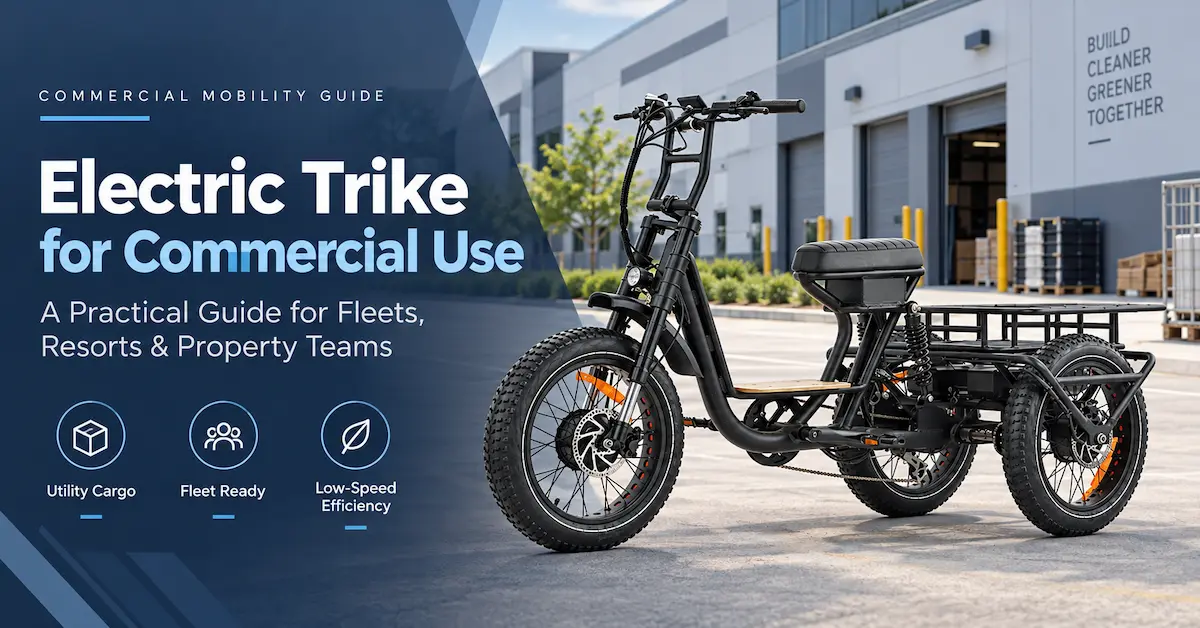
| OTM-T16 | Electric trike with rear cargo platform | Utility applications and carrying requirements |
| OTM-T5 | Practical electric trike platform | Daily transportation and application evaluation |
The OTM-T10 can be evaluated when storage flexibility and compact transportation are important factors.
The OTM-T16 provides a platform for buyers who need to evaluate rear cargo space and utility-oriented applications.
The OTM-T5 can be reviewed for projects requiring practical transportation functions, while final suitability should be confirmed according to the specific application requirements.
Buyers can also review the complete OTMAR electric trike range before selecting a suitable platform.
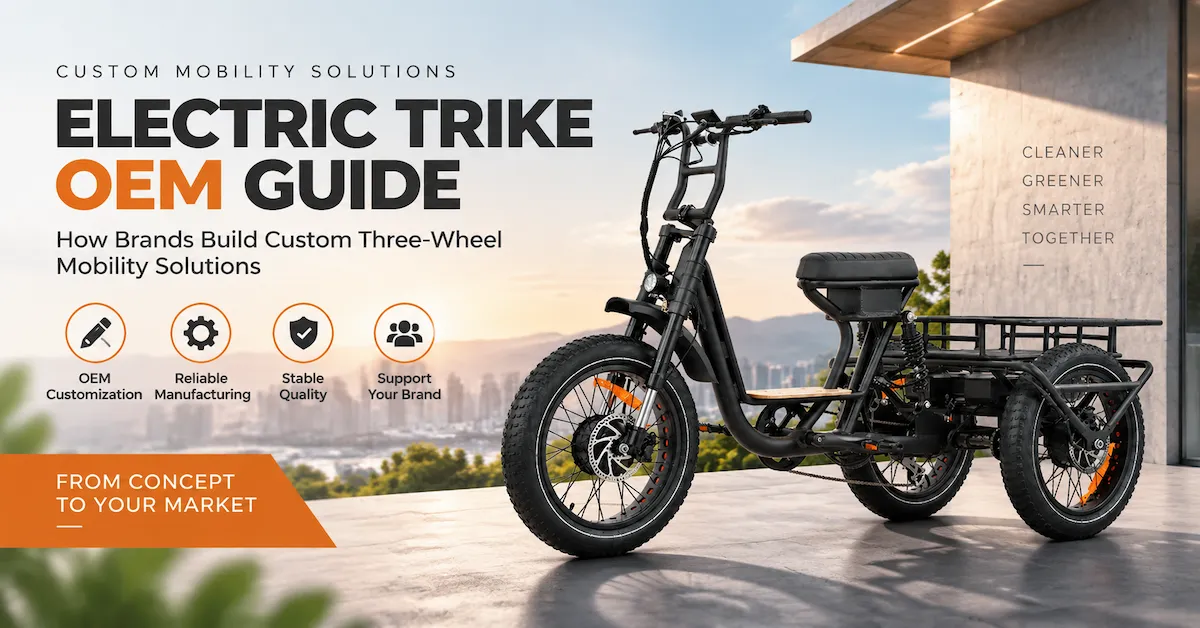
OEM and Private Label Electric Trike Development
OEM projects often involve multiple customization levels.
Visual Customization
Examples include:
- Logo
- Color
- Packaging
- Labels
- User manuals
Technical Customization
Examples include:
- Battery configuration
- Electrical components
- Frame changes
- Cargo structures
- Accessories
Technical modifications may influence testing, compatibility, documentation, and production processes.
OTMAR provides OEM/ODM cooperation opportunities through its Partner With Us page.
Buyers should prepare detailed requirements before development discussions, including target market, application, quantity, and expected customization scope.
MOQ, Lead Time, and Long-Term Cooperation
For B2B customers, selecting an electric trike manufacturer is also about long-term supply management.
Before ordering, buyers should confirm:
- MOQ requirements
- Sample process
- Production schedule
- Customization scope
- Spare parts support
- Repeat-order process
Lead time may vary depending on:
- Model selection
- Order quantity
- Custom components
- Packaging requirements
- Approval process
A clear project plan helps both buyers and manufacturers manage expectations.
How to Prepare an Electric Trike RFQ?
A detailed inquiry helps manufacturers provide a more accurate solution.
Buyers should include:
- Target country
- Customer type
- Application
- Quantity
- Load requirements
- Battery expectations
- Customization needs
- Delivery schedule
Instead of asking only for a product price, buyers should explain the business purpose and operating conditions.
Through the OTMAR Contact Us page, buyers can submit project requirements and discuss suitable electric trike solutions.
Frequently Asked Questions About Electric Trike Manufacturers
What should I check before choosing an electric trike manufacturer?
Evaluate product capability, manufacturing process, customization support, quality control, documentation, and after-sales cooperation.
Can an electric trike manufacturer provide OEM services?
Many OEM suppliers support branding and configuration discussions. The exact customization scope should be confirmed according to the project requirements.
How do I choose between an electric bike and an electric trike?
Compare stability, maneuverability, cargo needs, storage conditions, and operating environment before selecting the vehicle type.
Are electric trikes suitable for commercial applications?
They can be suitable for different commercial applications depending on the vehicle structure, operating conditions, and required performance.
What information should I provide for an electric trike quotation?
Provide application details, quantity, market, customization requirements, and expected delivery schedule.
How important is battery capacity for electric trikes?
Battery selection should match actual operation distance, charging availability, and usage conditions.
What quality checks should buyers request?
Buyers should discuss inspection requirements for mechanical components, electrical systems, assembly, and final vehicle condition.
Can electric trikes be customized for private brands?
OEM discussions may include branding, colors, packaging, and selected configuration changes depending on project requirements.
How can buyers reduce sourcing risks?
Define specifications clearly, test samples, confirm production standards, and maintain configuration control.
Why choose an OEM manufacturer instead of a trading supplier?
An OEM manufacturer may provide closer communication on specifications, customization, production process, and product consistency.
Conclusion
Choosing an electric trike manufacturer requires evaluating more than product appearance or basic specifications. Professional buyers should consider application requirements, vehicle structure, battery planning, quality control, OEM capability, and long-term supply stability before making a purchasing decision.
OTMAR provides electric trike platforms and OEM/ODM cooperation options for different mobility applications. Buyers can review the available electric trike products and contact OTMAR with their project requirements, application details, and customization needs to discuss suitable solutions.