
Electric Tricycle Manufacturer Guide: How to Choose the Right OEM Partner for Your Market

  • Applications & Solutions
  • OEM & Custom Solutions
Posted by Jinhua Otmar Technology Co.,LTD On Aug 18 2026

How to Choose the Right Electric Tricycle Manufacturer for Your Business

Choosing an electric tricycle manufacturer is not only about finding a supplier that can provide three-wheel electric vehicles. For distributors, wholesalers, mobility brands, and commercial buyers, the manufacturer must also provide reliable engineering support, consistent production quality, customization capability, and long-term after-sales cooperation.

Unlike standard bicycles, electric tricycles combine mechanical structures, electrical systems, battery technology, load management, and rider stability requirements. A qualified manufacturer needs to understand how different customers use electric trikes in real environments, including urban transportation, cargo delivery, tourism, senior mobility, commercial fleets, and special-purpose applications.

For B2B buyers, the key question is not simply:

Which electric tricycle has the lowest factory price?

The better question is:

Which electric tricycle manufacturer can provide the right product platform, quality consistency, customization support, and supply reliability for my target market?

OTMAR focuses on electric bikes and electric trikes for global B2B markets, supporting wholesalers, distributors, brands, and OEM/ODM projects. Buyers can review the company's electric tricycle products and evaluate suitable platforms according to their application requirements.
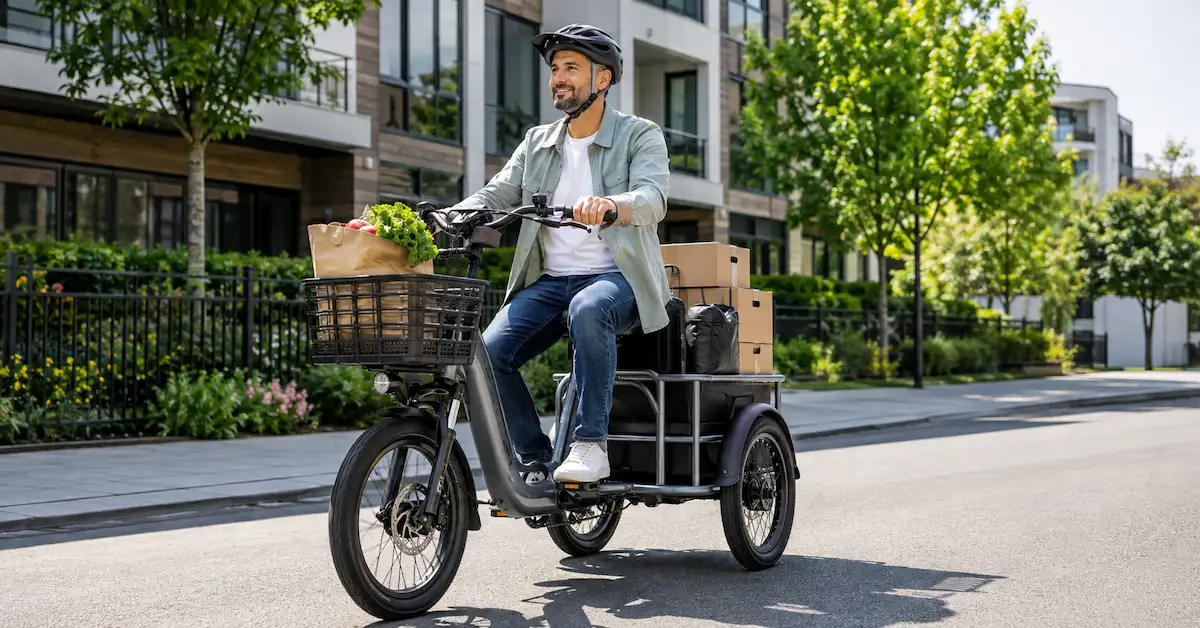
electric tricycle manufacturer

Who Should Work With an Electric Tricycle Manufacturer?

Electric tricycles serve multiple commercial markets, and each buyer type has different requirements.

Electric Tricycle Distributors

Distributors usually need:

  • Stable product supply
  • Competitive market positioning
  • Multiple product options
  • Spare parts availability
  • Technical documentation
  • Consistent quality between batches

A distributor selling electric trikes in Europe, North America, or Australia may need different configurations depending on local regulations, road conditions, and customer expectations.

Wholesale Buyers

Wholesale customers typically focus on:

  • Factory pricing
  • Minimum order requirements
  • Production capability
  • Packaging efficiency
  • Shipping preparation
  • Repeat order stability

A good supplier should help buyers select products suitable for their customer base instead of only offering a fixed catalog.

Private Label Electric Tricycle Brands

Private-label brands need deeper cooperation.

Typical requirements include:

  • Brand logo
  • Frame color
  • Product appearance
  • Model naming
  • Packaging design
  • User manuals
  • Component selection
  • Market-specific configurations

An experienced OEM electric tricycle manufacturer should be able to support product customization while maintaining production reliability.

Commercial Fleet Operators

Commercial users may include:

  • Delivery companies
  • Hotels and resorts
  • Tourist attractions
  • Campuses
  • Industrial parks
  • Property management companies

These buyers usually care more about:

  • Durability
  • Maintenance cost
  • Battery management
  • Rider safety
  • Spare parts
  • Fleet standardization

A fleet product needs to perform consistently after hundreds or thousands of operating cycles.

What Types of Electric Tricycles Can Manufacturers Provide?

A professional electric tricycle manufacturer normally develops different platforms for different applications.

The main categories include:

Electric Tricycle Type Common Applications Key Buyer Concerns
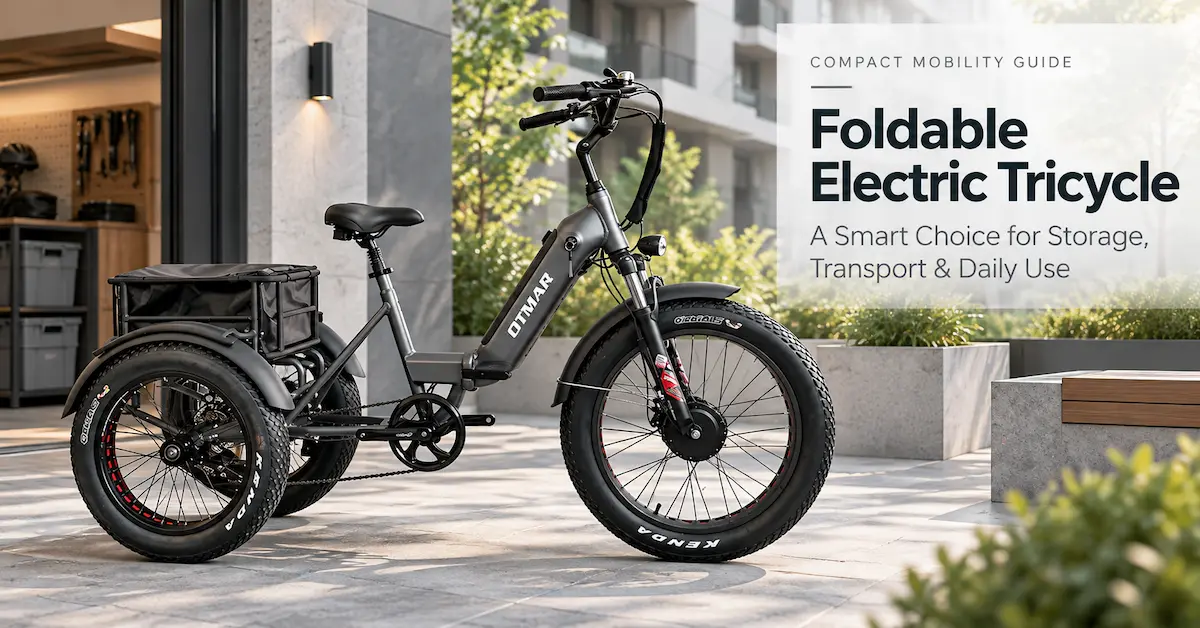
Folding Electric Trikes Urban users, storage-limited markets Compact design, convenience
Cargo Electric Trikes Delivery, logistics, shopping Load stability, cargo space
Passenger Electric Trikes Family transport, tourism Comfort, safety
Semi-Recumbent Electric Trikes Leisure, mobility Ergonomics, riding comfort
Full Suspension Electric Trikes Rough roads, outdoor use Stability, shock absorption
Fat Tire Electric Trikes Mixed terrain, outdoor applications Traction, durability

OTMAR currently provides electric trike platforms including models such as OTM-T10, OTM-T16, and OTM-T5, covering different utility and mobility scenarios.

What Technical Capabilities Should an Electric Tricycle Manufacturer Have?

A reliable electric trike factory should not only assemble components. It should understand how different systems work together.

The main technical areas include:

Frame Design and Structural Engineering

The frame is one of the most important parts of an electric tricycle because it must support:

  • Rider weight
  • Battery weight
  • Motor forces
  • Cargo loads
  • Repeated road impacts

A manufacturer should evaluate:

  • Frame geometry
  • Weight distribution
  • Welding quality
  • Stability during turning
  • Mounting points
  • Cargo support structure

For three-wheel vehicles, stability is especially important because the riding dynamics are different from two-wheel bicycles.

A well-designed electric trike should provide:

  • Predictable steering
  • Stable low-speed movement
  • Comfortable riding posture
  • Controlled weight distribution

Motor System Selection

The motor determines:

  • Acceleration
  • Hill-climbing ability
  • Load handling
  • Energy consumption

However, motor power should not be evaluated separately.

A complete electric drive system includes:

  • Motor
  • Controller
  • Battery voltage
  • Wheel size
  • Vehicle weight
  • Payload
  • Terrain conditions

For example, a cargo electric tricycle carrying heavy goods may require a different motor setup compared with a lightweight passenger mobility trike.

The correct configuration depends on the actual operating environment.

Battery System Engineering

Battery selection is one of the most important factors for electric tricycle buyers.

Manufacturers should consider:

  • Battery capacity
  • Cell quality
  • Battery management system (BMS)
  • Charging method
  • Installation position
  • Replacement availability

Actual range depends on:

  • Rider weight
  • Cargo load
  • Speed
  • Terrain
  • Temperature
  • Tire pressure
  • Riding mode

Therefore, professional suppliers should avoid only providing theoretical range numbers and should help customers evaluate realistic operating conditions.

For international projects, battery safety and transportation requirements must also be considered.

The U.S. Consumer Product Safety Commission recommends using manufacturer-approved chargers and compatible replacement battery packs for micromobility products. Buyers should confirm battery specifications and safety requirements according to their market before purchasing. (CPSC Micromobility Information Center)

Electric Tricycle Components Buyers Should Evaluate

A complete electric tricycle project involves multiple systems working together.

Braking System

Three-wheel vehicles often carry more weight than normal bicycles, especially cargo models.

Buyers should evaluate:

  • Brake type
  • Braking response
  • Loaded stopping performance
  • Component durability
  • Maintenance convenience

Suspension System

Suspension affects:

  • Rider comfort
  • Tire contact
  • Stability
  • Control on uneven roads

For outdoor, tourism, and rough-road applications, suspension design can significantly influence user experience.

Tires and Wheels

Tires influence:

  • Grip
  • Comfort
  • Rolling resistance
  • Stability
  • Service life

Fat tires may benefit:

  • Gravel roads
  • Outdoor routes
  • Poor pavement

while narrower tires may be more efficient for urban environments.

Controller and Display

The controller manages:

  • Motor response
  • Power output
  • Riding modes
  • Electrical protection

The display provides:

  • Battery information
  • Speed
  • Riding modes
  • System information

For commercial projects, electrical system reliability is often more important than adding unnecessary features.
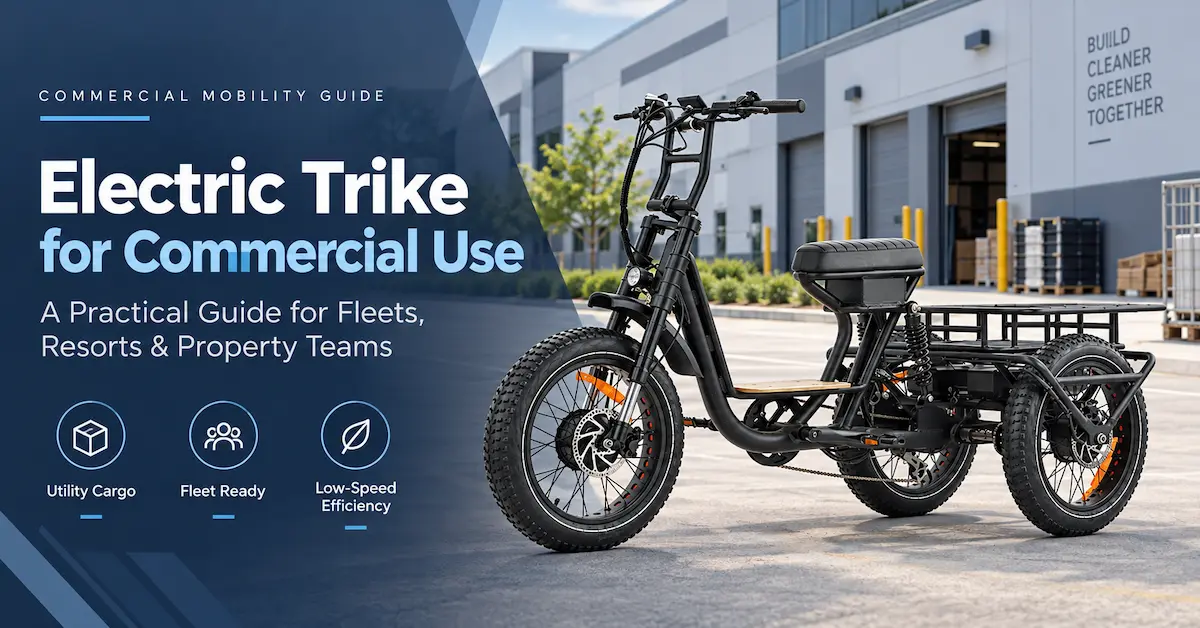
How to Evaluate an Electric Tricycle Manufacturer Before Ordering

Selecting an electric tricycle manufacturer requires more than comparing product photos or basic specifications. A professional sourcing process should evaluate engineering capability, production control, documentation, customization support, and long-term cooperation potential.

For B2B buyers, the following factors are especially important.

Factory Experience and Product Development Capability

A capable manufacturer should understand:

  • Electric drive systems
  • Battery integration
  • Frame engineering
  • Vehicle stability
  • Component compatibility
  • Market requirements

A factory with product-development experience can help buyers avoid common mistakes such as:

  • Selecting unsuitable motors
  • Overlooking weight distribution
  • Choosing incorrect battery capacity
  • Designing unstable cargo layouts
  • Ignoring maintenance requirements

OTMAR positions itself as an electric mobility manufacturer with OEM/ODM capabilities, supporting product development, customization, production, and export cooperation through its manufacturing process. Buyers can learn more about the company through the OTMAR About Us page.

Manufacturing and Assembly Capability

Electric tricycles involve multiple assembly stages:

  • Frame welding
  • Surface treatment
  • Electrical installation
  • Motor assembly
  • Battery installation
  • Brake adjustment
  • Wheel alignment
  • Functional testing
  • Final inspection

A reliable manufacturer should have standardized production procedures to maintain consistency between samples and mass production.

For B2B buyers, consistency matters because a product program may require:

  • Hundreds of units
  • Multiple shipments
  • Repeat orders
  • Regional distribution

A supplier should be able to maintain the same product quality throughout the cooperation period.

OTMAR Electric Tricycle Models and Application Positioning

When selecting an electric tricycle manufacturer, buyers should evaluate whether the supplier has suitable product platforms for different applications.

OTMAR currently lists electric trike models including:

  • OTM-T10
  • OTM-T16
  • OTM-T5

These platforms target different mobility requirements.

OTM-T10: Utility and Urban Mobility Electric Trike

The OTM-T10 is positioned around practical urban mobility applications.

Published features include:

  • 20-inch wheel configuration
  • 750W front-drive motor
  • Samsung battery
  • Step-through structure
  • Kenda tires
  • Rear cargo compartment

Potential application scenarios:

  • Local delivery
  • Shopping transportation
  • Community mobility
  • Commercial utility

For buyers considering an electric tricycle for daily operations, cargo layout, battery capacity, payload capability, and local regulations should be confirmed before final purchasing decisions.

OTM-T16: Stable Utility Electric Tricycle Platform

The OTM-T16 focuses on stability and practical transportation.

Published features include:

  • Front 24-inch / rear 20-inch wheel layout
  • 750W front-drive system
  • Samsung battery
  • High-strength steel frame
  • Front suspension
  • All-terrain tires
  • Disc brakes

This type of configuration can be considered for:

  • Mixed-road environments
  • Outdoor applications
  • Utility transportation
  • Users requiring additional stability

However, buyers should confirm:

  • Maximum payload
  • Battery capacity
  • Real-world range
  • Certification requirements

according to the final configuration.

OTM-T5: Cargo-Oriented Electric Trike

The OTM-T5 is designed around practical carrying requirements.

Published features include:

  • Front 24-inch / rear 20-inch wheel layout
  • 750W front-drive motor
  • Samsung battery
  • Front suspension
  • Front basket
  • Rear cargo area

Potential applications include:

  • Grocery transportation
  • Local business delivery
  • Property mobility
  • Commercial utility

For commercial buyers, the cargo structure should be tested with the actual intended load before bulk purchasing.

OEM and ODM Services From an Electric Tricycle Manufacturer

For many B2B buyers, an off-the-shelf electric trike is only the starting point.

A professional OEM/ODM manufacturer should support customization based on market requirements.

Product Customization

Possible customization areas include:

  • Brand logo
  • Frame color
  • Decals
  • Model name
  • Battery configuration
  • Motor selection
  • Display
  • Tires
  • Accessories
  • Packaging

Market-Specific Configuration

Different markets may require different product choices.

Examples:

European urban markets may prioritize:

  • Comfortable riding position
  • Regulatory compliance
  • Practical accessories

North American markets may prioritize:

  • Larger frames
  • Higher power configurations
  • Cargo capability

Tourism markets may prioritize:

  • Passenger comfort
  • Appearance
  • Easy operation

Commercial fleets may prioritize:

  • Durability
  • Serviceability
  • Standardization

Therefore, a good OEM partner should begin with understanding the application rather than immediately recommending a fixed model.

Electric Tricycle OEM Development Process

A structured OEM process normally includes several stages.

Step 1: Market Requirement Analysis

The manufacturer should understand:

  • Target country
  • Customer group
  • Application
  • Price positioning
  • Quantity requirements
  • Regulations

Step 2: Product Platform Selection

The buyer and manufacturer evaluate:

  • Existing models
  • Required modifications
  • Technical feasibility
  • Cost impact

Step 3: Specification Confirmation

Important specifications include:

  • Frame
  • Motor
  • Battery
  • Controller
  • Display
  • Tires
  • Brakes
  • Suspension
  • Accessories

Step 4: Prototype and Sample Testing

Before mass production, buyers should test:

  • Riding stability
  • Braking performance
  • Battery usage
  • Cargo handling
  • Comfort
  • Component reliability

Step 5: Production and Quality Inspection

After approval:

  • Production scheduling
  • Component inspection
  • Assembly
  • Functional testing
  • Final inspection
  • Packaging

are completed before shipment.

Quality Control: What Should Buyers Check?

Quality control is one of the biggest differences between a professional electric tricycle manufacturer and a simple trading supplier.

Important inspection stages include:

Incoming Quality Control

Check:

  • Frames
  • Motors
  • Batteries
  • Controllers
  • Displays
  • Brakes
  • Tires
  • Chargers

before assembly.

Production Process Inspection

During assembly, manufacturers should verify:

  • Wiring connections
  • Brake adjustment
  • Wheel alignment
  • Torque settings
  • Component installation

Final Product Testing

Before shipment, buyers should confirm:

  • Electrical system operation
  • Battery charging
  • Motor assistance
  • Brake performance
  • Lighting
  • Display function
  • Overall appearance

For international B2B buyers, final inspection reduces risks such as:

  • High return rates
  • Customer complaints
  • Repair costs
  • Brand reputation damage

Certifications and Compliance Considerations

Certification requirements depend on:

  • Destination market
  • Product category
  • Motor configuration
  • Battery system
  • Intended usage

Common standards buyers may need to evaluate include:

  • EN 15194
  • CE-related requirements
  • UL-related requirements
  • UKCA-related requirements

OTMAR publicly references EN 15194, UL, CE, UKCA, and ISO 9001 capabilities on its company information pages. However, buyers should confirm the exact documentation applicable to each specific model and configuration before placing production orders.

For electrical safety considerations, UL Solutions explains that UL 2849 evaluates e-bike electrical systems, including the relationship between the drive system, battery, and charger. Buyers should determine the appropriate requirements according to their market. (UL Solutions)

Cost Factors When Choosing an Electric Tricycle Manufacturer

The lowest unit price is not always the lowest total cost.

A professional buyer should evaluate total ownership factors.

Cost Factor Why It Matters
Product price Initial investment
Battery quality Replacement cost and operating reliability
Motor system Performance and efficiency
Spare parts Maintenance speed
Packaging Shipping protection
Quality consistency Reduces after-sales issues
Customization Supports market differentiation
Documentation Helps market compliance

A cheaper product with inconsistent quality may create higher costs through:

  • Warranty claims
  • Customer returns
  • Spare-part problems
  • Dealer dissatisfaction

For distributors and brands, supplier reliability often has greater long-term value than the lowest quotation.

How to Reduce Risks When Sourcing Electric Tricycles

Before placing a large order, buyers should:

Request Product Documentation

Confirm:

  • Technical specifications
  • Battery information
  • Charger information
  • Available certifications
  • User manuals

Test Samples

Evaluate:

  • Real riding conditions
  • Loaded performance
  • Battery usage
  • Comfort
  • Maintenance

Confirm Production Capability

Ask about:

  • Manufacturing process
  • Quality inspection
  • Packaging
  • Spare parts support

Build Long-Term Supplier Communication

A reliable manufacturer should support:

  • Product improvement
  • Market feedback
  • Repeat orders
  • Technical communication

FAQ About Electric Tricycle Manufacturer

What does an electric tricycle manufacturer do?

An electric tricycle manufacturer develops, produces, tests, and supplies electric three-wheel vehicles. A professional manufacturer may also provide OEM/ODM customization, technical support, quality control, and export assistance.

How do I choose a reliable electric tricycle manufacturer?

Evaluate product development capability, factory experience, quality-control systems, customization ability, certifications, communication efficiency, and after-sales support.

Can electric tricycle manufacturers provide OEM services?

Yes. OEM services may include branding, colors, component selection, packaging, product configuration, and market-specific adjustments depending on project requirements.

What types of electric tricycles can manufacturers produce?

Common categories include cargo electric trikes, folding electric trikes, passenger electric trikes, full-suspension electric trikes, and fat-tire electric trikes.

Are electric tricycles suitable for commercial delivery?

Yes. Cargo-oriented electric trikes can support applications such as local delivery, grocery transportation, tourism, and commercial mobility. Buyers should select the correct cargo structure and battery configuration.

What should I check before importing electric tricycles?

Buyers should check:

  • Product specifications
  • Battery information
  • Motor system
  • Certification requirements
  • Packaging
  • Spare parts
  • Sample performance

before bulk ordering.

How long does electric tricycle development take?

The timeline depends on whether the buyer selects an existing model or requires a new customized design. Sample testing, component confirmation, and certification requirements can influence the schedule.

What certifications are required for electric tricycles?

Certification depends on the destination market and product configuration. Buyers should confirm requirements before production rather than assuming one certificate applies globally.

What is the difference between OEM and ODM electric tricycle manufacturing?

OEM usually means customizing an existing product according to buyer requirements, while ODM involves deeper product development based on manufacturer capabilities.

Which OTMAR electric tricycle models can buyers evaluate?

OTMAR currently offers electric trike platforms including OTM-T10, OTM-T16, and OTM-T5. Buyers should evaluate each model according to application, terrain, cargo needs, and market requirements.

Conclusion

Choosing the right electric tricycle manufacturer is a strategic decision for distributors, wholesalers, and brands.

A reliable supplier should provide more than a product catalog. The ideal manufacturing partner should understand product engineering, battery systems, frame structures, quality control, customization requirements, compliance considerations, and long-term market development.

For B2B buyers, the best electric tricycle supplier is not necessarily the one offering the lowest price, but the one that can provide:

  • Suitable product platforms
  • Stable manufacturing quality
  • OEM/ODM flexibility
  • Reliable communication
  • Long-term supply support

OTMAR provides electric bike and electric tricycle OEM/ODM solutions for global partners. Buyers can explore the OTMAR electric tricycle range, learn about the company's manufacturing capability through the About Us page, or contact OTMAR for project discussions based on market requirements, quantity, and customization needs.

Featured Blogs

Tag:

  • Electric Tricycle Manufacturer
  • Electric Trike Supplier
  • OEM Electric Tricycle
  • Electric Cargo Trike
  • Electric Tricycle Factory
  • Commercial Mobility Solutions
  • Electric Trike Applications
  • Wholesale Electric Tricycle
Share On
Featured Blogs
Electric Cargo Bike Factory: How to Choose a Reliable OEM Partner for Commercial Mobility

Electric Cargo Bike Factory: How to Choose a Reliable OEM Partner for Commercial Mobility

Choosing the right electric cargo bike factory is essential for distributors, wholesalers, and commercial mobility brands that need reliable products and scalable supply. This guide explains how to evaluate cargo e-bike manufacturers through engineering capability, product design, production quality, OEM customization, and sourcing strategies.

Electric Trike Manufacturer China: How to Choose the Right OEM Supplier for Your Business

Electric Trike Manufacturer China: How to Choose the Right OEM Supplier for Your Business

Finding the right electric trike manufacturer China requires more than comparing prices. This guide explains how importers, distributors, and private-label brands can evaluate factory capability, product platforms, OEM customization, quality control, and sourcing risks when selecting an electric trike supplier.

Electric Tricycle Manufacturer Guide: How to Choose the Right OEM Partner for Your Market

Electric Tricycle Manufacturer Guide: How to Choose the Right OEM Partner for Your Market

Selecting the right electric tricycle manufacturer is critical for distributors, wholesalers, and private-label brands that need reliable products, customization capability, and long-term supply support. This guide explains how to evaluate electric trike factories through product platforms, technical capability, quality control, OEM/ODM services, and commercial risks.

E Bike for Daily Commuting: How to Choose a Reliable City Commuter for Everyday Use

E Bike for Daily Commuting: How to Choose a Reliable City Commuter for Everyday Use

Choosing an e bike for daily commuting requires balancing practical range, rider comfort, braking, tire choice, carrying capacity, maintenance, and local market requirements. This guide helps commuters, distributors, retailers, fleet buyers, and private-label brands evaluate the right city e-bike configuration for dependable everyday transportation.

E Bike for Food Delivery: How Fleets Choose Range, Cargo, and Reliability

E Bike for Food Delivery: How Fleets Choose Range, Cargo, and Reliability

Choosing an e bike for food delivery requires more than comparing motor wattage and advertised range. This B2B guide explains how delivery fleets, restaurants, distributors, and private-label brands should evaluate battery strategy, cargo design, braking, tires, maintenance, sample testing, safety, and OEM configuration for reliable daily operations.